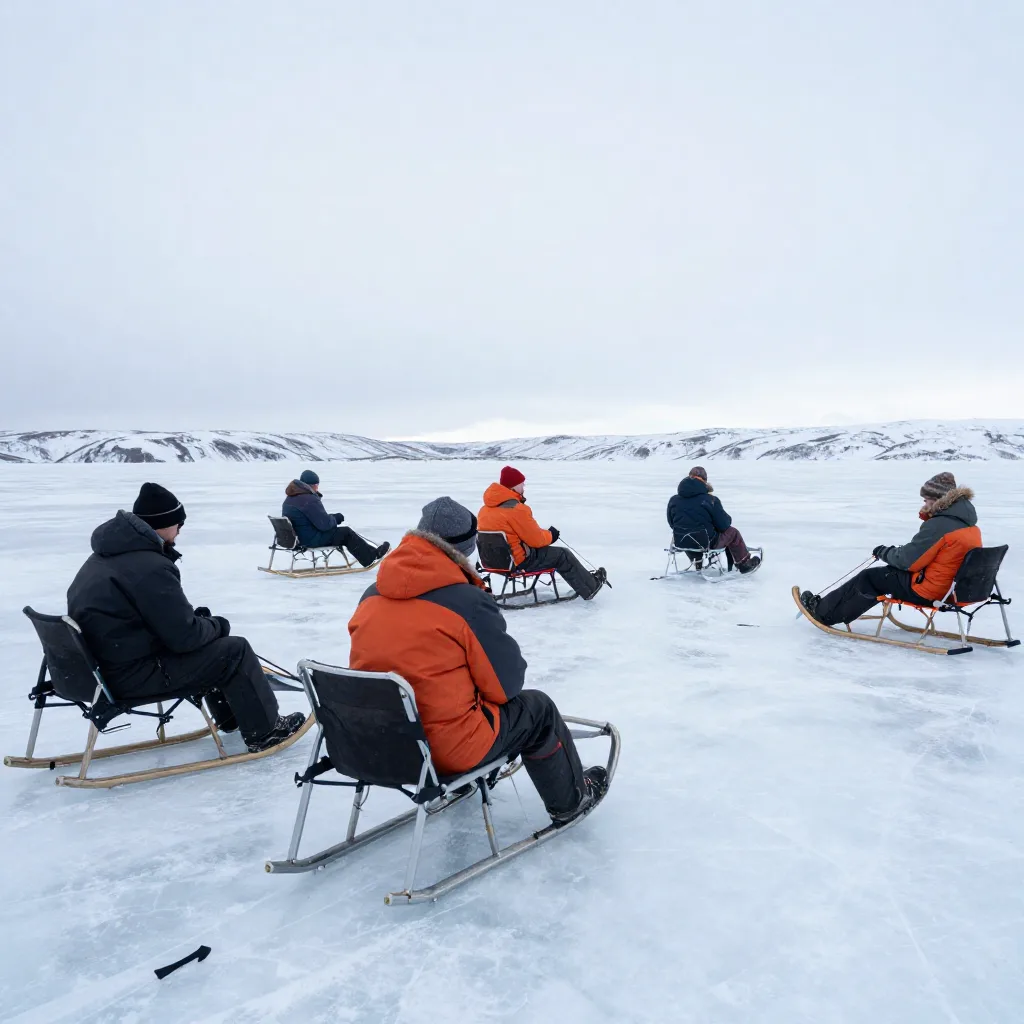
Picture this: you’re sitting in a heated ice shelter on a frozen Alaskan lake, watching the Northern Lights dance across the sky while your line suddenly jerks with the weight of an Arctic char. The silence of the wilderness surrounds you, broken only by the crackling of your heater and the excited shouts of your fishing buddies. This isn’t just fishing—this is the kind of experience that goes straight to the top of any angler’s bucket list.
When people think of Alaska fishing, they usually imagine summer salmon runs or fly fishing in crystal-clear streams. But here’s what most folks don’t know: winter ice fishing in Alaska might just be the most unique fishing experience you’ll ever have. With 71% of the Earth’s surface covered by water, anglers could spend a lifetime chasing fish around the world, but ice fishing in “The Last Frontier” offers something truly special that you simply can’t find anywhere else.
I’m Paoul, and I’ve been fortunate enough to experience ice fishing across North America, but nothing—and I mean nothing—compares to dropping a line through three feet of solid ice in Alaska. The combination of world-class fisheries, stunning scenery, and that raw sense of adventure makes this trip worth every penny and every mile traveled. Whether you’re a seasoned ice angler or someone who’s never even seen a tip-up, Alaska welcomes you with open arms and full stringers.
Why Ice Fishing in Alaska Should Top Your Bucket List
Alaska isn’t called “The Last Frontier” for nothing. World-class salmon fisheries, remote lodges, and rich culture make the allure of Alaskan adventure unmatched by any other fishing destination in the United States. But winter transforms Alaska into something even more magical—a frozen wonderland where ice fishing becomes an authentic wilderness experience.
Unlike ice fishing techniques you might use in the lower 48 states, Alaska offers unique species you won’t find anywhere else. We’re talking about Arctic char, rainbow trout that fight like they’re twice their size, king salmon, Arctic grayling, and northern pike that can reach monster proportions. The diversity of species available through the ice is staggering, and each one presents its own exciting challenge.
The scenery alone is worth the trip. Imagine fishing with the Alaska Range as your backdrop, watching bald eagles soar overhead, and possibly catching a glimpse of the Aurora Borealis while you wait for your next bite. According to aurora research, the winter months offer some of the best viewing opportunities for the Northern Lights, and combining this with ice fishing creates an unforgettable dual experience.
But here’s what really sets Alaska apart: guided options offer a cozy portable shelter while waiting for your catch, meaning you’re not suffering through bitter cold like traditional ice fishing. Many outfitters provide heated shelters, all necessary gear, expert guidance, and even fresh-cooked fish meals right on the ice. It’s adventure without the misery—the best of both worlds.
Best Time for Ice Fishing in Alaska: Planning Your Trip
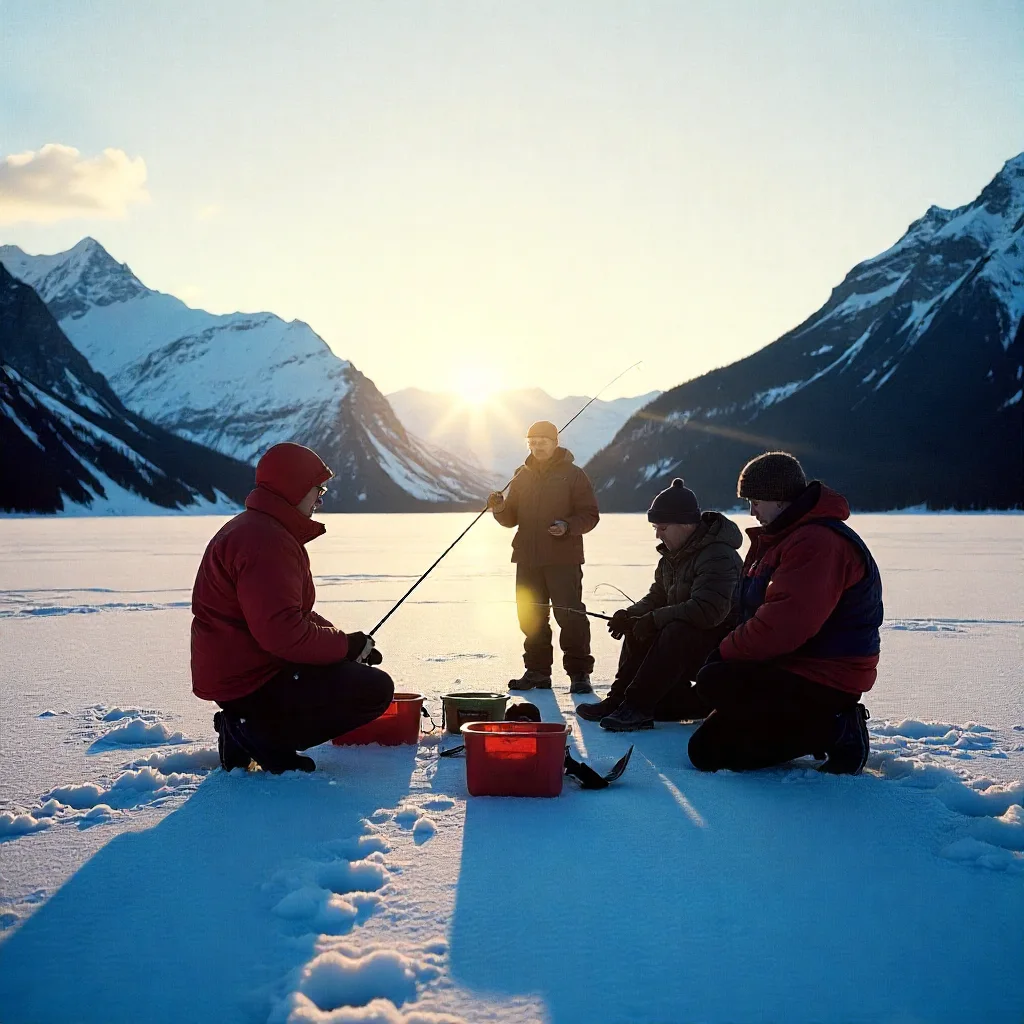
Timing is everything when planning your Alaska ice fishing adventure. The ideal months for ice fishing in Alaska range from late November through March, with peak season typically running from December through mid-March when ice conditions are most stable and predictable.
Understanding seasonal fishing tips helps you pick the perfect window. Early season (late November to December) offers the excitement of first ice and actively feeding fish preparing for the long winter ahead. Mid-season (January to February) provides the thickest ice and most stable conditions, though temperatures can be brutal—we’re talking potential lows of -40°F or colder in places like Fairbanks.
Late season (March to early April) brings longer days, slightly warmer temperatures, and fish that are hungry after a long winter. Ice fishing in Southcentral Alaska is usually open from December through April, giving you a solid four-to-five-month window to plan your adventure. The climate of Alaska varies significantly by region, so research your specific destination carefully.
Here’s an insider tip I learned the hard way: book your trip for late February or early March if you want the best of everything. The ice is still thick and safe (we’re talking several feet in most places), the days are getting longer so you’re not fishing in darkness by 4 PM, temperatures are slightly more bearable, and you still have excellent chances of seeing the Northern Lights. Plus, this timing avoids both the holiday rush and the spring breakup when ice conditions become unpredictable.
For those interested in timing, knowing the best time to go fishing guide principles still applies to ice fishing—dawn and dusk tend to produce the most active feeding periods, even under the ice.
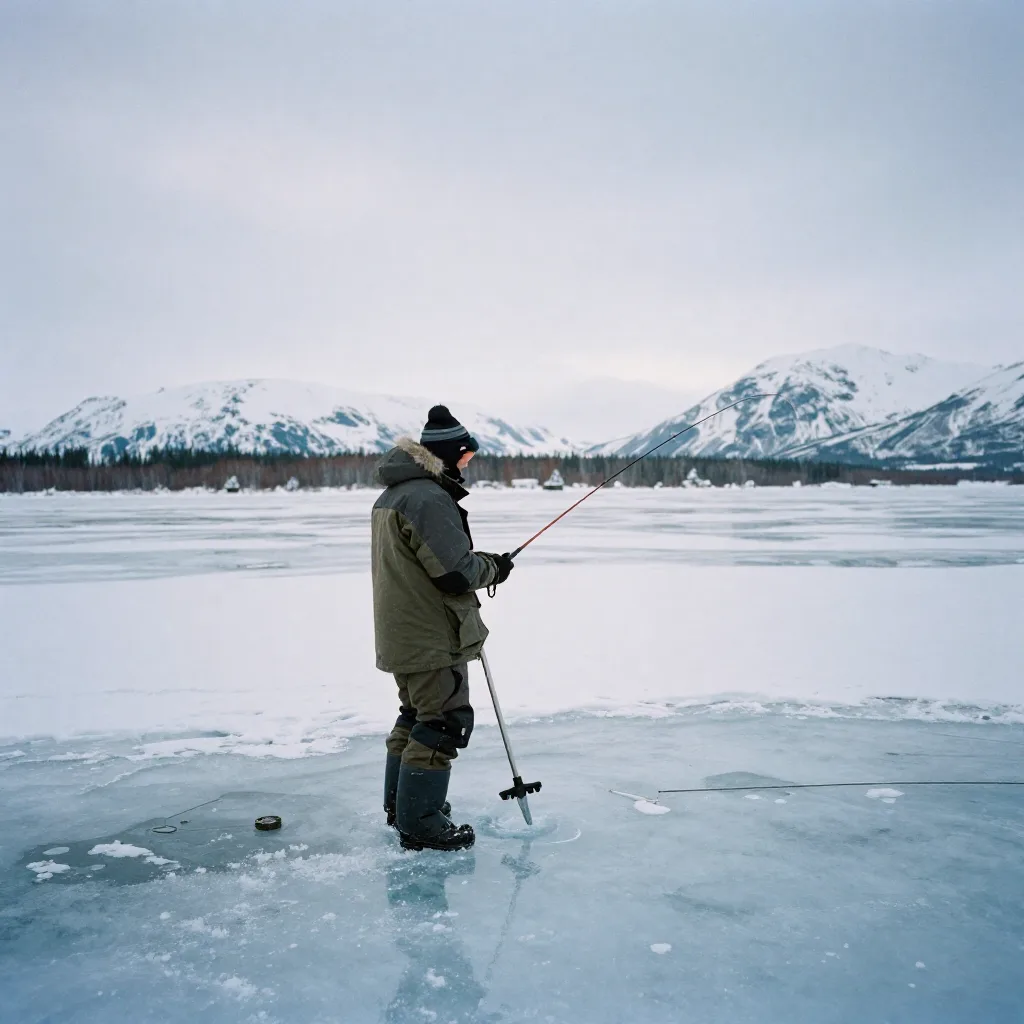
Top Alaska Ice Fishing Locations: Where to Drop Your Line
Alaska is massive—bigger than Texas, California, and Montana combined—so choosing where to fish matters tremendously. Here are the premier ice fishing destinations that consistently produce memorable catches and experiences.
Fairbanks and Chena Lake
Rod’s Alaskan Guide Service offers tours at Chena Lake, in North Pole, Alaska, making this the most accessible ice fishing destination for first-timers. Located just outside Fairbanks, Chena Lake offers excellent opportunities for Arctic char, rainbow trout, Arctic grayling, and both king and silver salmon. The convenience factor is huge—you can fly into Fairbanks International Airport and be on the ice within an hour.
What makes the Fairbanks area special is the combination of good fishing and Northern Lights viewing opportunities. Snag your rare opportunity to catch unique Alaskan fish and see the beautiful arctic night skies at the same time. The region is known as one of the best places on Earth to witness the aurora borealis, and many guided trips offer evening sessions specifically timed for Northern Lights viewing.
The Tanana River system also provides connected fishing opportunities, and local guides know exactly where fish concentrate during winter months. Understanding saltwater fishing techniques won’t help you here, but the principles of reading structure and finding fish still apply under the ice.
Anchorage Area Lakes
For those flying into Alaska’s largest city, Anchorage offers surprising ice fishing right in town. Beach, Campbell Point, Delong, Mirror, Sand, Goose, and Jewel lakes are each minutes from hotels and easily accessible. This proximity makes Anchorage perfect for shorter trips or for anglers who want to combine ice fishing with other winter activities like skiing or dog sledding.
Anchorage is surrounded by lakes that freeze solid each winter, making it one of the easiest places in Alaska to go ice fishing without traveling far. You can target rainbow trout, Arctic char, Dolly Varden (a type of char), landlocked salmon, and northern pike without venturing into the deep wilderness. The ice thickness on Goose, Jewel, and Delong lakes is regularly monitored and reported by Parks and Recreation, providing excellent safety information for independent anglers.
The Matanuska Lakes State Recreation Area near Palmer, just north of Anchorage, offers additional options with slightly less pressure and potentially larger fish. Many successful anglers apply the same fishing tips for beginners they learned in other locations to these productive waters.
Birch Lake
Located about 60 miles from Fairbanks, Alaska Guided Ice Fishing offers an unparalleled ice fishing experience on the breathtaking frozen lakes of Alaska, with Birch Lake being their premier location. This spot has gained fame for its luxury ice fishing experiences, featuring a 43-foot ice castle fish house that’s more like a winter RV than a traditional shelter.
The fish house comfortably accommodates up to six people and comes equipped with multiple heat sources, large-screen TVs showing underwater camera footage, and all the amenities you need for a comfortable day on the ice. You can watch fish approach your bait in real-time on the screens—it’s like having a front-row seat to an underwater nature show. Species available include Arctic char, rainbow trout, king salmon, and burbot (a freshwater cod that’s surprisingly good eating).
This location represents the pinnacle of guided ice fishing experiences, perfect for families, groups, or anyone who wants adventure without roughing it. Learning about best ocean fishing locations might inspire your summer trips, but Birch Lake is where you create winter fishing memories.
Caribou Lake (Homer Area)
Caribou lake is a great place to enjoy this cold and unique experience. You can spend a quiet day to yourself, fishing for Dolly Varden and Kokanee. Located on the Kenai Peninsula near Homer, this spot offers a more remote feeling while still being relatively accessible. The Homer area is famous for its summer halibut fishing, but winter transforms it into an ice angler’s paradise.
The Kenai Peninsula provides numerous ice fishing opportunities, and many lodges that operate summer fishing charters transition to ice fishing in winter. The Kenai Peninsula geography creates diverse fishing environments, from shallow bays to deep lakes, each holding different species and requiring different approaches.
Fish Species You’ll Target Ice Fishing in Alaska
One of the most exciting aspects of ice fishing Alaska is the incredible variety of species available. Each fish presents unique challenges and rewards, making every trip an adventure in itself.
Arctic Char
Arctic char are jewels of the north—stunningly beautiful fish with orange-pink flesh and vibrant colors. They’re related to both salmon and trout, belonging to the Salmonidae family, and they fight with impressive strength for their size. In Alaska, you’ll typically catch char ranging from 1-5 pounds, though larger specimens exist.
These fish prefer colder waters and are most active during winter months when many other species slow down. Use small jigs tipped with salmon eggs, small minnows, or artificial plastics in bright colors. Arctic char have excellent vision, so clear line and subtle presentations often work best. The same careful approach used in fly fishing techniques applies here—finesse beats power with these intelligent fish.
Rainbow Trout
Alaska’s rainbow trout are legendary, and ice fishing offers a unique opportunity to target them when pressure is lowest. These fish continue feeding actively throughout winter, especially during warmer spells or around mid-day when sunlight penetrates the ice. Understanding freshwater fishing bait guide principles helps you select the right offerings.
Most winter rainbows run 12-20 inches, though larger fish are possible in certain waters. They’ll readily take small jigs, spoons, and live bait presentations. Salmon eggs are particularly effective, as are small plastic grubs in natural or bright colors. Set your baits near the bottom or suspended at various depths until you find where fish are holding.
Rainbow trout are members of the Oncorhynchus genus and are among the most sought-after sport fish worldwide. Catching them through the ice in Alaska adds a unique notch to any angler’s achievement list.
Arctic Grayling
Arctic grayling are distinctive fish with a large, sail-like dorsal fin adorned with spots and colors. They’re smaller than trout (typically 10-14 inches), but they’re eager biters and incredibly beautiful. These fish are surface feeders during summer, but in winter they hold near the bottom or in mid-depths.
Small flies, tiny jigs, or live bait like wax worms work excellently for grayling. They school up during winter, so finding one often means catching several. The Arctic grayling is a symbol of pristine northern waters and catching them feels like connecting with true wilderness.
King Salmon (Chinook)
Yes, you can catch king salmon through the ice in certain Alaskan lakes! Landlocked populations exist in several water bodies, and they provide thrilling action for ice anglers. These salmon typically run smaller than their ocean-going cousins (5-15 pounds is common for landlocked kings), but they fight with typical salmon aggression.
Use larger jigs, spoons, or bait rigs when targeting winter kings. They prefer deeper water and often hold near the bottom during daylight hours. Having your fishing license requirements in order is crucial, as king salmon often require special stamps or endorsements even when targeting landlocked populations.
Northern Pike
For anglers who want serious action and explosive strikes, northern pike are Alaska’s toothy predators. Some Alaskan lakes and rivers hold pike that reach impressive sizes—40+ inches is possible, though 24-34 inches is more typical. These fish are voracious predators that actively feed throughout winter.
Pike require heavier tackle and wire leaders to prevent bite-offs. Use larger lures, tip-ups with live or dead bait fish, and aggressive jigging motions to trigger strikes. The northern pike is found across the northern hemisphere and provides heart-pounding action regardless of location. Many techniques from bass fishing techniques work well for pike—they’re ambush predators that respond to aggressive presentations.
Burbot
Often overlooked but surprisingly fun to catch, burbot are Alaska’s only freshwater cod. Test your skills and luck as you fish for Arctic Char, Rainbow Trout, King Salmon, and Burbot in Alaska’s pristine waters. These fish are nocturnal feeders, making evening or night ice fishing sessions particularly productive.
Burbot are bottom dwellers that will eat almost anything. Use pieces of fish, chicken liver, or large jigs tipped with bait. They’re not pretty fish, but they’re excellent eating and fight harder than their appearance suggests. The burbot is circumpolar in distribution and represents one of Alaska’s most underutilized fish resources.
Essential Gear for Alaska Ice Fishing
Don’t let the gear intimidate you—guided trips provide everything you need, but understanding what’s involved helps you appreciate the experience. For those planning independent trips, here’s what you’ll need beyond basic fishing knot tying guide knowledge.
Ice Fishing Rods and Reels
Alaska ice fishing requires specialized equipment. Ice rods are much shorter (24-36 inches) than regular fishing rods, designed for fishing in tight spaces inside shelters. They’re typically matched with small spinning reels or inline reels that prevent line twist. Many guides provide quality combos, but having your own allows you to dial in your preferred sensitivity and action.
Understanding best fishing rods for 2025 helps you appreciate quality equipment. For Alaska, medium-light to medium power rods handle most species, while heavier setups are needed for big pike or king salmon.
Ice Augers and Shelters
Drilling through several feet of Alaskan ice requires serious equipment. Gas-powered or electric augers make quick work of even the thickest ice. By mid-winter, the thickness of the ice in Southcentral Alaska is measured in feet, not inches, strong enough to safely support a semi-truck.
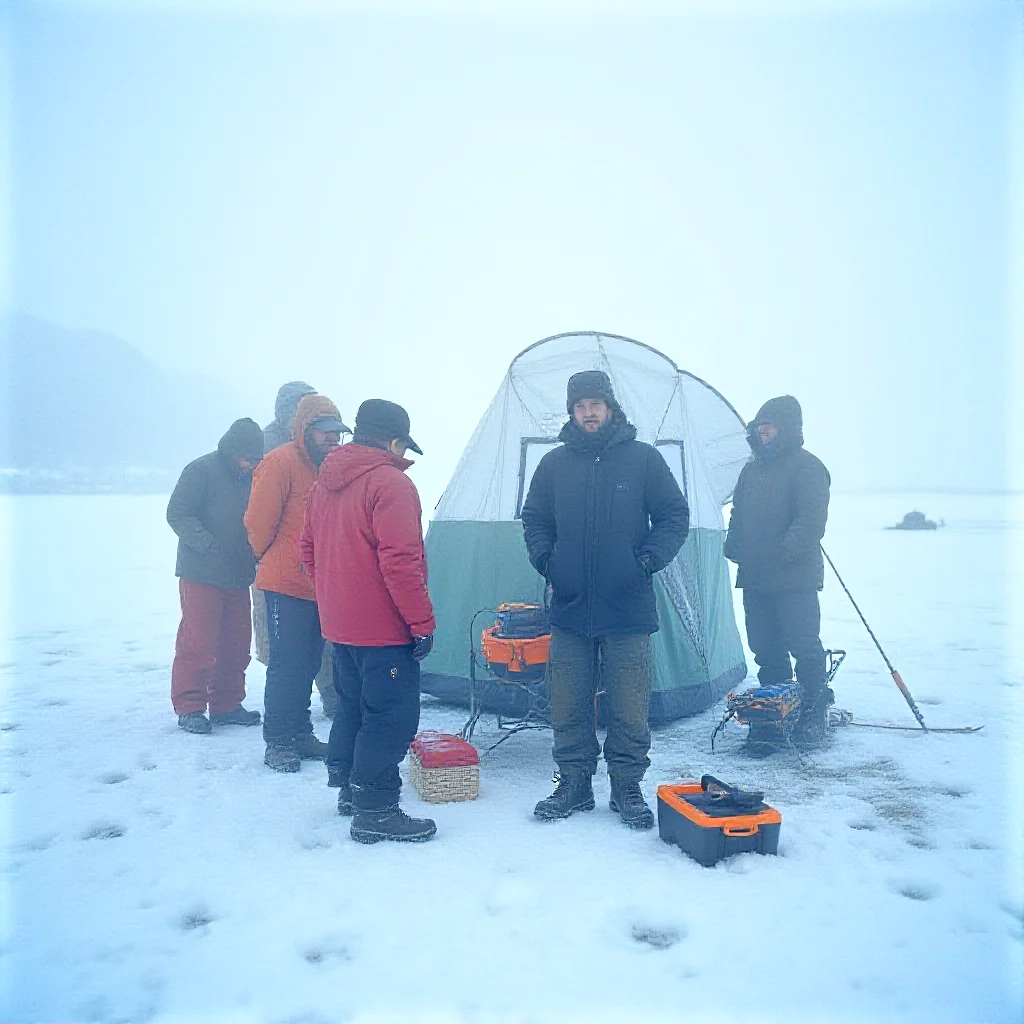
Portable ice shelters range from simple flip-over models to elaborate pop-up structures. Rod’s Alaskan Guide Service offers tours in fully heated, mobile cabins—keeping you comfortable no matter the outside temperature. These heated shelters transform ice fishing from an endurance test into a comfortable experience where you can fish all day without freezing.
Clothing and Safety Equipment
Extreme cold demands extreme preparation. Dress in layers using moisture-wicking base layers, insulating mid-layers, and windproof outer layers. Dress warm: Insulated boots, parka, snow pants, hats, gloves, scarf/face mask, multiple under layers, warm socks. Quality insulated boots rated for extreme cold are non-negotiable—frostbite can occur in minutes at Alaskan winter temperatures.
Safety equipment includes ice picks (worn around your neck for self-rescue if you break through), a throw rope, and a fully charged cell phone in a waterproof case. While ice fishing on a lake in Alaska is very safe, it only takes 2 inches of ice to support a person’s weight, always check ice conditions before venturing out and never fish alone in remote areas.
Guided Ice Fishing Tours vs. DIY: What’s Right for You?
One of the biggest decisions you’ll make is whether to book a guided tour or tackle Alaska ice fishing independently. Both approaches have merits, and your choice depends on experience level, budget, and desired comfort.
Benefits of Guided Tours
Guided options guarantee comfort, adventure, and memories to last a lifetime. Professional guides know exactly where fish are located, have all equipment ready, and handle all the hard work of drilling holes, setting up shelters, and finding productive spots. Many even cook your catch right on the ice—there’s nothing quite like fresh fish prepared lakeside while surrounded by Alaskan wilderness.
We provide all the equipment you need, from fishing poles to bait, drilled ice holes, and even a delicious meal prepared fresh on-site. This all-inclusive approach means you simply show up and fish. For first-timers, groups with kids, or anyone who wants guaranteed success without the learning curve, guided tours are absolutely the way to go.
Cost typically ranges from $150-200 per person for a half-day trip, up to $400-500+ for full-day luxury experiences. Packages combine dog sledding and snowmobile tours with ice fishing to save up to $75 per person, making multi-activity adventures surprisingly affordable. Many guides participate in fishing expos and trade shows where you can meet them and book trips in advance.
DIY Ice Fishing Considerations
Independent ice fishing offers freedom and potentially lower costs, but requires significant equipment investment and local knowledge. Gear rentals for a day or more are available through companies like Alaska Outdoor Gear Rental, which helps if you’re flying in and can’t bring equipment.
You’ll need transportation to your chosen lake, all necessary gear (auger, rods, shelter, heater), safety equipment, and fishing licenses. Fishing licenses are a must, and most grocery stores, outdoor outfitters, and retail outlets can sell you one. The knowledge gained from how to start fishing beginners guides helps, but Alaska presents unique challenges that even experienced anglers from other regions might not anticipate.
The main advantage of DIY is flexibility—you fish when, where, and how you want. The disadvantage is everything else falls on you, including dealing with equipment failures, finding fish, and staying safe in potentially dangerous conditions. Many anglers compromise by doing one guided trip first to learn the ropes, then attempting DIY adventures afterward with newly gained knowledge.
Alaska Fishing License Requirements for Ice Fishing
Here’s something you absolutely cannot skip: proper licensing. Each participating angler 16 years or older in age is required to carry a valid Alaskan fishing license with them while fishing (no exceptions). Alaska takes fishing regulations seriously, and conservation officers do check licenses even in remote areas.
You will only need a 1 day (24h) sport fishing license for most ice fishing situations. Non-residents pay $15 for a one-day license or can purchase longer-term options like 3-day ($30), 7-day ($45), or annual licenses if planning extended stays. Residents enjoy significantly cheaper rates. You do not typically need a king salmon stamp for ice fishing landlocked populations, but verify this based on your specific destination.
Purchasing licenses online is straightforward through the Alaska Department of Fish and Game website. You can also buy physical licenses at stores like Big Ray’s, Sportsman’s Warehouse, Frontier Outfitters, Walmart. Just make sure to check holiday and opening hours if buying in person.
The license must be signed to be valid—you can digitally sign during the online purchase process or manually sign a printed copy. Understanding resident vs non-resident fishing licenses helps you navigate the system, though Alaska’s rules are generally straightforward compared to some states.
Keep your license easily accessible while fishing—waterproof plastic sleeves work well for protecting paper licenses from moisture. Violating fishing regulations can result in substantial fines and could impact future fishing privileges, so play by the rules and help preserve Alaska’s incredible fisheries for future generations. Learning about fishing without a license consequences in other states shows how serious this issue is nationally.
Planning Your Perfect Alaska Ice Fishing Adventure
Putting all the pieces together requires some planning, but the payoff is absolutely worth it. Here’s how to make your dream ice fishing trip a reality without the stress and guesswork.
Booking Your Trip
Start planning 3-6 months in advance, especially if targeting prime season (January-March) or holiday periods. Popular guides and lodges book up quickly, and flights to Alaska during winter can be expensive if purchased last minute. Many operators participate in 20 best fishing expos events where you can meet them face-to-face and ask detailed questions.
Research multiple guide services and read recent reviews. The fishing community online provides valuable insights about different operators’ reputations and success rates. Don’t just pick the cheapest option—quality guides make or break your experience.
What to Pack
Beyond fishing gear (which guides provide), bring quality cold-weather clothing, camera equipment for documenting your adventure, hand and toe warmers, sunglasses (sun reflection off ice and snow is intense), sunscreen (yes, even in winter), and any personal medications. Pack snacks and drinks in insulated containers—they’ll freeze solid otherwise.
Reindeer sausage snacks and drinks are provided on many tours, but bringing extra food never hurts. Hot water for coffee, tea, or instant soup makes long sessions more comfortable. Understanding freshwater fishing gear checklist helps you think through what might be useful.
Combining Ice Fishing with Other Activities
Alaska offers incredible winter activities beyond fishing. Dog sledding, snowmobiling, Northern Lights viewing, wildlife photography, and cultural experiences make multi-day trips more diverse and memorable. Add dog sledding and snowmobile tours to your fishing trip and save up to $75 per person through package deals offered by many operators.
Fairbanks and Anchorage both offer museums, restaurants, and winter festivals worth experiencing. The Alaska State Museum provides fascinating cultural and natural history context for your adventure. Some anglers even combine their ice fishing trip with checking out upcoming U.S. fishing tournaments in the region.
Photography and Memory Making
Don’t forget to document your adventure! Bring a quality camera or smartphone with extra batteries (cold drains them quickly), waterproof cases for protection, and consider a GoPro for underwater footage if available. Many guides provide underwater cameras that show fish approaching your bait—this footage makes incredible keepsakes.
Take photos of the journey, not just the fish. The frozen landscapes, your fishing shelter glowing against the darkness, your buddies celebrating a catch, and especially any Northern Lights displays all deserve documentation. These memories become stories you’ll tell for decades.
Common Mistakes to Avoid When Ice Fishing in Alaska
Even experienced anglers make mistakes when fishing Alaska for the first time. Learn from others’ errors to maximize your success and safety. Check beginner fishing mistakes for general principles that also apply to ice fishing.
Underestimating the cold. Alaska winter temperatures go beyond what most people have experienced. What feels “warm enough” in your home state will leave you miserably cold in Alaska. Over-prepare with clothing—you can always shed layers, but you can’t add what you didn’t bring. Review top 15 common fishing mistakes to understand other pitfalls.
Ignoring local advice. Guides and bait shops know current conditions, hot spots, and what’s working. Stubbornly doing things your way because “that’s how we do it back home” wastes valuable fishing time. Alaska fish behave differently than fish in other states—adapt your approach.
Forgetting about wildlife. Alaska is wild country. Moose are common around many fishing spots and are dangerous if approached or surprised. Store food properly to avoid attracting bears (yes, some bears stay active all winter), and always be aware of your surroundings. The wildlife of Alaska includes numerous species that demand respect.
Neglecting licenses and regulations. We covered this earlier, but it bears repeating: carry proper licenses, know bag limits and size restrictions, and follow all regulations. Alaska wildlife officers have zero tolerance for violations, and ignorance isn’t an acceptable excuse.
Fishing the wrong times. Even under the ice, fish have active and inactive periods. Dawn and dusk remain prime times, as do mid-day hours when sunlight penetrates the ice. Cloudy days often produce better action than bluebird conditions. Understanding best time for freshwater fishing principles applies even in frozen lakes.
What Makes Alaska Ice Fishing Different from the Lower 48
Having ice fished across North America, I can tell you Alaska is in a league of its own. The species are unique—you can’t catch Arctic char or landlocked king salmon anywhere else. The scenery is unmatched—snow-covered mountains, pristine wilderness, and potential Northern Lights displays create an ambiance impossible to replicate.
The scale is different too. By mid-winter, the thickness of the ice is measured in feet, not inches, meaning you’re drilling through barriers that would stop most augers used in other states. The fish populations are often healthier and less pressured than anywhere in the lower 48, translating to higher catch rates and better average size.
But perhaps the biggest difference is the sense of adventure. You’re not fishing a local pond or reservoir where you could walk home if something went wrong. You’re in Alaska—one of the last truly wild places in America. That wildness demands respect but offers rewards that tame places simply can’t provide. The same spirit that draws anglers to learn about best ocean fishing locations in the world applies here—it’s about experiencing something extraordinary.
Frequently Asked Questions About Ice Fishing in Alaska
Is ice fishing in Alaska safe for beginners?
Absolutely! Ice fishing on a lake in Alaska is very safe—guided services never fish on ice thinner than about 4 inches, and by mid-winter ice thickness reaches several feet. Guided tours are perfect for beginners, providing all necessary equipment, safety gear, and expert instruction. You’ll be fishing from heated shelters with experienced guides who know every safety protocol.
How much does an Alaska ice fishing trip cost?
Costs vary widely based on location and services. Half-day guided trips typically run $150-200 per person, while full-day luxury experiences can cost $400-500+. Multi-activity packages combining ice fishing with dog sledding or snowmobiling offer better value. DIY fishing has lower per-day costs but requires equipment investment that adds up quickly. Most visitors find guided trips provide the best value for first-time experiences.
What should I wear ice fishing in Alaska?
Layer aggressively! Start with moisture-wicking base layers, add insulating mid-layers (fleece or down), and top with windproof, waterproof outer shells. Insulated boots rated for extreme cold are essential—frostbite can occur in minutes at Alaskan temperatures. Bring quality gloves (consider mittens over gloves for warmth), a warm hat, face protection, and hand/toe warmers as backup. Guides provide heated shelters, but you’ll still be outside during setup and moving between holes.
Can kids go ice fishing in Alaska?
Most guide services welcome families and provide age-appropriate instruction. Children under 5 are not permitted for safety reasons by some operators, but kids 5 and older typically enjoy the experience immensely. Heated shelters make it comfortable for young anglers, and catching unique species like Arctic char or grayling creates incredible memories. Consider shorter trips (half-day) for younger children, as attention spans can wane during full-day excursions. Check fishing license for kids USA for age requirements.
Do I need previous ice fishing experience?
Not at all! Guides teach complete beginners everything they need to know, from baiting hooks to identifying species. Ice fishing techniques are straightforward—basically vertical jigging or dead-stick presentations. If you can fish anywhere, you can ice fish in Alaska with minimal learning curve. Many first-time ice anglers choose Alaska precisely because guided services make it accessible.
What’s the best month for Alaska ice fishing?
February through early March offers the sweet spot for most anglers. Ice is thick and safe, daylight hours are increasing, temperatures are slightly more moderate than January, and you still have excellent chances of seeing Northern Lights. Fish remain active throughout this period. However, every month from December through March offers good fishing—your schedule and preferences matter more than picking the “perfect” month.
Can I keep the fish I catch?
Yes, Alaska regulations allow you to keep fish within established limits. Guests can choose to keep fish caught during this trip or return them to the water. Many guides will clean and package your catch for travel, and some even cook it fresh on the ice. Learn size limits and bag limits for each species—these vary by location and species. Practicing catch-and-release for some fish while keeping others for meals represents a good conservation-minded approach.
Your Alaska Ice Fishing Adventure Awaits
There’s something transformative about ice fishing in Alaska. Maybe it’s the raw beauty of the landscape, the thrill of catching species found nowhere else, or the simple satisfaction of succeeding in an extreme environment. Whatever draws you, I promise the experience will exceed your expectations.
I still remember my first Alaskan ice fishing trip—sitting in a heated shelter on a frozen lake outside Fairbanks, watching bait sink through crystal-clear water on the underwater camera, then seeing that flash of color as an Arctic char investigated my offering. The strike was electric, the fight spirited, and holding that beautiful fish—all orange and silver against the snow—felt like holding a piece of the wilderness itself. That moment earned its place at the very top of my fishing memories, and it will earn that place on your list too.
Whether you choose a luxury guided experience on Birch Lake, a DIY adventure on one of Anchorage’s city lakes, or a combination trip with dog sledding and Northern Lights viewing, you’re making a decision you won’t regret. Alaska isn’t just another fishing destination—it’s the fishing destination for anyone serious about checking extraordinary experiences off their bucket list.
Start planning now. Research guides, book your flights, get your gear together, and prepare for the adventure of a lifetime. Make sure you have proper fishing license requirements sorted well in advance. When you’re standing on that frozen lake with the Northern Lights dancing overhead and your line tight with an Alaskan fish, you’ll understand exactly why this trip tops every serious angler’s bucket list.
The ice is calling. Alaska is waiting. And your bucket list adventure is ready to begin. Tight lines, warm shelters, and unforgettable memories await in The Last Frontier.
Related Articles for Your Alaska Adventure
- Ice Fishing Techniques: Master Winter Fishing Skills
- Seasonal Fishing Tips: Year-Round Success Guide
- Best Time to Go Fishing: Complete Timing Guide
- Fishing Tips for Beginners: Essential Skills
- How to Start Fishing: Complete Beginner’s Guide
- Fly Fishing Techniques: Advanced Methods
- Best Fishing Rods for 2025: Expert Reviews
- Fishing Knot Tying Guide: Essential Knots
- Freshwater Fishing Gear Checklist: Complete Equipment Guide
- Freshwater Fishing Bait Guide: What Works Best
- Bass Fishing Techniques: Proven Methods
- Best Time for Freshwater Fishing: Seasonal Strategies
- Fishing License Requirements by State: 2025 Guide
- Resident vs Non-Resident Fishing Licenses: What You Need
- Fishing License for Kids USA: Age Requirements
- Fishing Without a License: Consequences and Exceptions
- Beginner Fishing Mistakes: Avoid These Common Errors
- Top 15 Common Fishing Mistakes: Learn from Others
- Fishing Community: Connect with Fellow Anglers
- 20 Best Fishing Expos Events in 2025: Don’t Miss Out
- Fishing Expos and Trade Shows 2025: Industry Updates
- Upcoming U.S. Fishing Tournaments: 2025 Schedule
- Best Ocean Fishing Locations for Beginners: Start Here
- Best Ocean Fishing Locations in the World 2025: Bucket List Destinations
- Saltwater Fishing Techniques: Ocean Success Strategies
- Saltwater Fishing for Beginners: Essential Guide
- Best Saltwater Fishing Spots: Top Coastal Destinations
- Big Game Fishing Guide: Trophy Fish Tactics
- Expert Fishing Tips: Advanced Strategies
- Professional Angler: Career Guide and Insights