
Ice fishing captivates millions of anglers annually with its unique blend of outdoor winter adventure, accessible fishing action, and social camaraderie found nowhere else in angling sports. However, newcomers to hardwater fishing frequently face uncertainty about equipment requirements, safety protocols, target species, techniques, and general expectations. These frequently asked questions provide comprehensive answers that address the most common concerns, helping you transition from curious beginner to confident ice angler.
Understanding ice fishing fundamentals before your first trip transforms potentially frustrating experiences into successful adventures that build lifelong passion for winter angling. From determining safe ice thickness to selecting appropriate baits, choosing between power and manual augers to locating productive fishing spots, these detailed answers cover everything beginners need to know. Whether you’re planning your first ice fishing expedition or seeking to improve existing skills, these FAQs provide expert guidance for safe, successful winter fishing.
Safety and Ice Conditions
When is it safe to start ice fishing?
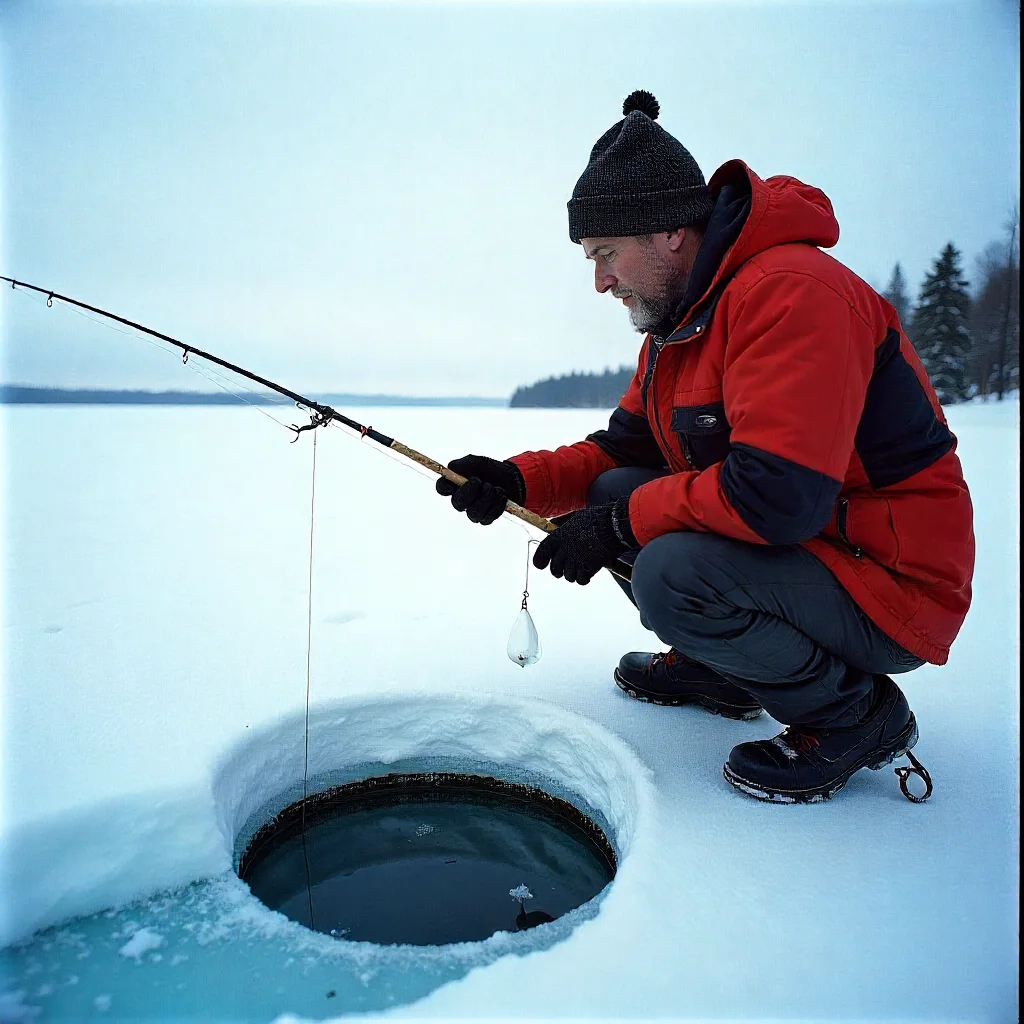
Always check with local bait shops or state fish and wildlife agencies before venturing onto ice. The general safety standard requires minimum 4 inches of solid, clear ice to support one person walking. This thickness typically develops after approximately one week of consecutive nights with below-freezing temperatures. However, ice thickness varies dramatically across single water bodies due to currents, springs, varying depths, and sun exposure patterns.
New clear ice is strongest, while white cloudy ice contains air bubbles reducing strength by approximately 50%. Gray ice indicates water presence and should be avoided entirely. Never trust ice appearance alone—always measure thickness directly using spud bars or ice chisels as you move across frozen surfaces. For comprehensive safety guidance including late-season considerations, review our March ice fishing safety tips.
What safety equipment do I need for ice fishing?
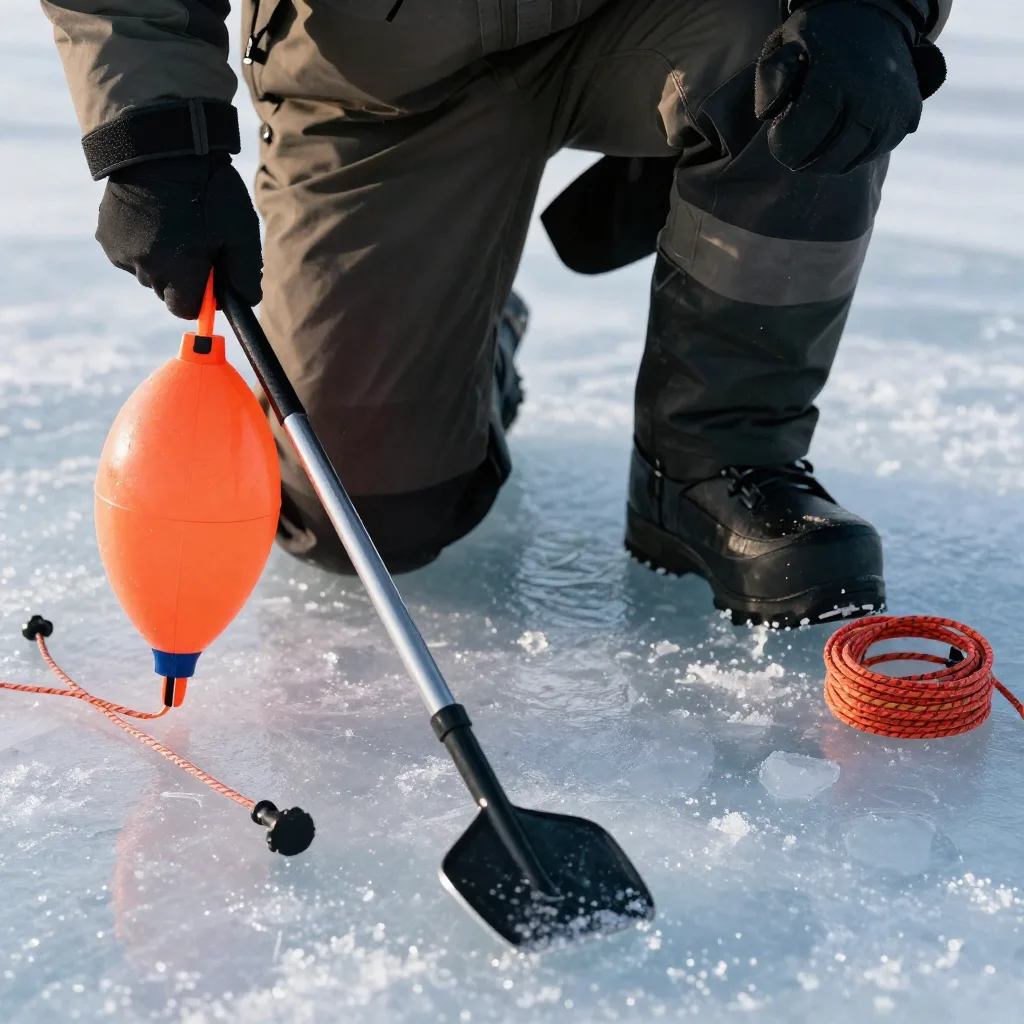
Essential safety equipment includes ice picks (rescue claws) worn on lanyards around your neck, which provide grip to pull yourself from water onto ice during breakthrough emergencies. Personal flotation devices or float suits keep your head above water until rescue arrives—avoid inflatable PFDs as extreme cold inhibits CO2 cartridge function. Throw ropes measuring 50+ feet assist others or create anchor points during emergencies.
Ice cleats worn over boots dramatically improve traction on slippery surfaces, preventing dangerous falls. Carry waterproof first aid kits with bandages, antiseptic, and hand warmers. Never fish alone, especially as a beginner, and always inform someone about your location and expected return time. Emergency whistles signal for help when visibility drops or assistance becomes necessary. These safety items represent insignificant investments compared to life-saving value they provide.
Equipment and Gear Questions
What equipment do I need to start ice fishing?
Basic ice fishing equipment includes a specialized ice fishing rod measuring 24-36 inches long, ice auger for drilling holes, ice scoop for removing slush, small jigs and hooks, live bait or artificial lures, bucket or chair for seating, and warm layered clothing. Ice fishing rods use float bobbers or spring bobbers as strike indicators to detect subtle bites. If you cannot purchase new rods immediately, borrow from fellow anglers or visit local bait shops that often rent equipment.
When fishing established community spots (“shanty towns”) during moderate weather, open holes typically exist, potentially eliminating auger requirements initially. However, owning an auger provides mobility to explore new areas and adjust to changing fish locations. For comprehensive equipment recommendations, explore our beginner ice fishing guide.
Which is better: power auger or hand auger?
Both auger types work effectively, with advantages depending on specific situations. Hand augers perform excellently during early season when ice remains relatively thin (4-12 inches), operate quietly to avoid spooking fish, require no fuel or maintenance, and cost significantly less than power options. The physical exertion provides exercise and remains manageable for reasonably fit anglers.
Power augers—whether gas, electric, or propane—excel mid-season when ice thickness exceeds 12 inches, making hand drilling exhausting. Electric cordless augers offer optimal balance, providing ample power without gas fumes, noise pollution, or fuel handling. Modern lithium batteries drill 20-40 holes per charge depending on ice thickness. Power augers enable greater mobility by reducing drilling effort, allowing you to explore multiple locations efficiently. When using power augers, plant feet firmly and avoid excessive downward pressure that might throw off balance. For detailed equipment comparisons, consult our ice fishing gear buying guide.
Can I use my regular fishing rod for ice fishing?
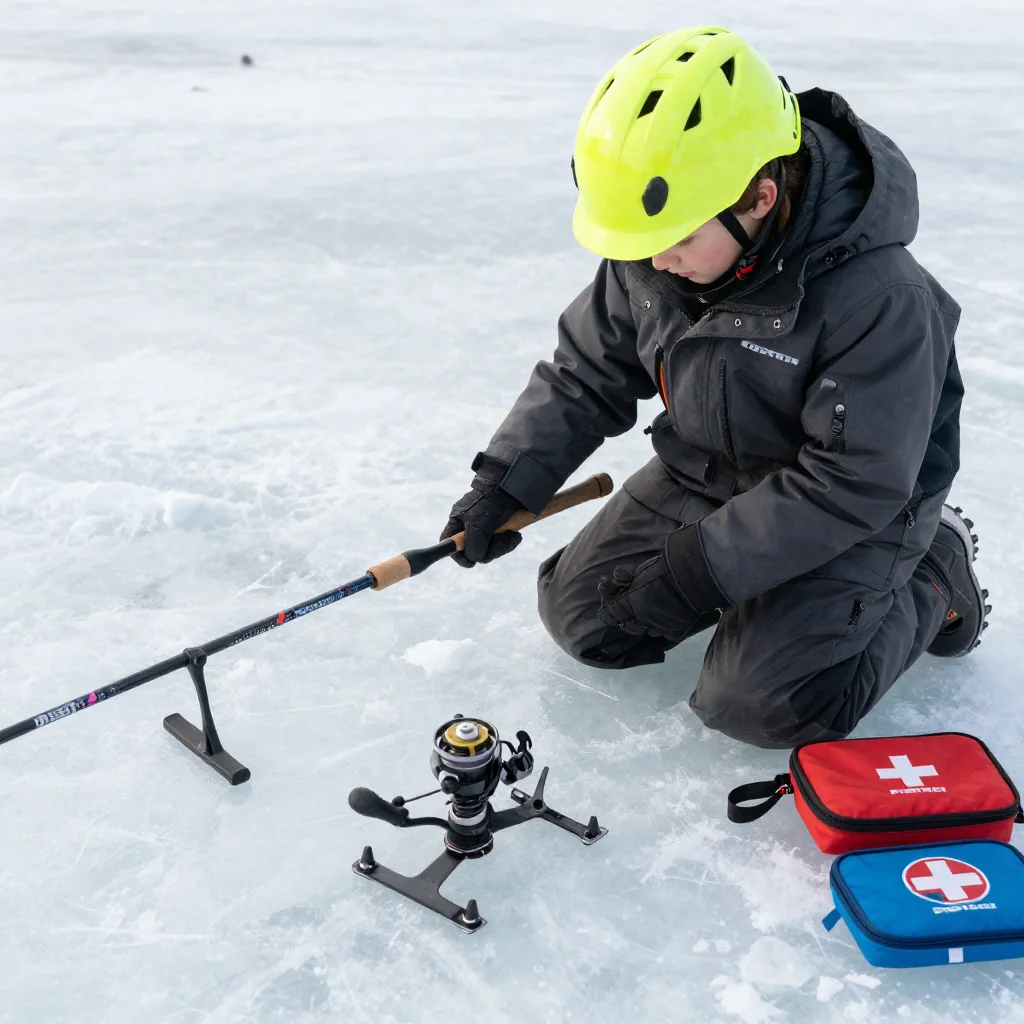
Ice fishing rods are specifically designed with short lengths (24-36 inches) that allow comfortable fishing while seated close to holes. This compact design keeps you out of cold wind while providing adequate sensitivity to detect light winter bites. Standard open-water rods prove excessively long and cumbersome for ice fishing applications.
However, if purchasing specialized equipment immediately presents financial barriers, borrow ice fishing rods from friends or rent them from local tackle shops to start. Many anglers willingly loan equipment to newcomers, and bait shops near productive ice fishing waters typically maintain rental inventories. Once you’ve confirmed your interest in ice fishing, invest in quality ice-specific rods that dramatically improve your experience.
Location and Target Species
Where should I ice fish on a lake?
Before your first trip, call local bait shops to verify ice thickness safety and request lake maps showing productive areas. Bait shop staff provide invaluable local knowledge about current fishing success locations and effective techniques. Most state fish and wildlife agencies maintain websites with downloadable lake maps showing depth contours and structure.
The best early-ice starting location typically involves the largest weed bed on the lake, as vegetation holds panfish, crappie, and predators feeding on baitfish concentrated there. Look for previously drilled holes indicating recent fishing activity—these spots likely produced results. In established “shanty towns” (groups of ice shelters close together), check holes showing the most fishing activity through equipment, tracks, and obvious use. Don’t hesitate asking other ice anglers for advice—the hardwater fishing community embraces welcoming, helpful attitudes toward newcomers.
What types of fish can I catch ice fishing?
Ice fishing targets diverse species depending on geographic location and water body characteristics. Shallow water weed beds throughout the Midwest predominantly hold bluegill and crappie—both excellent beginner targets providing consistent action. Yellow perch inhabit colder, deeper lakes especially throughout the Dakotas, providing exceptional eating quality. Northern pike and muskellunge represent top predators that anglers target using tip-ups rigged with large live minnows.
Walleye provide premier winter fishing across northern states and Canada, often concentrated near rocky spawning areas and basin edges. Lake trout inhabit deep, cold lakes throughout northern regions and mountain reservoirs. Largemouth and smallmouth bass remain catchable through ice in many jurisdictions where open seasons permit winter harvest. For species-specific tactics, explore our guide on ice fishing for panfish.
Bait, Lures, and Techniques
What is the best bait for ice fishing beginners?
Always stop at local bait shops before fishing to ask what fish have been biting recently. Current conditions and fish preferences change frequently, making real-time local knowledge invaluable. Generally, live bait outperforms artificial lures, particularly for beginners still learning presentation techniques.
Small jigs—preferably tungsten for rapid sink rates—tipped with maggots (also called spikes or Eurolarvae) represent ideal beginner presentations. Fine-tune maggot numbers from single specimens to fully loaded hooks depending on fish preferences. Waxworms provide another excellent live bait option with slightly larger profile than maggots. Prevent bait freezing by storing containers in closed packs or jacket pockets where body heat maintains appropriate temperatures.
Live minnows excel for targeting larger predators like walleye, pike, and crappie. Some anglers prefer artificial plastics because they never die, come in multiple colors and sizes, and eliminate live bait care requirements. However, artificial presentations demand more technique and experimentation than live bait, making them better suited for anglers after gaining experience.
Live bait or artificial lures—which is better?
Live bait almost always outperforms artificial presentations, especially for beginners and during challenging conditions when fish become selective. The scent, natural movement, and familiar appearance of live bait triggers strikes from even the most cautious fish. Maggots, waxworms, minnows, and mealworms represent proven live bait options.
However, artificial lures offer distinct advantages including no special storage requirements, unlimited reusability, color variety, and no concerns about freezing. Experienced anglers often prefer plastics, tungsten jigs, and blade baits that allow rapid presentations covering water efficiently. Many successful ice anglers compromise by tipping artificial lures with small pieces of live bait, combining both advantages. For comprehensive tackle recommendations, review our ice fishing line selection guide.
What ice fishing technique should beginners try first?
The simplest and most successful beginner technique involves jigging from bottom upward until you find the depth zone where fish are actively biting. Lower your bait or lure to the bottom, then jig (lift and drop your rod tip rhythmically) for 30-60 seconds. If no bites occur, reel up approximately one foot and repeat the jigging process. Continue this systematic approach, moving up one foot at a time until you encounter fish activity.
Once you discover the productive depth zone, focus subsequent presentations at that specific level. Fish often suspend at consistent depths throughout the day, making this knowledge immediately applicable to additional holes you drill. Always check fishing reports or online forums for current local information before trips. The best aspect of ice fishing involves fish telling you exactly what they want through their behavior—you simply need to pay attention and adapt.
Ice Conditions and Fishing Success
What are signs above ice indicating fish below?
When ice surfaces display snow cover, look for previously drilled holes indicating recent fishing activity. These locations likely produced catches, making them logical starting points. In established shanty towns featuring groups of shelters close together, identify huts showing the most activity through vehicle tracks, footprints, and obvious recent use. Popular holes typically produce consistent action.
However, don’t limit yourself to previously fished holes if they fail to produce. Fish move throughout the day following food sources and comfort zones. Electronics like flashers dramatically improve fishing efficiency by showing fish presence before committing extended time to specific holes. Without electronics, systematic drilling across depth gradients helps locate active fish concentrations.
How do I know what depth to fish?
Check fishing reports, online forums, or ask local bait shop staff about current productive depths before your trip. Different species prefer different depths—panfish often concentrate in 5-15 feet around vegetation, while walleye and lake trout inhabit 20-50 feet near structure or basin edges. Water clarity, weather conditions, and time of day all influence fish depth preferences.
When uncertain, use the systematic jigging approach described above, starting from bottom and working upward. Many ice anglers set tip-ups at varying depths simultaneously, letting fish reveal their preferences. Electronics provide real-time depth readings and display fish locations, dramatically shortening the searching process. Without sonar, patience and systematic exploration eventually locate active fish.
Family Activities and Social Aspects
What other activities can I do while ice fishing?
Kids naturally find entertainment playing on ice and in surrounding snow. Most times, additional activities aren’t necessary—children create their own fun building snow forts, ice skating on cleared areas, or exploring surroundings. Family gatherings become more enjoyable when hot food is available, so bring portable grills and cook hot dogs, brats, or warm snacks. These meals transform fishing trips into memorable events regardless of catch success.
Plan to make friends with other ice anglers and bring extra food and hot beverages to share. The social atmosphere distinguishes ice fishing from other angling pursuits, creating community experiences on frozen lakes. Between fishing sessions, families enjoy snowshoeing, sledding, or simply walking across frozen landscapes. For comprehensive family ice fishing guidance, explore our ice fishing with kids tips.
Getting Started Logistics
Do I need a fishing license for ice fishing?
Yes, ice fishing requires valid state fishing licenses for all anglers above minimum age requirements (typically 16 years old, though age limits vary by jurisdiction). Purchase licenses through state fish and wildlife agency websites or at authorized vendors including sporting goods stores and bait shops. Some states offer free ice fishing weekends annually—Minnesota’s “Take A Kid Ice Fishing Weekend” allows adults to fish free when accompanied by children 15 and under.
Carry licenses while fishing and present them immediately when conservation officers request inspection. Many jurisdictions now offer digital licenses accessible through smartphone applications. For detailed licensing information, consult our ice fishing license guide.
Where are the best ice fishing destinations for beginners?
Lake of the Woods in Minnesota represents North America’s premier beginner-friendly ice fishing destination due to full-service resorts offering heated ice houses, equipment rentals, and guide services. Devils Lake in North Dakota provides exceptional perch action with heated fish house rentals that keep families comfortable. Closer options include researching family ice fishing destinations near your location.
For regional options, explore ice fishing lakes in Ohio or review our guide to top North American ice fishing destinations. Begin at smaller local lakes with established ice fishing communities where you can learn from experienced anglers before attempting remote or challenging waters.
Conservation and Ethics
How many fish should I keep?
Keep only what you’ll consume for one or two meals rather than harvesting legal limits unnecessarily. Overharvesting depletes fish populations, particularly in smaller lakes with limited reproduction. Practice catch and release in heavily fished areas to preserve quality fishing for everyone. Avoid keeping exclusively large fish—these represent prime breeding stock. Instead, harvest mid-sized specimens that provide excellent eating while preserving small growing fish and large spawning adults.
Follow all size and bag limit regulations strictly. For comprehensive conservation guidance, review our sustainable ice fishing practices article.
Conclusion
Ice fishing offers accessible winter outdoor adventure combining fishing excitement with unique hardwater experiences unavailable during open-water seasons. Understanding fundamental safety protocols, equipment requirements, target species, techniques, and general expectations transforms uncertain beginners into confident ice anglers prepared for successful winter fishing. These frequently asked questions address the most common concerns newcomers face when contemplating their first ice fishing adventures.
Safety always takes priority—verify ice thickness through multiple sources, carry essential safety equipment, and never venture alone. Start with basic equipment including ice fishing rods, augers, small jigs, live bait, and warm clothing. Seek productive locations by consulting local bait shops, researching lake maps, and observing where experienced anglers concentrate. Employ simple techniques like systematic jigging from bottom upward, adapting to what fish behavior reveals.
Whether you’re exploring premier destinations, learning proper line selection, or planning family trips, comprehensive preparation ensures positive first experiences that build lifelong passion for ice fishing.