
This post contains affiliate links. As an Amazon Associate, I earn from qualifying purchases at no extra cost to you.
The frozen lake stretches before you like a vast white canvas, silent except for the occasional crack and groan of ice settling. Beneath your feet lies a world of active fish, hungry and waiting. Ice fishing transforms winter from a season to endure into an adventure to embrace—but only if you understand the fundamentals of safe ice, proper gear, and effective techniques.
I’ll never forget my first ice fishing trip. Bundled in layers I could barely move in, drilling my first hole through 8 inches of clear ice, then dropping a line into the dark water below. The anticipation, the cold, the complete stillness—and then, twenty minutes later, the explosive strike that bent my rod and launched me from my bucket seat. That first pike through the ice hooked me for life.
Whether you’re curious about trying ice fishing for the first time or looking to refine your technique, this comprehensive guide covers everything from ice safety fundamentals to species-specific tactics. Let’s explore how to ice fish successfully while staying safe on frozen water.
Understanding Ice Safety: The Foundation of Ice Fishing
Before discussing gear or techniques, we must address the most critical aspect of ice fishing: ice safety. More fishermen die from falling through thin ice than from any other fishing-related cause. Understanding ice thickness, quality, and safety protocols isn’t optional—it’s essential.
How Thick Should Ice Be for Ice Fishing?
The question “how thick should ice be for ice fishing” ranks among the most searched ice fishing queries, and for good reason. Your life depends on accurate answers. Here are the universally accepted ice thickness guidelines:
Ice Thickness Safety Chart:
- Under 4 inches: STAY OFF—unsafe for any activity
- 4 inches: Minimum for ice fishing on foot (one person)
- 5-7 inches: Snowmobile or ATV travel
- 8-12 inches: Small cars or light pickup trucks
- 12-15 inches: Medium trucks
Critical Important Note: These guidelines apply to new, clear, solid ice on lakes and ponds without current. White ice or “snow ice” is only half as strong as clear ice—you need double the thickness for equivalent safety.
I measure ice thickness every single trip, even on lakes I fish regularly. Ice doesn’t freeze uniformly. You might find 8 inches near shore and only 3 inches fifty feet away. Springs, currents, underwater structures, and even schools of fish moving warm bottom water can create dangerously thin spots.
Ice Color: Reading Nature’s Warning Signs
Ice color tells you critical information about ice quality and safety:
Clear Blue/Black Ice: The strongest ice. New formation with minimal air bubbles or impurities. This is what you want to see.
White/Milky Ice: Contains snow, air bubbles, or has partially melted and refrozen. Only about 50% as strong as clear ice. Proceed with extreme caution.
Gray to Dark Black: Melting ice. This can occur even when air temperature stays below freezing. STAY OFF—this ice is weak and cannot support weight.
Dangerous Ice Conditions to Avoid
Certain conditions create weak ice that no amount of thickness makes safe:
Flowing Water Areas: Streams, rivers, inlets, outlets, bridges, and culverts create current that prevents solid ice formation. River bends are particularly dangerous due to faster current on the outside edges.
Spring Holes: Underwater springs bring warmer groundwater that thins ice from below. These invisible hazards create death traps on otherwise safe ice.
Pressure Ridges: Where ice sheets collide and push upward, creating cracks and weak zones. These areas never freeze as solidly as flat ice.
Vegetation and Structure: Docks, fallen trees, large rocks, and thick vegetation absorb sunlight, warming the surrounding water and thinning nearby ice. Give these areas wide berth.
Snow-Covered Ice: Heavy snow insulates ice, slowing or stopping freezing. Snow also adds weight that can crack ice. Additionally, snow hides cracks, thin spots, and open water.
Slushy Ice: Ice covered in slush indicates melting, water seepage through cracks, or ice saturated with water. This extremely dangerous condition can occur mid-winter during warm spells.
Essential Ice Safety Equipment
Never venture onto ice without proper safety equipment. This gear can literally save your life:
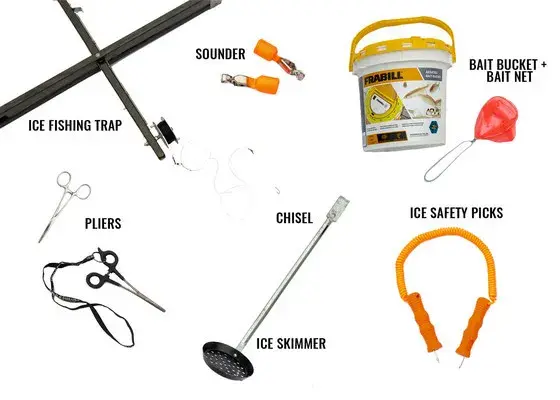
Ice Picks/Ice Awls: Worn around your neck for instant access. If you break through, these picks provide the grip needed to pull yourself back onto solid ice. Without them, the wet, slippery ice surface makes escape nearly impossible.
Spud Bar/Ice Chisel: A 4-5 foot metal bar with a sharpened chisel end. Strike the ice with it as you walk—if it penetrates with one blow, the ice is too thin. Turn back immediately.
Throw Rope: 50-100 feet of floating rope to throw to someone who breaks through. Practice throwing it before you need it in an emergency.
Life Jacket or Float Suit: Modern ice fishing suits with built-in flotation keep you afloat if you go through. A traditional life jacket under your winter gear works too. Note: Don’t wear flotation in enclosed vehicles on ice.
Whistle: Attached to your life jacket. If you go through and can’t yell for help, a whistle carries much farther than your voice.
Ice Cleats: Strap-on traction devices for boots. Slippery ice causes falls and makes escape from water extremely difficult. Cleats provide the traction needed for safety.
For comprehensive information on ice fishing safety, including rescue procedures and emergency protocols, check our detailed guide.
Ice Fishing Gear: What You Actually Need
Ice fishing requires specialized equipment, but beginners don’t need to spend thousands. Here’s what you actually need versus what’s nice to have.
Essential Ice Fishing Gear for Beginners
Ice Auger ($40-400): The single most important ice fishing tool. You need to drill holes through ice, period. Three types exist:
Hand Augers ($40-150): Manual drilling. Excellent workout, quiet operation, never runs out of gas or batteries. Best for ice under 12 inches and limited holes. I started with a hand auger and still use one for scouting new spots.
Gas Augers ($200-400): Powerful, fast, drills dozens of holes effortlessly. Loud, requires maintenance, weighs 20-30 pounds. Serious ice anglers swear by them.
Electric Augers ($200-600): Battery-powered convenience. Quiet like hand augers, easy like gas augers. The VEVOR 8-inch ice auger drill bit is an excellent budget-friendly option that attaches to your cordless drill, saving hundreds compared to dedicated electric augers. Battery life limits drilling capacity, but modern lithium batteries have made these increasingly popular.
Ice Chisel/Spud ($30-60): Dual purpose—safety tool for testing ice thickness and hole opener for thin ice. Essential even if you own an auger.
Ice Scoop ($5-15): Removes ice chips and slush from holes. Seems trivial until you’re fishing in 15°F weather trying to keep holes clear. The $8 plastic scoop is one of the best investments you’ll make.
Tip-Ups or Ice Fishing Rods:
Tip-Ups ($15-40 each): Devices that sit over holes with lines suspended at set depths. When fish strike, a flag pops up. You can legally run multiple tip-ups (check state regulations) to cover more water. Tip-ups work excellent for pike, pickerel, and other species that prefer live bait.
Ice Fishing Rods ($20-150): Shorter than regular rods (24-36 inches), designed for vertical jigging. More active fishing than tip-ups. The Ugly Stik Dock Runner spinning combo makes an excellent ice fishing rod—its legendary durability handles cold temperatures and the short length works perfectly for jigging through holes. Start with one medium-light rod for panfish and walleye.
Line and Terminal Tackle: For tip-ups, use monofilament or tip-up line (designed not to freeze). For jigging, light 4-6 lb test for panfish, 8-12 lb for walleye and pike. The PLUSINNO 547-piece tackle box provides everything you need for ice fishing—hooks, weights, lures, and accessories in one organized package. Perfect for beginners who don’t know exactly what tackle they’ll need.
Five-Gallon Bucket ($10): Serves triple duty—carries gear, provides seating, holds caught fish. The humble bucket is ice fishing’s most versatile tool.
Warm Clothing: Layered system crucial. Moisture-wicking base layer, insulating mid-layers, windproof/waterproof outer shell. Good insulated boots rated to -40°F. The KastKing Mountain Mist fishing gloves are specifically designed for ice fishing—warm enough to protect your hands yet thin enough to tie knots and handle gear. A quality balaclava or face mask completes your cold-weather protection.
Nice-to-Have Ice Fishing Gear
Once you’re committed to ice fishing, these upgrades enhance comfort and success:
Ice Shelter ($100-1000): Pop-up portable shelters provide wind protection and warmth. The Garvee pop-up ice fishing tent offers insulated protection in multiple sizes, from 1-person to 8-person capacity. These hub-style shelters set up in minutes and dramatically extend your fishing time in extreme cold. For serious winter fishing, shelters transform brutal days into comfortable ones.
Ice Fishing Sled ($30-100): Pulls your gear across ice easily. Cheaper than a snowmobile, more efficient than carrying everything in trips. Modified children’s sleds work fine for beginners.
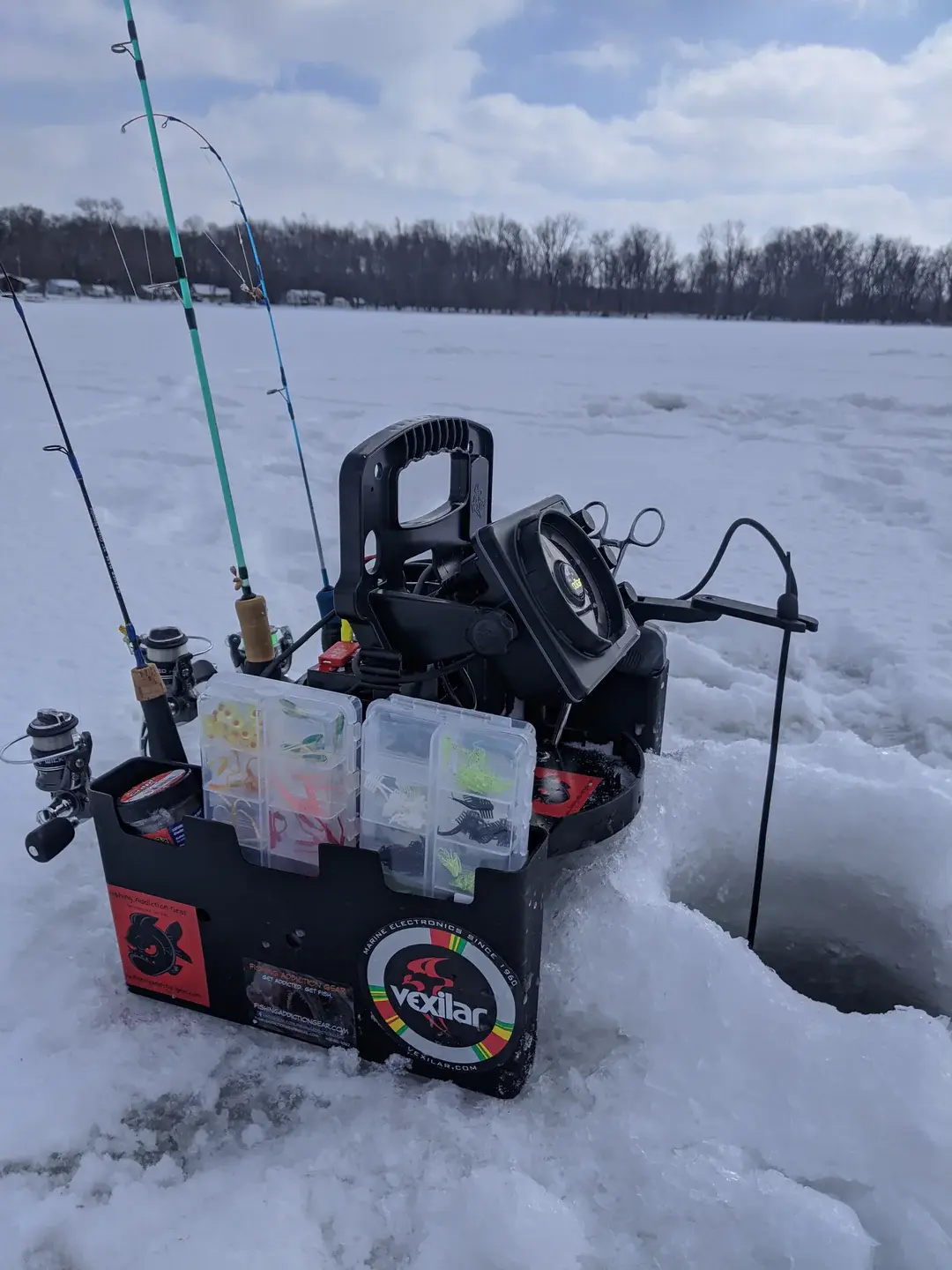
Depth Sounder/Fish Finder ($100-800): Electronics show bottom depth, structure, and fish location. Game-changing technology that separates serious ice anglers from casual ones. Modern units are specifically designed for ice fishing with flasher displays or traditional sonar.
Portable Heater ($50-150): Propane heaters make shelters comfortable. Critical: Only use in well-ventilated shelters to prevent carbon monoxide poisoning. Crack a window or door for fresh air circulation.
Flasher or Underwater Camera ($200-600): Watch fish react to your bait in real-time. Incredibly educational and effective. You’ll learn more in one day with a flasher than a month of blind fishing.
For detailed reviews of the best ice fishing gear, including specific product recommendations, check our comprehensive equipment guide.
How to Ice Fish: Step-by-Step Process
Let’s walk through an actual ice fishing trip from arrival to packing up.
Step 1: Check Ice Conditions and Weather
Before leaving home, research recent ice reports for your target water. Local bait shops, fishing forums, and social media groups share current conditions. Call ahead if possible.
Check the weather forecast. Temperature, wind, and precipitation affect both safety and comfort. Windy days make ice fishing miserable—wind chill can drop effective temperature 20-30°F below actual. Plan accordingly.
Step 2: Arrive and Assess Ice Safety
Upon arrival, observe ice color from shore. Look for cracks, dark spots, or areas with slush or standing water. Watch where other anglers are fishing—they’ve tested the ice already.
Start at the shoreline with your spud bar or chisel. Strike the ice hard. It should make a solid “thunk” and not penetrate. If your chisel breaks through easily, the ice is too thin. Turn back.
Continue testing every 10-15 feet as you move onto the ice. Conditions change with depth, bottom structure, and distance from shore. Never assume uniform thickness.
Step 3: Select Your Fishing Spot
Fish location varies by species and season. Early ice (first 2-3 weeks of safe ice) finds fish in shallower water—3-8 feet. Mid-winter pushes them deeper—12-25 feet. Late ice sees them return to shallows as oxygen decreases in deep water.
Look for structure: weed beds, drop-offs, points, humps, and creek channels. If you have a depth finder or know the lake, target these areas. If fishing blind, try multiple depths until you locate fish.
Drill several holes in your chosen area. Space them 10-20 feet apart to cover different depths and structures. More holes = more opportunities to intersect fish movements.
Step 4: Set Up Tip-Ups or Start Jigging
Setting Tip-Ups:
- Thread line through the tip-up mechanism according to manufacturer instructions
- Attach appropriate leader and hook for your target species
- Add split shot or sinker if needed to reach desired depth
- Hook live bait (minnows for pike/pickerel, shiners for trout/bass, worms for panfish)
- Lower bait to the depth you want to fish (use a depth sounder or measure with line)
- Set the flag mechanism so it triggers on strikes
- Position tip-up over hole and wait
Check regulations—most states limit tip-up numbers (typically 3-5 per angler). Space them across your area to cover different depths and locations.
Jigging Technique:
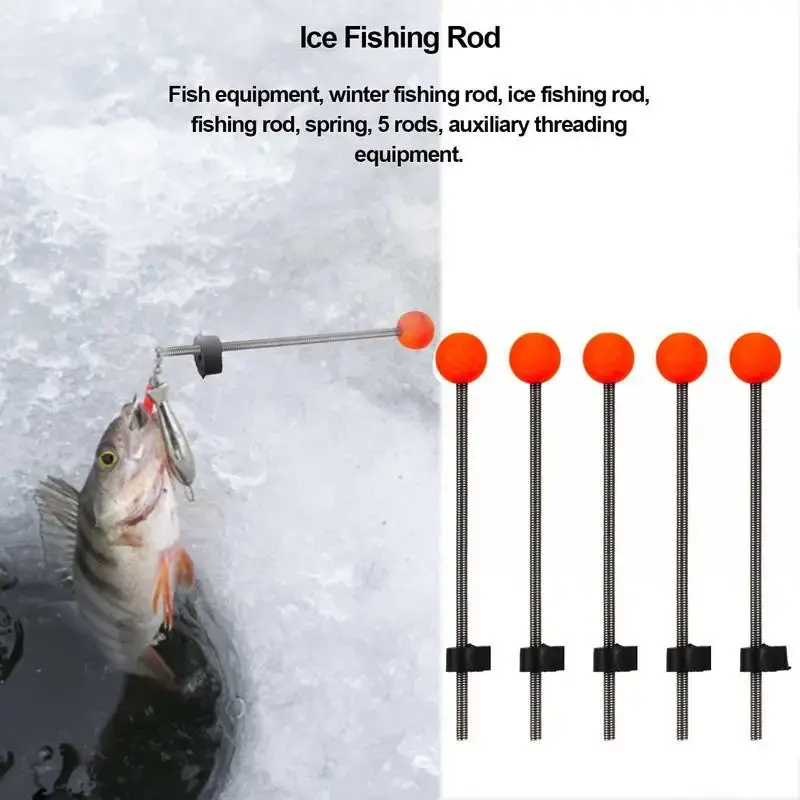
- Lower your jig or baited hook to desired depth
- Lift rod tip 6-12 inches, then let it fall back
- Vary the cadence—sometimes fast, sometimes slow, sometimes pausing
- Keep the bait moving to attract fish
- When you feel a bite, set the hook with a firm upward snap
Jigging allows you to feel bites immediately and provides more active fishing than watching tip-ups. Many anglers run tip-ups for pike while jigging for panfish or walleye.
Step 5: Stay Warm and Monitor Conditions
Every 30-45 minutes, clear ice and slush from your holes with the scoop. Holes freeze over quickly in cold weather. Keep your auger handy to re-open stubborn holes.
Stay active to maintain body heat. Walk to check tip-ups, drill exploratory holes, or adjust your jigging location. Sitting stationary in extreme cold invites frostbite and hypothermia.
Eat high-calorie snacks and drink warm liquids regularly. Your body burns tremendous energy maintaining core temperature. Avoid alcohol—it impairs judgment and actually makes you colder despite the warming sensation.
Step 6: Landing and Handling Fish
When a tip-up flag pops, walk (don’t run) to it. Running risks falling on slippery ice. Lift the tip-up and hand-over-hand retrieve the line. When you feel the fish, maintain steady pressure—don’t jerk or you’ll pull the hook.
As the fish nears the hole, slow down. Pike, pickerel, and large trout often make final runs at the hole’s edge. Let them run if needed.
Use pliers or a hook remover to extract hooks. Many fish are deeply hooked. A disgorger tool helps remove hooks from deeply hooked fish you plan to release.
Keep fish you’re taking home in a bucket with snow or on the ice. They freeze solid in cold weather—nature’s perfect preservation.
Ice Fishing Techniques by Species
Different species require different approaches. Here’s how to target the most popular ice fishing species.
Northern Pike Ice Fishing Tips
Northern pike are among the most exciting ice fishing targets—aggressive, hard-fighting, and often large. They prefer shallow to mid-depth water near weed beds, drop-offs, and rocky structures.
Best Pike Techniques:
- Use tip-ups with large 4-6 inch shiners or suckers as bait
- Set baits 2-3 feet off bottom near weed edges
- Use steel leaders—pike teeth cut through monofilament instantly
- Target early ice in 4-8 feet of water near vegetation
- Move to deeper water (12-20 feet) mid-winter
- Return to shallows late ice as they prepare for spring spawn
Pike Tip: Quick-strike rigs (two hooks on one leader) increase hooking percentage with large live baits. Pike often grab minnows sideways before turning to swallow them. Quick-strike rigs hook fish on the initial grab.
Pike ice fishing generates tremendous excitement. The flags pop up, you sprint over (carefully), grab the line, and feel that heavy weight fighting back. These fish make ice fishing addictive. For comprehensive northern pike ice fishing tips, including seasonal patterns and rigging details, see our species guide.
Ice Fishing Techniques for Trout
Ice fishing for trout requires finesse compared to pike’s aggressive approach. Trout have excellent vision and can be extremely selective, especially on clear lakes with fishing pressure.
Trout Ice Fishing Tactics:
- Use light line (2-4 lb test) and small baits or lures
- Target depths of 15-30 feet mid-winter
- Early and late ice, fish 8-15 feet near structure
- Small ice jigs tipped with waxworms or spikes (maggots)
- Micro spoons in silver, gold, or glow colors
- Jigging should be subtle—trout don’t like aggressive action
- Set tip-ups with small shiners or smelt suspended at various depths
Rainbow vs. Lake Trout: Rainbow trout prefer shallow to mid-depths (10-20 feet) near weed edges. Lake trout go deep (30-80+ feet) over rocky bottom and drop-offs. Lake trout require different tackle—heavier line, larger baits, and serious patience.
The beauty of trout ice fishing lies in the challenge. These fish test your skills with light tackle and selective feeding. Landing a 3-lb rainbow through an 8-inch hole on 3-lb line takes technique and nerve.
Panfish: Bluegill, Crappie, and Perch
Panfish provide the most consistent ice fishing action. They school heavily, bite readily, and taste delicious. Perfect for beginners and families.
Panfish Techniques:
- Drill multiple holes across different depths (5-20 feet)
- Use micro ice jigs or small teardrop jigs
- Tip jigs with waxworms, spikes, or mousies (rat-tailed maggots)
- Subtle jigging—lift and drop 2-4 inches with pauses
- Once you find a school, stay put—panfish move in groups
- Target weed edges, drop-offs, and brush piles
- Morning and evening feed most actively
Bluegill vs. Crappie: Bluegill prefer shallower, weedy areas and bite throughout the day. Crappie suspend in deeper water (12-20 feet) over structure and feed most actively at dawn and dusk. Yellow perch roam in schools over sandy or rocky bottom in 10-25 feet of water.
Panfish ice fishing is pure fun. Fast action, constant bites, and a bucket full of fillets by day’s end. This is where most ice anglers cut their teeth and where we return when we just want to catch fish.
Ice Fishing Tips for Consistent Success
These advanced tips separate successful ice anglers from those who struggle:
Mobility Wins
The biggest mistake beginners make is setting up in one spot and staying there all day. Fish move. Successful ice fishing requires mobility—drill holes, fish them 15-20 minutes, and move if nothing bites.
Modern ice anglers drill 20-40 holes per day. It sounds excessive, but fish are constantly on the move under ice. The “run and gun” approach consistently outproduces sitting on one hole hoping fish appear.
Electronics Change Everything
A quality ice fishing flasher or fish finder transforms guesswork into precision. The Eyoyo underwater camera lets you see:
- Exact bottom depth and composition (hard vs. soft)
- Fish appearing and leaving your bait in real-time
- How fish react to different jigging cadences
- Whether fish suspend or hug bottom
- Species identification before you hook them
I resisted electronics for years, thinking they took away from “pure” fishing. Then I tried one. Within an hour I understood why tournament anglers consider them essential. Watching fish approach your bait in real-time provides feedback that accelerates learning exponentially.
Match Bait to Conditions
Clear water and heavy fishing pressure require small baits, light line, and subtle presentations. Stained water or aggressive fish allow larger, flashier presentations.
Early ice typically means aggressive fish and easier fishing. Mid-winter often slows down as fish become lethargic in cold water. Late ice sees activity increase as fish prepare for spawn.
Adjust your approach to conditions rather than fishing the same way regardless of factors.
Keep Holes Clear
Slush and ice buildup in holes reduces oxygen and makes bait presentations unnatural. Skim holes every 20-30 minutes. This small effort dramatically improves catch rates.
Fish Prime Times
Fish feed most actively during low-light periods—dawn and dusk. Plan to be on the ice and fishing before sunrise. The hour before sunset often produces a feeding frenzy.
That said, panfish, perch, and trout often bite throughout the day in winter. Pike tend to be most active at dawn, mid-morning, and dusk.
Safety Never Takes a Day Off
Complacency kills. Check ice thickness regularly even on lakes you’ve fished all winter. Warm spells thin ice quickly. Always fish with a partner and carry safety equipment.
Tell someone your plans—where you’re fishing, when you’ll return. Carry a fully charged cell phone in a waterproof bag. These simple steps save lives every winter.
Frequently Asked Questions About Ice Fishing
How do you ice fish for the first time?
Start with an experienced ice angler if possible—nothing beats learning firsthand from someone who knows. Otherwise, begin on small ponds with known safe ice (4+ inches clear). Rent or borrow gear initially to minimize investment. Focus on panfish—they’re easiest to catch and most forgiving of mistakes. Join an ice fishing group or forum online before your trip to get current conditions and advice.
How long can you keep fish on ice?
Ungutted fish last 1-2 days on ice in winter temperatures. Gutted fish stay fresh 3-5 days on ice. In below-freezing weather, fish freeze solid quickly and keep for weeks if stored properly frozen. For best quality, clean fish within 24 hours of catching. The cold preserves fish better than summer fishing, but bacteria still grows—prompt cleaning ensures best taste.
How long will ungutted fish last on ice?
In winter ice fishing conditions, ungutted fish last 24-48 hours when kept cold. However, cleaning fish promptly (within a few hours) produces best flavor and texture. The fish’s digestive system contains bacteria that spreads to flesh over time. Cold slows this process but doesn’t stop it. If you can’t clean immediately, keep fish as cold as possible and clean within two days maximum.
How thick ice for ice fishing safely?
Minimum 4 inches of clear, solid ice for one person on foot. This is absolute minimum—many experienced anglers won’t venture onto less than 5 inches. Remember that white ice or snow ice requires double the thickness for equivalent safety. Always test ice thickness personally with spud bar or auger. Don’t rely on others’ reports—ice conditions change daily.
What’s the best time of day for ice fishing?
Dawn and dusk produce most active feeding for most species. However, many ice fishing species bite throughout the day. Panfish (bluegill, crappie, perch) often feed actively mid-morning through early afternoon. Pike and walleye peak at dawn, mid-morning, and dusk. Lake trout bite throughout the day but often best in afternoon. Try different times to learn patterns on your specific waters.
Making Your Ice Fishing Adventure Safe and Successful
Ice fishing transforms winter from cabin-fever monotony into outdoor adventure. The silence of frozen lakes, the challenge of finding fish under ice, the camaraderie of ice fishing communities—these experiences make winter something to anticipate rather than endure.
But ice fishing demands respect for its inherent dangers. Every season anglers fall through thin ice, and some don’t survive. The techniques and safety protocols covered here aren’t suggestions—they’re requirements for safe ice fishing. Test ice thickness. Carry safety equipment. Never fish alone. Tell others your plans.
Start simple with basic gear on safe ice targeting panfish. Build skills and confidence before advancing to bigger species, electronics, and more elaborate setups. The learning curve is gentle if you don’t rush it.
Ice fishing opens a winter world most people never experience. Fish remain active all winter, feeding regularly despite cold water. Understanding seasonal patterns, species preferences, and proper techniques allows you to catch fish consistently while others huddle indoors assuming nothing’s biting.
Whether you’re seeking solitude on a frozen lake at dawn, teaching children to fish, or competing in tournaments, ice fishing offers something for everyone. The gear required is surprisingly minimal for beginners—a hand auger, basic rod or tip-up, warm clothes, and safety equipment gets you started.
For more information on ice fishing techniques, essential fishing gear, and species-specific tips, explore our comprehensive fishing guides. We cover everything from beginner fishing basics to advanced tournament tactics.
Now stop reading and go drill some holes. The fish are waiting beneath the ice, and winter won’t last forever. Bundle up, test that ice thickness, and experience the unique thrill of ice fishing. Just remember—safe ice first, everything else second. The best fish story means nothing if you’re not alive to tell it.
Tight lines and stay safe out there!
8 thoughts on “How to Ice Fish: Complete Guide for Beginners (Safety, Gear & Techniques)”