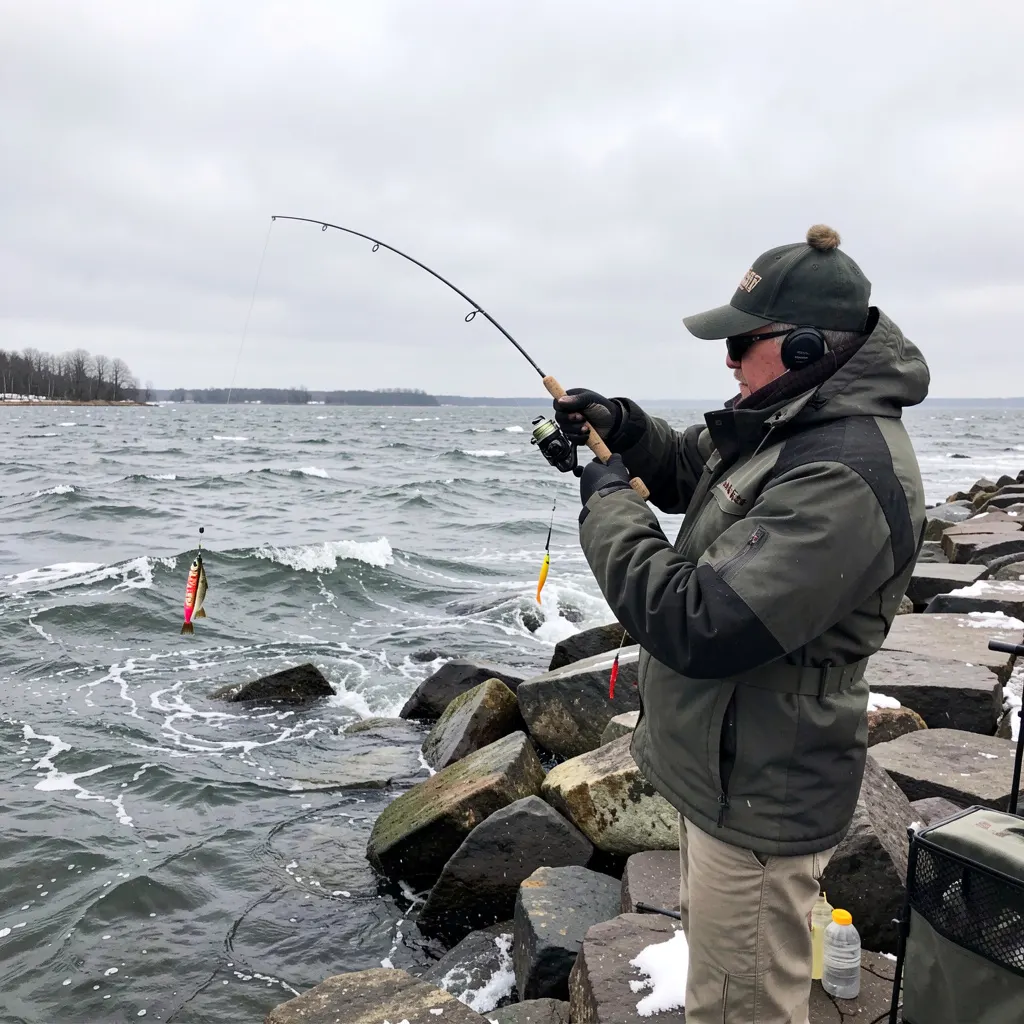
Winter bass fishing lures it just changes which lures work and how you retrieve them. When water temperatures drop below about 50°F (10°C), bass metabolism slows, they group up tighter, and they stop chasing fast baits, so every presentation has to look like an easy meal, not a race. The right cold‑water lures, fished at the right speed and cadence, will still catch largemouth and smallmouth all winter long.
Below are the top winter bass lures plus the specific retrieval methods that make them effective when the water is at its coldest.
1. winter bass fishing lures: Suspending Jerkbaits
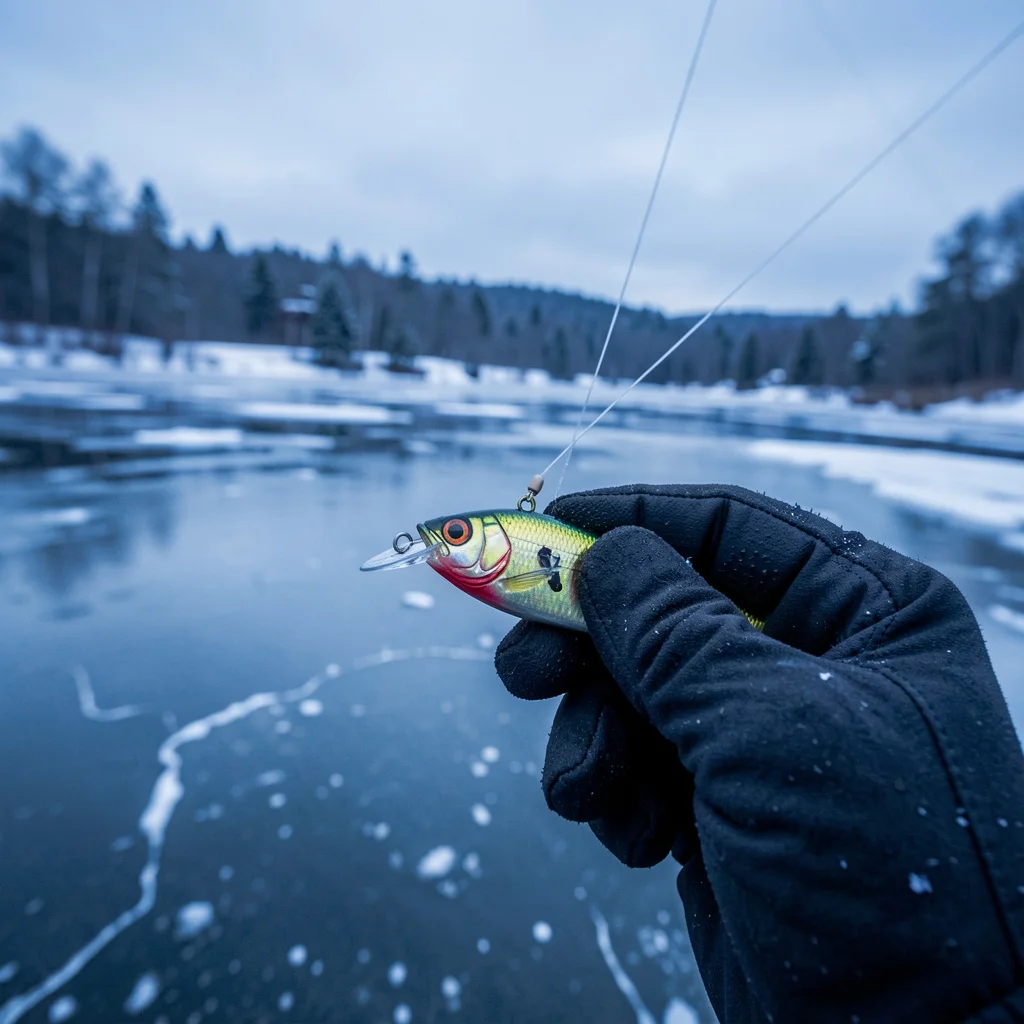
Suspending jerkbaits are arguably the most important cold‑water search bait because they perfectly mimic a dying baitfish that just hangs there in front of a lethargic bass.
When to use
- Water temp: ~45–55°F (7–13°C).
- Conditions: Clear to lightly stained water, points, steep banks, channel swings, and over bait schools.
Best retrieve
- Cast past the target, reel down to depth with a few quick cranks, then switch to short twitches with long pauses.
- Start with: two or three twitches, then a 3–5 second pause; as water gets colder (low 40s), extend pauses to 8–10+ seconds.
- Most bites feel like nothing—the bait just feels heavy when you go to twitch it again.
The key is confidence in letting the bait sit still long enough; in winter, the pause often is the retrieve.
2. Blade Baits and Jigging Spoons
Metal blade baits and jigging spoons are deadly for bass that spend winter pinned to deep structure or bait.
When to use
- Water temp: 40–48°F (4–9°C).
- Conditions: Deep flats, channel edges, humps, and around balls of bait on your sonar.
Best retrieve – vertical
- Drop straight down to bottom under the boat, lift the rod 6–12 inches until you just feel the lure vibrate, then let it fall on a semi‑slack line.
- Pause a second or two on bottom between lifts; many bites happen as the bait falls or just after it lands.
Best retrieve – cast and hop
- Cast, let it hit bottom, then work a slow lift–fall back to you along the contour.
- Think “tight, small hops” instead of big rips in super‑cold water.
Flat‑sided vibration and the flash of metal do the work—you just keep the bait close to the bottom and move it slower than feels natural.
3. Finesse Jigs and Football Jigs
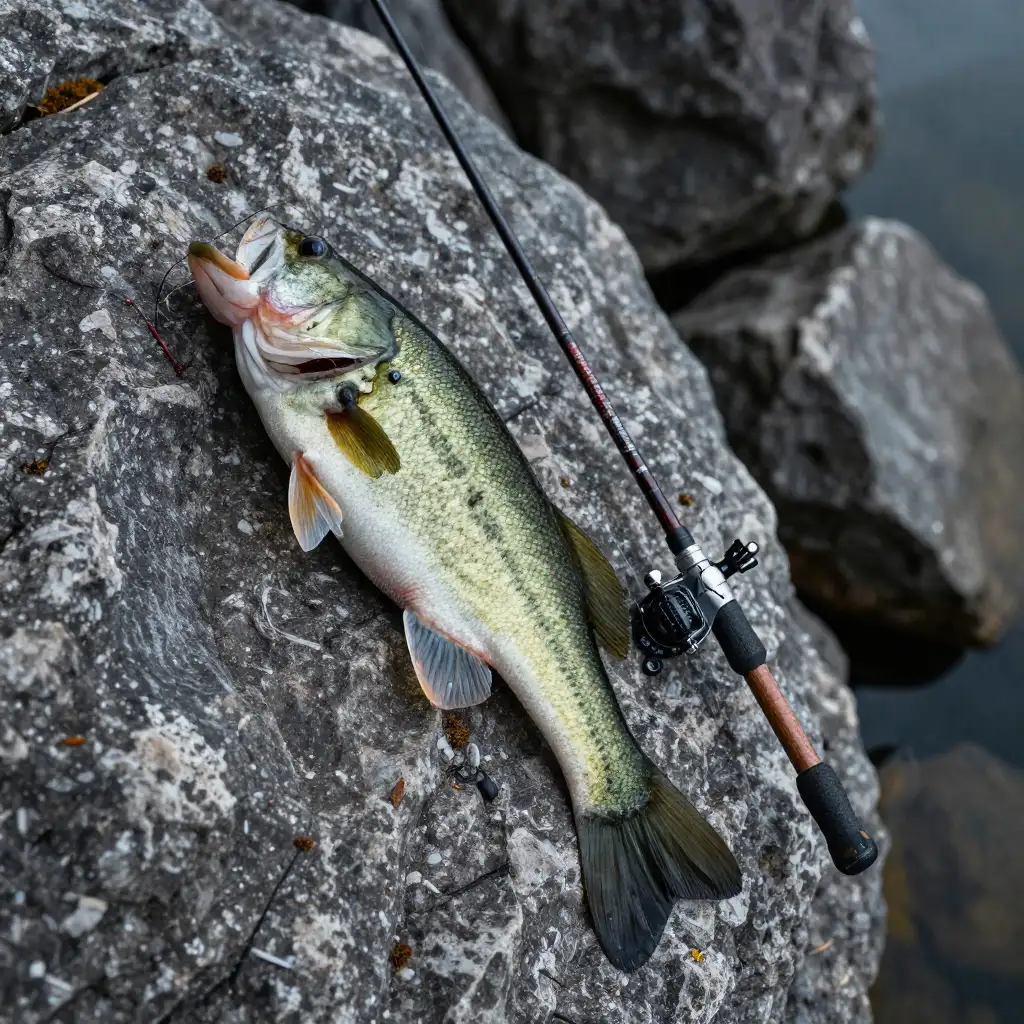
As water hits the low 40s, a compact jig dragged along bottom starts outfishing most moving baits.
When to use
- Water temp: below ~48°F (9°C), especially 40–45°F (4–7°C).
- Conditions: Rock, gravel, channel swings, and any hard bottom where winter crawfish live.
Best retrieve
- Make a long cast, let the jig settle to bottom, then drag it more than you hop it.
- Use slow rod sweeps to move it a foot or two at a time, then let it sit briefly before moving again.
- Strikes usually feel like extra weight or the jig “hanging up” rather than a sharp thump—lean into those.
Compact football finesse jigs with small trailers match the smaller cold‑water craws and give you the profile without too much bulk or action.
4. Ned Rigs, Drop Shots, and Other Finesse Plastics
When the water is cold and clear and bass are nose‑down on subtle structure, finesse plastics keep a bait in the strike zone longer than anything else.
When to use
- Water temp: 38–50°F (3–10°C).
- Conditions: Smallmouth or spotted bass on gravel, bluff ends, long points, and around isolated rock.
Best retrieve – Ned rig / micro jig
- Cast, let it hit bottom, then just drag and occasionally shake it along—think inches, not feet.
- Avoid hopping it high off bottom; keep it crawling like a tiny craw or goby.
Best retrieve – drop shot
- Drop or cast to marks on sonar, tighten up, and hold the bait barely quivering in place.
- Move the bait less than you think; often the natural movement from the boat is enough.
These subtle rigs are especially good for smallmouth that remain more active than largemouth but can be line‑shy in clear, cold water.
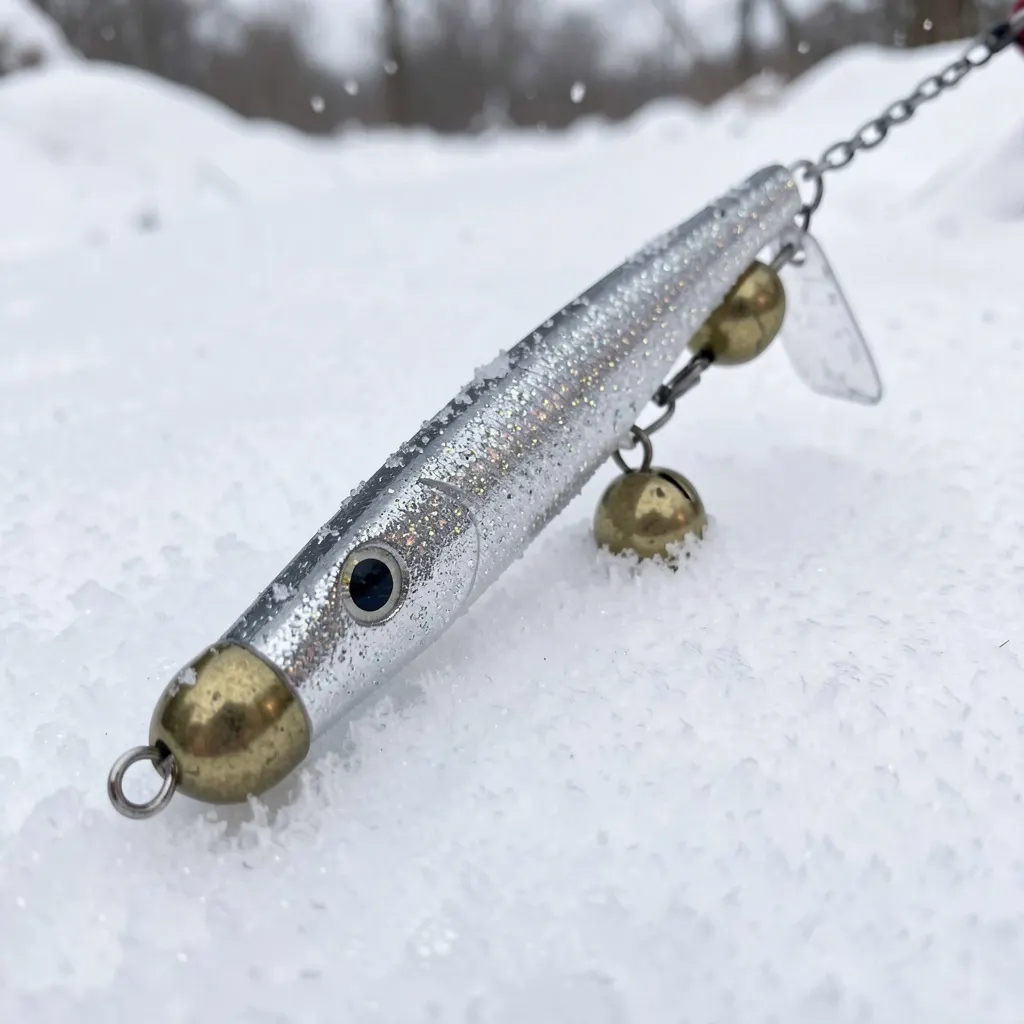
5. Flat‑Sided and Lipless Crankbaits
You don’t have to completely put away cranks in winter—flat‑sided and lipless models still produce, as long as you slow them down and keep them near bottom.
When to use
- Water temp: upper 40s to low 50s°F (8–11°C), or warmer afternoons that bump temps a degree or two.
- Conditions: 5–12 ft flats near channels, riprap, grass edges with some remaining vegetation.
Best retrieve – flat‑sided crank
- Cast, get it to depth, then use a slow, steady retrieve with occasional brief stalls.
- Let the bait “crawl” and occasionally bump rock or wood; pause for a heartbeat after deflections.
Best retrieve – lipless crank
- Slow roll it just fast enough to feel it vibrate, close to bottom or tops of grass.onthewater+1
- In deeper water, yo‑yo it: lift to feel vibration, then let it fall back on semi‑slack line.
Think “slow vibration” rather than burning—speed kills your bite rate once water dips under ~55°F.
6. Swimbaits and Underspins
Small paddletail swimbaits on jig heads or underspins can be magic when bass key on winter shad and smelt.
When to use
- Water temp: 40–50°F (4–10°C).
- Conditions: Bass tracking schools of bait off points, over timber, or on river ledges.
Best retrieve
- Count the bait down to just above the fish or cover, then reel with a slow, steady retrieve that keeps tail just kicking.
- For river smallmouth, let it hit bottom, then “slow roll” so it ticks rock occasionally.
An underspin adds flash without making the profile too aggressive, which helps in clear winter water.
7. Timing, Locations, and Retrieve Speed Rules
Lure choice is only half the equation—timing and retrieve speed are just as important in winter.
Best time of day
- Afternoons often out‑fish mornings because even a 1–2°F rise can nudge bass into short feeding windows.
- Be on your best spots when the sun has been on them a few hours—rock, riprap, and hard bottom warm fastest.
General retrieve rules in winter
- Under 55°F: slow down more than feels comfortable.
- Under 50°F: add longer pauses and smaller movements.
- Low 40s and below: near‑dead retrieves—drag, small shakes, long pauses.
In clear winter water, subtle movement and long pauses work best; in muddy or wind‑stained water, add more vibration so bass can actually find your bait.
YUM Dinger Classic Worm All-Purpose Soft Plastic Bass Fishing Lure 100 Pack, 5 Inch
6 Pcs Bass Spinner Baits, Spinner Baits for Bass Fishing Trout Salmon Hard Metal Spinnerbaits
FAQ :
How slow should I retrieve lures for winter bass?
In water under 50°F (10°C), slow down more than feels comfortable—use long pauses (5–10+ seconds for jerkbaits), small movements (6–12 inches for jigs), and barely perceptible rod shakes for finesse rigs. Speed kills bites in cold water. Speed up slightly (slow roll) only on blade baits and swimbaits when fish are actively tracking bait schools.
What is the best time of day for winter bass fishing?
Afternoons typically outfish mornings because even a 1–2°F temperature rise activates bass for short feeding windows. Target your best spots (rock, riprap, hard bottom) after the sun has warmed them for a few hours. Low light (dawn/dusk) can still work with finesse presentations.
What depth do bass hold in winter?
Largemouth often hold 8–20 feet near structure (timber, brush, steep banks); smallmouth prefer 15–35 feet on gravel, rock, and points. Watch your sonar for tight schools or bait balls—bass will be close. Vertical presentations shine over deep flats and ledges.
Do I need electronics for winter bass fishing?
Electronics dramatically increase success by showing bait schools, bottom composition, and bass locations. Focus on 2D sonar for structure and Forward Facing Sonar (FFS) if available to spot suspended fish. Without electronics, target steep transitions and hard bottom.
What colors work best for winter bass lures?
Use natural shad/smelt colors (chrome/blue, ghost minnow) in clear water and brighter options (chartreuse, orange, glow) in stained water. Subtle flash works better than loud patterns—match winter forage like small shad and craws.