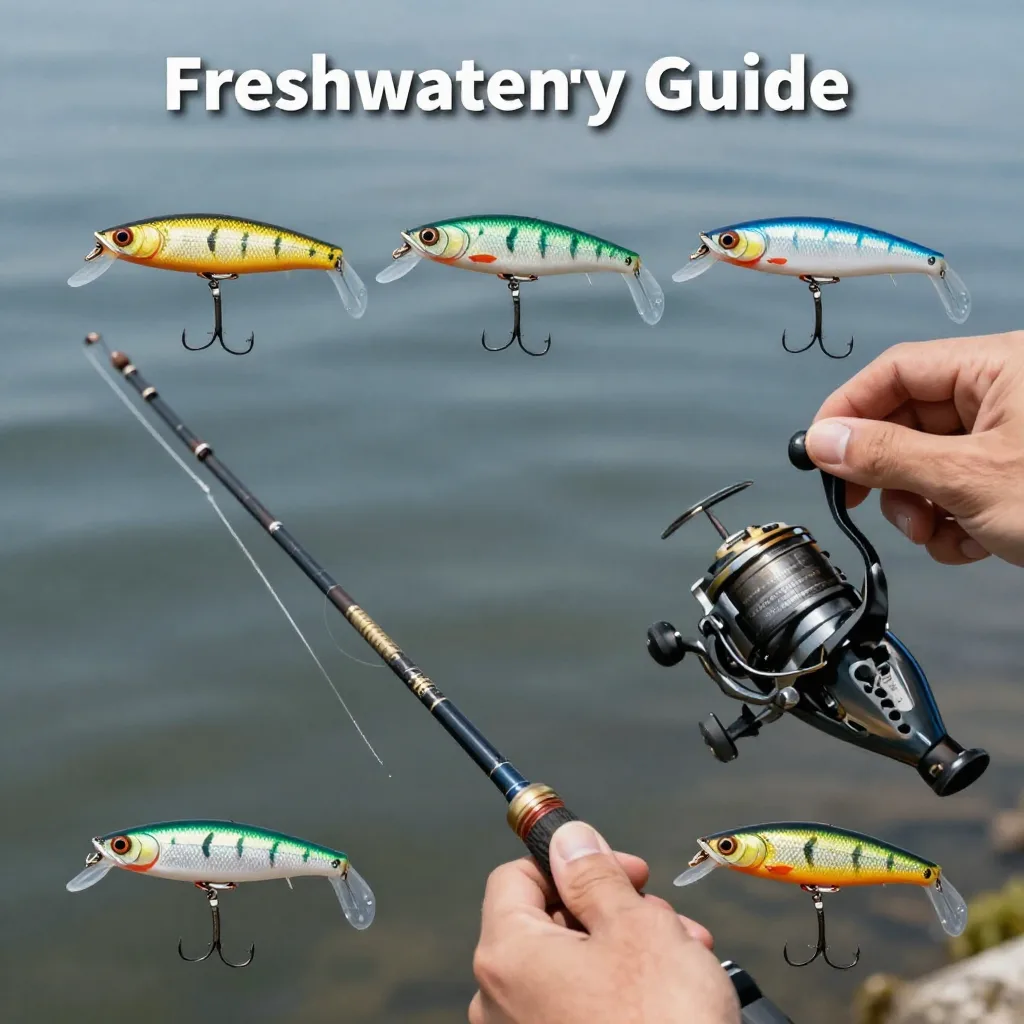
Choosing the right freshwater lure guide gets much easier when you understand what each lure family does, where it runs in the water column, and which fish it’s best at fooling. Instead of owning hundreds of random baits, you can cover almost every situation with a small, smart selection that matches depth, clarity, and fish mood.
This guide walks through the main lure types—what they imitate, when to use them, and simple retrieve ideas so you can confidently pick the right bait on any lake or river.
Freshwater Lure Guide: Crankbaits and Jerkbaits
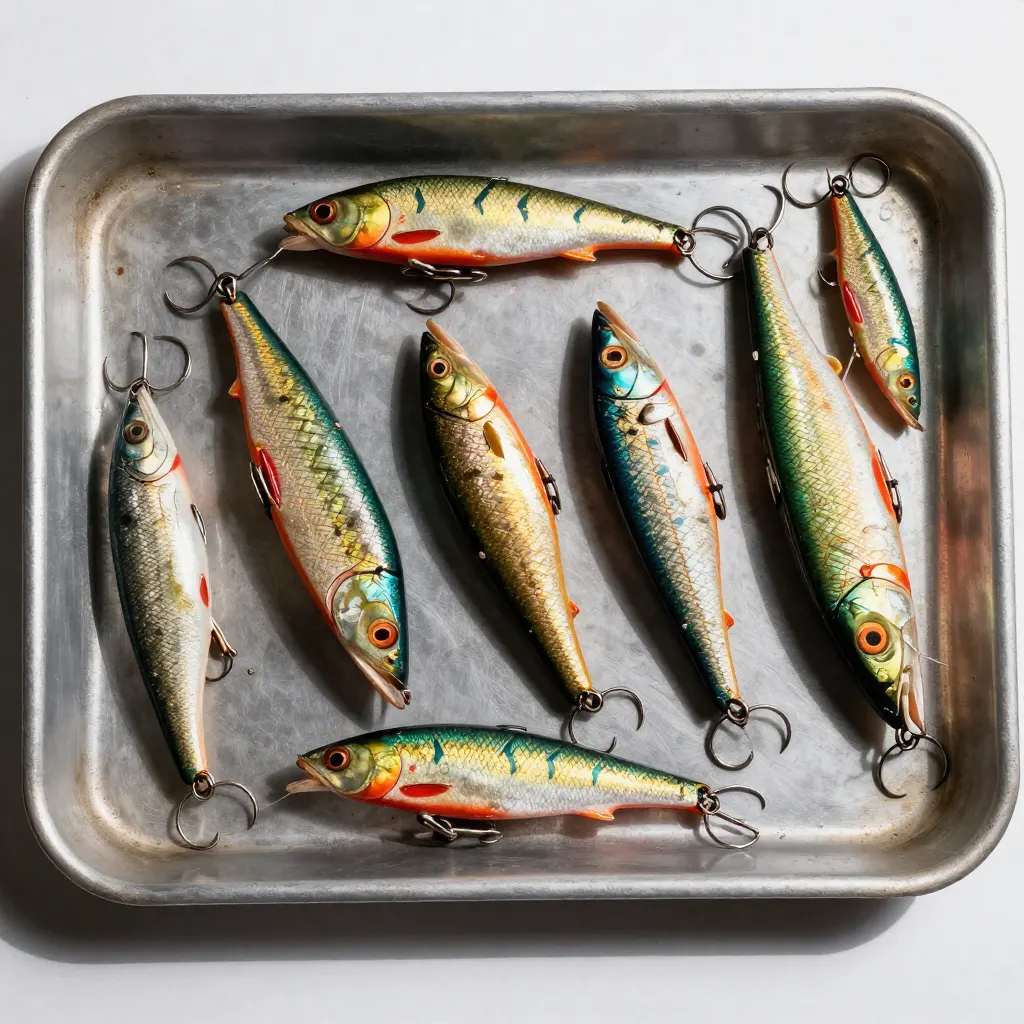
Hard baits are your search lures: they cover water fast and imitate fleeing baitfish
When to use them
- Species: Bass, walleye, trout, pike.
- Situations:
- Crankbaits: Beating shoreline cover, rocks, points, and grass edges.
- Jerkbaits: Clear water, cooler seasons, suspended fish over points or drops.
Key details
- Bill shape = depth:
- Squarebill (2–8 ft): deflects off wood and rock in the shallows.
- Round/long bill (10–20+ ft): reaches mid/deep structure.
- Lipless cranks sink and can be burned high in the column or yo‑yoed near bottom.
- Jerkbaits work best with a “twitch‑twitch‑pause” cadence; most bites come on the pause.
Use natural shad/perch colors in clear water and brighter options like chartreuse or firetiger in stained water.
Spinnerbaits and Inline Spinners
Spinnerbaits and inlines add flash plus vibration, making them easy for fish to find.
When to use them
- Species: Largemouth/smallmouth, pike, muskie; smaller inlines excel on trout and panfish.
- Situations: Windy banks, dingy water, shoreline cover, along laydowns and grass lines.
Key details
- Willow blades: more flash, less thump—better in clear water and for faster retrieves.
- Colorado blades: more thump—better in dirty water or low light.
- Simple retrieve: cast, let blades start, then reel steadily; bump into cover to trigger reaction bites.
When you’re not sure what to throw, a white or white/chartreuse spinnerbait is a high‑percentage choice.
Jigs
If you could only pick one lure family for all seasons, jigs would be near the top.
When to use them
- Species: Bass, walleye, perch, crappie—match head size and trailer to target.
- Situations: Bottom contact around rock, timber, docks, and along breaklines.
Key details
- Football jigs: dragging along rock and points.
- Flipping jigs: pitching into wood, laydowns, and grass.
- Swim jigs: straight‑retrieve through and over grass like a swimbait.
- Always add a trailer (craw, grub, swimbait) to give profile and action.
Work them slowly—small hops, drags, or shakes. Jigs excel when reaction baits stop getting bit.
Soft Plastics (Worms, Creatures, Tubes, Swimbaits)
Soft plastics are your most flexible tools: they can be fished finesse‑slow or power‑fast, anywhere from top to bottom.
When to use them
- Species: Bass, walleye, crappie, panfish, pike depending on size and rig.
- Situations: Pressured fish, cold fronts, clear water, heavy cover.
Core styles and rigs
- Worms (straight, ribbon, stick)
- Texas rig, Carolina rig, wacky rig, Ned rig.
- Creatures / craws / beavers
- Flip or pitch into wood/grass to imitate crayfish.
- Tubes
- Great for smallmouth; drag/hop across rock and sand.
- Paddle‑tail swimbaits
- Ball‑head or swimbait jig; steady retrieve near grass or over rock.
Natural colors (green pumpkin, watermelon, shad) catch fish almost everywhere.
Topwater Lures
Topwater baits don’t just catch fish; they make some of your most memorable blow‑ups.
When to use them
- Species: Largemouth, smallmouth, pike, muskie, snakehead.
- Situations: Low light (dawn/dusk), over weeds, around wood, or along shade lines.
Main types
- Poppers: short pulls to spit and “bloop” in place—great around targets.
- Walking baits: side‑to‑side “walk‑the‑dog” for covering water.
- Buzzbaits/prop baits: constant surface commotion on a straight retrieve.
- Frogs: over matted grass, pads, and heavy cover where trebles would hang.
Pause often—many bigger fish strike when the bait just sits there.
Matching Lures to Conditions
You don’t need to memorize everything; think in three lenses: clarity, depth, and mood.
By water clarity
- Clear:
- Natural colors, finessey action—jerkbaits, jigs, subtle plastics.
- Stained:
- Brighter colors and vibration—spinnerbaits, squarebills, thumping jigs.
By depth
- 0–5 ft: Topwater, weightless plastics, squarebills, light jigs.
- 5–12 ft: Medium cranks, spinnerbaits, Texas‑rigged worms, swim jigs.
- 12+ ft: Deep cranks, football jigs, Carolina rigs, drop shot / Ned rigs.
By fish mood
- Active: reaction baits (cranks, spinnerbaits, topwater, swimbaits).
- Neutral/pressured: slower, in‑their‑face baits (jigs, worms, suspending jerkbaits).
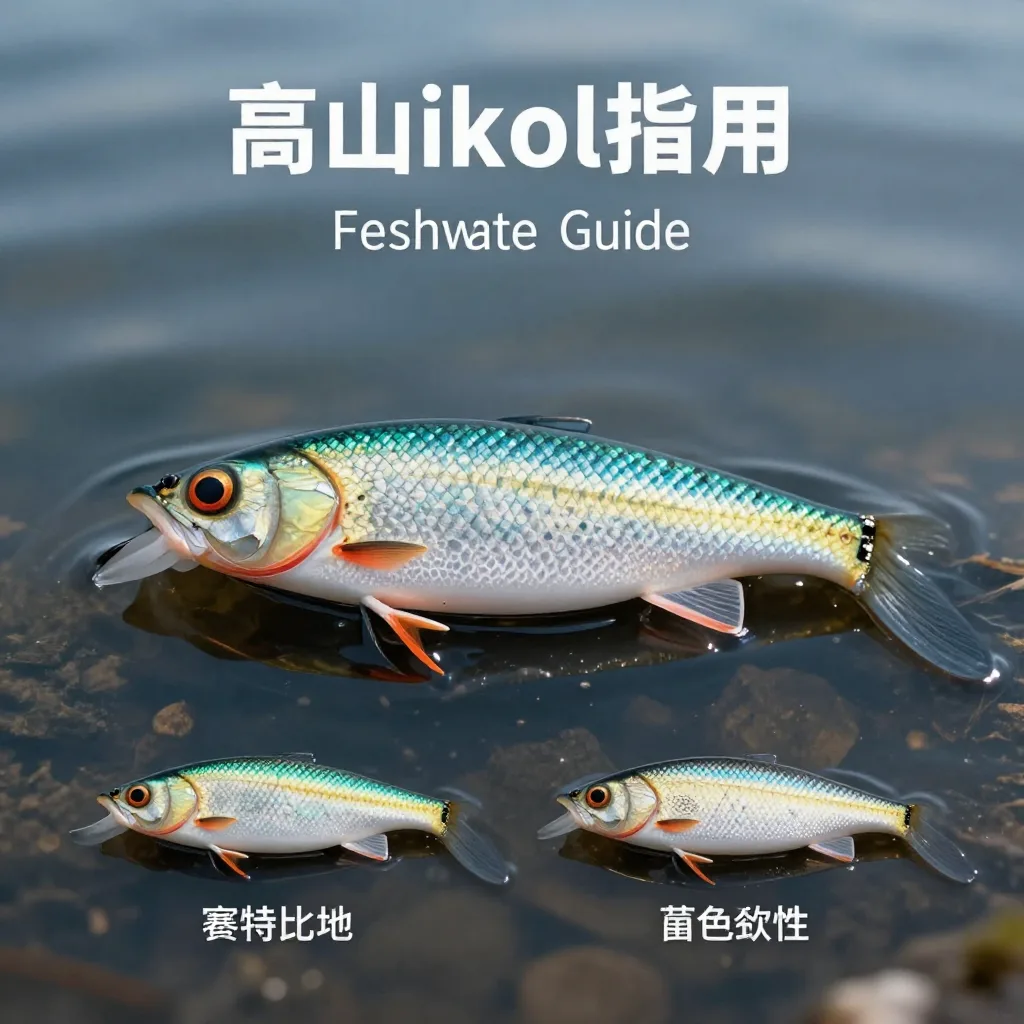
Simple Starter Lure Lineup
For a compact box that covers almost everything:
- 1–2 squarebill crankbaits (shad + chartreuse).
- 1 medium‑diving crankbait.
- 1 lipless crankbait (chrome/blue).
- 2 spinnerbaits (white or white/chartreuse, willow blades).
- 2–3 jigs (3/8–1/2 oz) + craw trailers.
- 1 pack 5″ stick worms (green pumpkin).
- 1 pack 3–4″ paddle‑tail swimbaits.
- 1 popper, 1 walking topwater, and 1 frog if you fish heavy grass.
From there, customize around your main targets (bass vs. multi‑species) and typical depth/clarity on your local waters.
1 thought on “Freshwater Lure Guide: Best Baits & When To Use Them 2026”