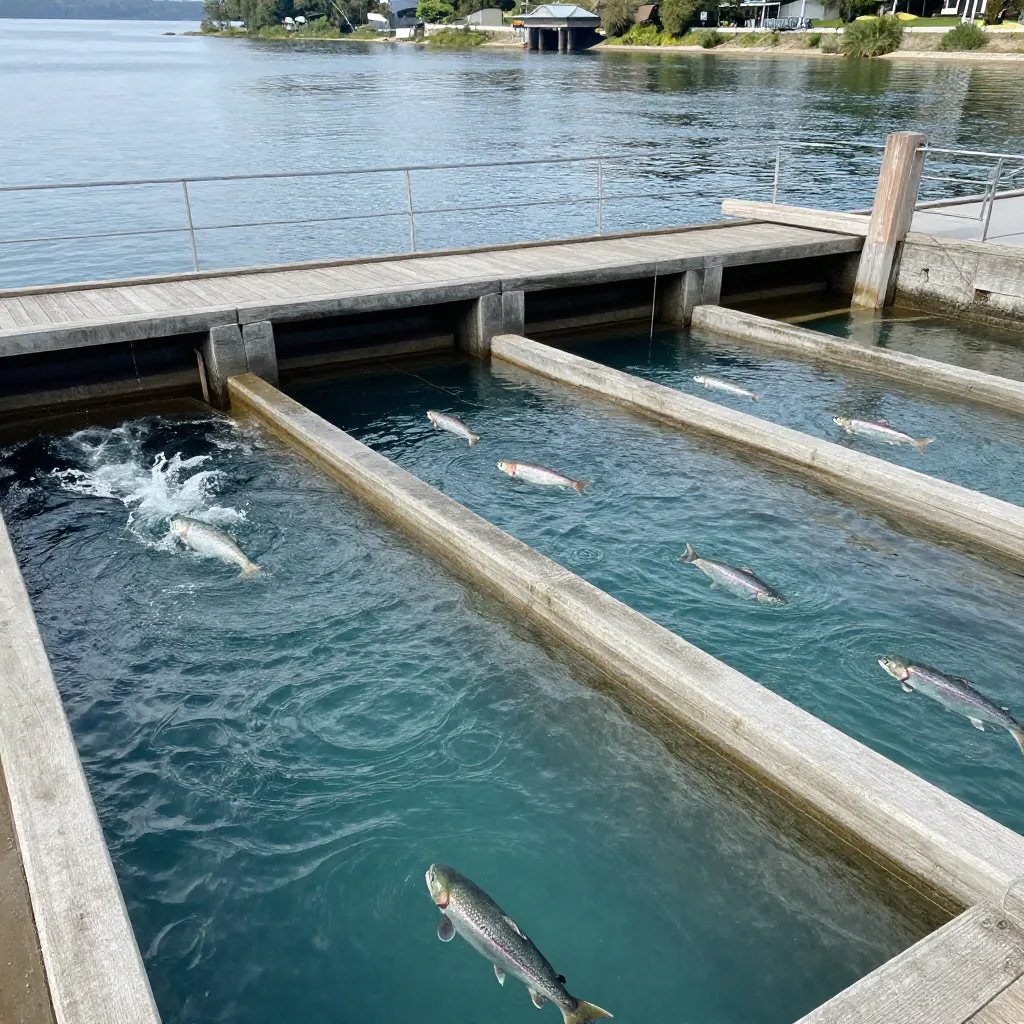
If someone mentions the words “fish ladders,” do you think of a spry salmon or sturgeon shimmying his way up an inclined set of rungs? While the term may conjure up some entertaining visions of our gill-bearing friends ascending a simulated set of steps, fish steps are actually constructed for the purpose of fishing conservation. These ingenious engineering structures serve as vital pathways enabling migratory fish to bypass human-made obstacles like dams, weirs, and culverts that would otherwise block access to critical spawning grounds and feeding habitats.
Fish ladders represent sophisticated solutions to one of conservation’s most challenging problems—how to maintain hydroelectric power generation, flood control, and irrigation while preserving natural fish migration patterns that have existed for millennia. Understanding how fish ladders work, why they’re necessary, the different types of designs, their effectiveness for various species, and their role in broader conservation efforts provides insight into the intersection of human infrastructure and wildlife preservation. This comprehensive guide explores fish ladder history, design principles, migration biology, modern innovations including AI-powered systems, effectiveness data, and how anglers contribute to these conservation projects through fishing license purchases.
What Are Fish Ladders?
Definition and Purpose
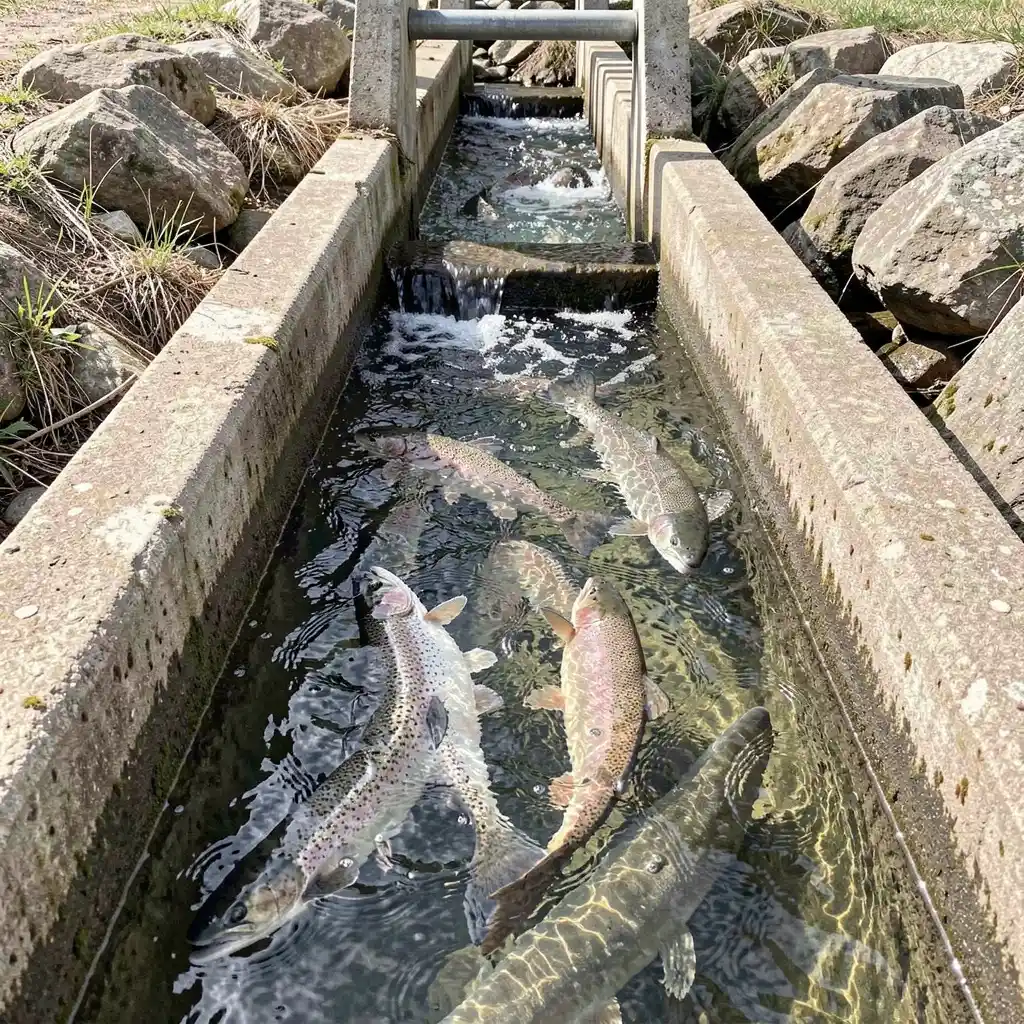
A fish ladder is a structure that allows migrating fish passage over or around an obstacle on a river. A fish ladder is a series of ascending pools or steps built alongside or within a dam or other artificial barrier. It is designed to create a gradual increase in water depth, allowing fish to swim upstream and bypass the obstruction.
The answer to the question, “are these fins really made for climbing?” is no, but fish do use fish ladders as detour routes when there is a particular obstruction on a river system. The ladder consists of a series of chambers or weirs, each of which provides a resting place for fish as they move upstream. The design and layout of fish ladders can vary depending on the specific needs of the fish species it is intended to help.
Why Fish Ladders Are Necessary
Culverts, dams, and waterfalls are three examples of river obstructions that can impede fish migration… and may eventually lead to the decline of fish populations. Building a dam imparts a stupendous change to the environment, and as with any change, there are winners and losers. The winners are usually us, people, through hydropower generation, protection from flooding, irrigation for farmland, and water storage.
However, dams create significant challenges for migratory fish species that depend on accessing specific river reaches for spawning, feeding, and survival. Without fish ladders or other passage structures, these populations would face severe decline or even extinction. For comprehensive fishing conservation information, review our reasons to go fishing guide covering conservation contributions.
Understanding Anadromous Fish Migration
What Does Anadromous Mean?
Many anadromous (fancy word, I know) spawning fish depend on migrations up and down rivers—species such as salmon, sturgeon, and shad. Anadromous fish are born in freshwater, migrate to the ocean to grow and mature, then return to freshwater to spawn. This remarkable life cycle requires unobstructed access between freshwater spawning grounds and ocean feeding areas.
Migration Timing and Importance
While downstream migration generally takes place in the early life stages, upstream migration happens after anadromous species reach adulthood. Young salmon, for example, migrate downstream to the ocean as juveniles, spend several years growing in marine environments, then return upstream as adults to spawn in the exact streams where they were born.
This incredible homing ability called philopatry drives salmon back to natal streams despite encountering numerous dams along migration routes. The biological imperative to reach spawning grounds is so strong that salmon will attempt to overcome nearly any obstacle, making well-designed fish ladders critical for population survival.
Species Benefiting from Fish Ladders
Primary species utilizing fish ladders include:
- Salmon (Chinook, Sockeye, Coho): Pacific salmon species with complex ocean-to-river migrations
- Steelhead Trout: Sea-run rainbow trout that spawn in freshwater
- Sturgeon: Ancient species requiring access to specific spawning habitats
- Shad: Anadromous herring species migrating up Atlantic coast rivers
- Eels: Catadromous species (opposite of anadromous) breeding in ocean but living in freshwater
- Lamprey: Primitive jawless fish with important cultural and ecological significance
How Fish Ladders Work
Basic Operating Principles
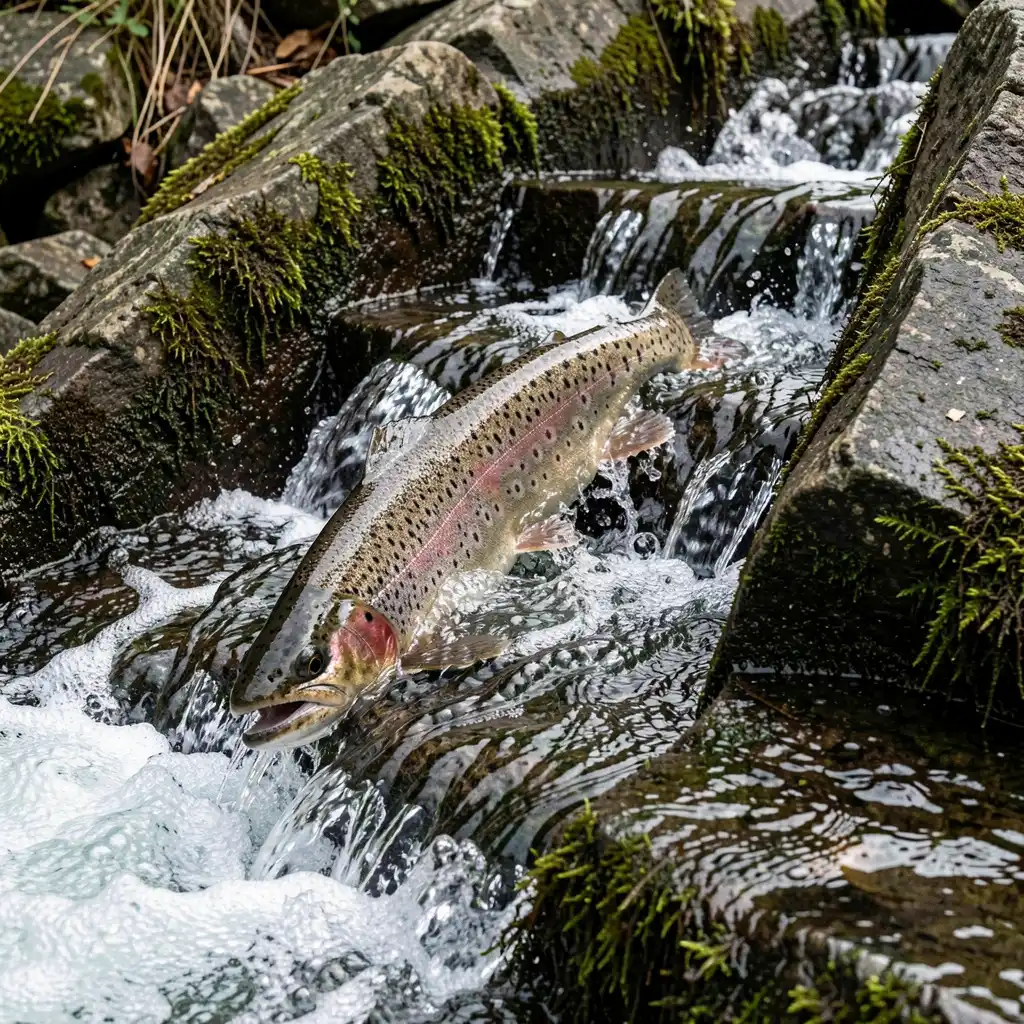
Fishway designs can differ depending on the type of obstruction, river flow, and species of fish, but the purpose is the same for all fish ladders. Each ladder contains a series of ascending pools that can be reached when fish swim against a stream of water. In other words, fish leap through the rushing water, rest in a pool, and then keep repeating this process until they reach the “top” of the ladder.
The primary purpose of a fish ladder is to provide fish with a passage that is easier and safer to navigate than attempting to swim directly over a dam or other barrier. This allows fish to overcome the considerable physical challenges they would encounter when swimming against the strong currents and turbulent waters typically found near dams.
Water Flow and Attraction
A fish ladder is designed to provide a structured pathway for fish to navigate around barriers such as dams and weirs. The main objective is to create a gradual increase in water depth that allows fish to move upstream and reach their desired spawning or feeding grounds. Fish are attracted to the ladder entrance by water flowing from the top, creating a current signature that mimics natural upstream flows.
The ladder entrance must be positioned where fish naturally congregate below dams—typically near areas with the strongest currents. Once fish locate the entrance, they begin ascending through the series of pools, resting as needed between ascents.
The Journey Through the Ladder
Throughout the fish ladder, monitoring systems may be installed to track fish movement and behavior. This data can help researchers and conservationists better understand the effectiveness of the fish ladder and make necessary adjustments or improvements.
The funny thing is, once they get up there, the fish don’t actually have to fix a ceiling fan or touch up the walls with a fresh coat of paint… they just keep swimming along on their anadromous (I really like using that word) migration route toward survival and conservation.
Types of Fish Ladder Designs
Pool and Weir Fish Ladders
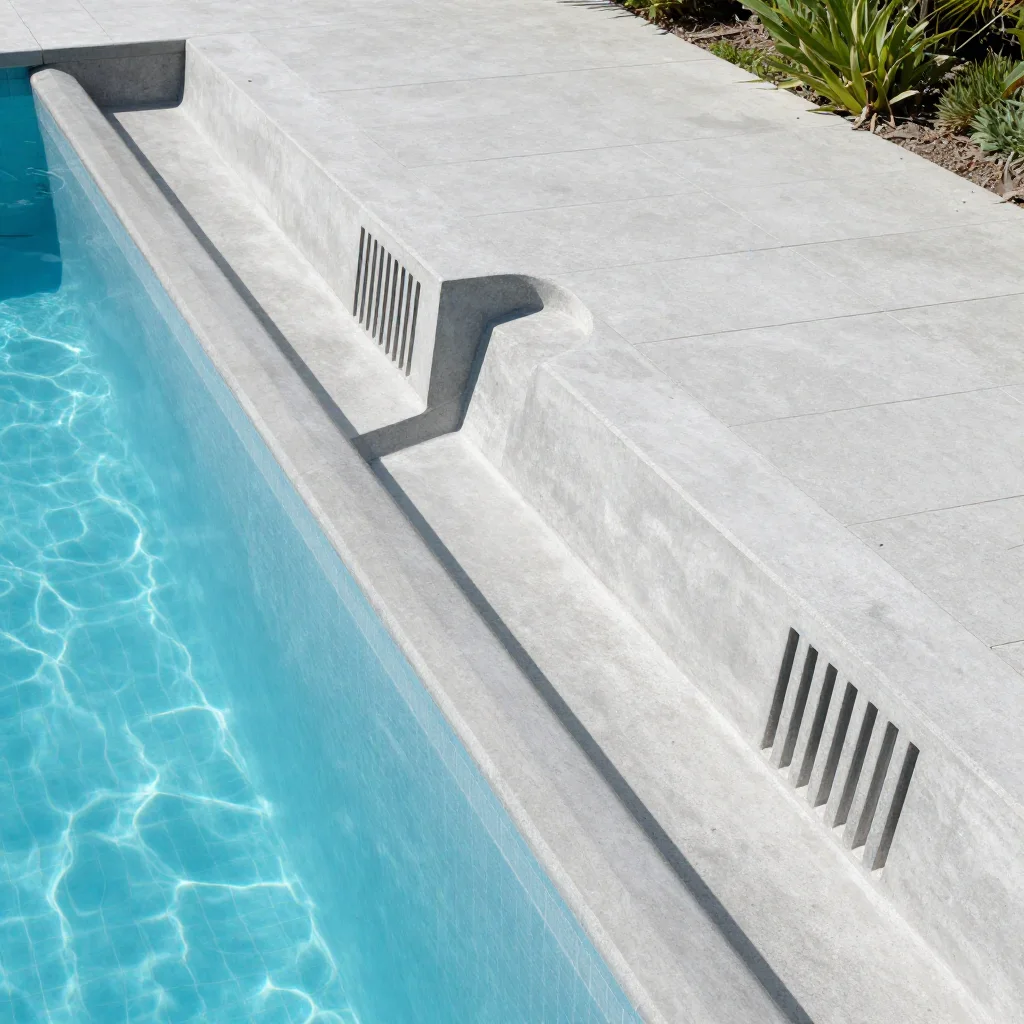
Pool and weir fish ladders consist of a series of pools connected by weirs or low barriers. As fish navigate through the ladder, they move from one pool to the next, gradually ascending the structure. The pools provide resting areas for fish to regain strength before continuing their journey upstream.
“The fish ladder has about six weirs in it. There are ‘wing walls’ on either side and ‘windows’ at the bottom. That way the fish don’t have to go over the weirs. Once they find the windows, they just shoot through,” said fisheries biologist Harthorn. The ladder functions well because it provides several opportunities for fish to travel up.
Vertical Slot Fish Ladders
Vertical slot fishways are exactly what they sound like. Instead of a weir or orifice, they use a slot along the entire height of the baffle. That makes it possible for fish to move upstream under a wide variety of flow conditions. When water levels change, the vertical slot baffles continue working in essentially the same manner.
Plus, the velocity is fairly consistent from the top to the bottom of the slot, giving fish ample opportunity to pass through each one. The protrusion on the upstream face creates a gentle area for fish to rest if they need it. This type of fish ladder features narrow vertical slots or channels that create turbulent flow helping fish ascend. They are often used for species like salmon and trout that are agile swimmers and can maneuver in fast-moving water.
Surface Passage Structures (Downstream Migration)
Starting in 2001, new surface passage structures (removable, top, adjustable spillway weirs, and the Bonneville corner collector) have been added to dams. Surface passage structures allow downstream migrating fish to pass the dam at the surface. This reduces juvenile fish passage delay, improves water quality, makes more efficient use of spill, improves juvenile fish survival, and helps direct more fish over the spillway instead of through the bypass.
When downstream migrating fish pass dams at the surface, the result is fewer fish transported downstream by barges and trucks. All dams on the Snake and Columbia rivers now have at least one surface passage structure. These structures particularly benefit juvenile salmon migrating to the ocean.
AI-Powered Modern Fish Passage Systems
A fish ladder is a structure in a natural or artificial waterway that allows fish to pass to a destination, like the ocean or spawning grounds. Modern innovations have dramatically improved fish passage technology. Fishheart’s system, established in 2016, consists of a series of guide nets, valves, pumps, actuators, a multicamera lighting system, possibly also satellite entry units on both sides of the waterway, underwater cameras, and AI software that identifies fish.
The system attracts fish in through a combination of a “surface attraction flow,” a spray of water on the surface and internal attraction flows. Fish swim into the unit at a “fish-friendly elevation” through the machine out to the other side of the waterway.
The cameras, combined with the AI software, identify all the fish that use the fishway. This helps people monitoring the system figure out how to remove invasive species from the waterway. The AI determines which fish are members of invasive species. Automated systems drive them to a container where operators can then take the fish to be released elsewhere or killed, if needed.
“We build different models of the system for different depths of water and different sizes of rivers. Our system has the capacity to move up to 100,000 fish per day. In Europe, we often use it to move Baltic herring,” said Mika Sohlberg, Vice President of Sales for Fishheart.
Fish Ladder Effectiveness: Success Stories and Challenges
Columbia and Snake River System Success
Over 15 years, researchers monitored passage effectiveness at eight dams on the Columbia and Snake rivers for 26,886 radio-tagged spring-summer and fall Chinook Salmon, Sockeye Salmon, and summer steelhead during their migrations to spawning sites. Almost all fish that entered dam tailraces eventually approached and entered fishways.
Tailrace-to-forebay passage efficiency estimates at individual dams were consistently high, averaging 0.966 (SD = 0.035) across 245 run×year×dam combinations. These estimates are among the highest recorded for any migratory species, which researchers attribute to the scale of evaluation, salmonid life history traits (e.g., philopatry), and a sustained adaptive management approach to fishway design, maintenance, and improvement.
Passage Times and Migration Success
Full-dam fish passage times were considerably more variable, with run×year×dam medians ranging from 5-65 hours. Evaluation at larger scales provided evidence that fishways were biologically effective—researchers observed rapid migration rates (medians = 28-40 km/d) through river reaches with multiple dams and estimated fisheries-adjusted upstream migration survival of 67-69%.
Although the technical fishways are effective for salmonids in the Columbia-Snake River system, other co-migrating species have lower passage rates, highlighting the need for species-specific design and evaluation wherever passage facilities impact fish management and conservation goals.
Challenges and Uncertainties
However, there were substantive uncertainties regarding effectiveness. Uncertainty about natal origins confounded estimation of population-specific survival and interpretation of apparent dam passage ‘failure’. Lack of post-migration reproductive data precluded analyses of delayed or cumulative effects of passing the impounded system on fish fitness.
Benefits of Fish Ladders for Conservation
Promoting Fish Migration and Genetic Diversity
Fish ladders enable fish to migrate upstream and downstream, allowing them to access critical habitats for breeding, feeding, and survival. This promotes genetic diversity, population dynamics, and the overall health of fish populations. By providing an alternative route, fish ladders enable fish to access spawning grounds, feeding areas, and other critical habitats that would otherwise be inaccessible due to human-made structures.
Restoring Spawning Grounds
By providing a passage around barriers, fish ladders allow migratory fish to reach their traditional spawning grounds. This is crucial for species like salmon, trout, and eels, whose survival depends on reaching specific areas to reproduce. Without access to natal spawning streams, entire populations face extinction within single generations.
Maintaining Ecosystem Balance
Overall, a fish ladder serves as a man-made facilitator for fish migration, enabling the natural movement of species and contributing to the overall health and productivity of aquatic ecosystems. The aim of a fish ladder is to provide fish with a guided and safer pathway to navigate around barriers and reach their desired destinations. By mimicking natural river conditions and providing resting areas, fish ladders help ensure the successful migration of fish species and the preservation of healthy aquatic ecosystems.
Where to Find Fish Ladders
Major Fish Ladder Locations in North America
Prominent fish ladder systems exist throughout North America wherever dams block migratory fish routes:
- Columbia River Basin (Washington/Oregon): Eight major dams with sophisticated fishway systems
- Snake River (Idaho/Washington): Multiple dams with vertical slot and pool-weir ladders
- Bonneville Dam (Oregon/Washington): Features corner collector and viewing windows
- California Water Resources Projects: Oroville and other facilities supporting salmon runs
- New England Rivers: Atlantic salmon and shad passage systems
- Great Lakes Tributaries: Supporting lake-run trout and salmon
Many fish ladders feature public viewing windows where visitors can observe migrating salmon during peak runs. These viewing areas provide educational opportunities and connect people with conservation efforts.
How Anglers Support Fish Ladder Projects
Fishing License Contributions
When you buy a fishing license, you are contributing to conservation projects, such as the construction of fish steps, which help to preserve our waterways for future generations. Fishing license fees fund:
- Fish passage structure construction and maintenance
- Migration monitoring and research programs
- Habitat restoration in spawning areas
- Water quality improvement projects
- Fish population surveys and management
For comprehensive licensing information, review our fishing license guide.
Conservation Through Responsible Angling
The more you learn about fishing and conservation, the more mindful you are of proper catch and release, protecting our ecosystems, and respecting other anglers. Understanding fish migration needs and supporting habitat protection ensures future generations enjoy fishing opportunities. For additional conservation information, explore our reasons to go fishing guide covering conservation participation.
Future of Fish Passage Technology
Adaptive Management Approaches
The sustained adaptive management approach to fishway design, maintenance, and improvement continues advancing fish passage effectiveness. Engineers and biologists collaborate refining designs based on monitoring data, species-specific needs, and emerging technologies.
Innovative Solutions
Modern innovations include AI-powered identification systems, surface passage structures for juveniles, variable flow designs accommodating multiple species, and monitoring technologies providing real-time passage data. These advancements improve passage rates while enabling invasive species management.
Balancing Human Needs and Wildlife Conservation
Everyone has a different perspective about what it means for humanity to live harmoniously with all the other life we share the planet with. Fish ladders represent fascinating examples of how those ideas and endeavors trickle down through engineering into the real world. The challenge remains balancing hydroelectric power generation, flood control, and irrigation needs with preservation of migratory fish populations that evolved over millions of years
Top 5 Frequently Asked Questions About Fish Ladders
What is a fish ladder and how does it work?
A fish ladder is a structure that allows migrating fish passage over or around obstacles like dams on rivers. It consists of a series of ascending pools or steps creating gradual water depth increases. Fish swim against rushing water streams, rest in pools, then repeat this process until reaching the top. The ladder entrance is positioned where fish naturally congregate below dams, with water flowing from the top attracting fish. Each pool provides resting areas for fish to regain strength before continuing upstream.
Why are fish ladders necessary?
Fish ladders are necessary because dams, culverts, and other obstructions impede fish migration and may lead to population decline. Anadromous species like salmon, sturgeon, and shad depend on migrations between freshwater spawning grounds and ocean feeding areas. Without fish ladders, these populations would face severe decline or extinction. Fish ladders enable access to critical spawning grounds, feeding areas, and habitats that would otherwise be inaccessible due to human-made structures.
How effective are fish ladders for salmon?
Fish ladders are highly effective for Pacific salmon. Research monitoring 26,886 radio-tagged salmon at eight Columbia and Snake River dams found passage efficiency averaging 0.966 (96.6%) across 245 combinations. These estimates are among the highest recorded for any migratory species. Researchers observed rapid migration rates of 28-40 km/day through reaches with multiple dams and estimated upstream migration survival of 67-69%. Success is attributed to salmonid philopatry (homing ability) and sustained adaptive management of fishway design.
What are the different types of fish ladders?
Main fish ladder types include: Pool and weir ladders with series of pools connected by low barriers where fish rest between ascents, Vertical slot fishways using slots along entire baffle heights allowing passage under various flow conditions, Surface passage structures enabling downstream juvenile migration at the surface reducing delay and improving survival, and AI-powered systems using cameras and software to identify fish species and manage invasive populations.
How do fishing licenses support fish ladders?
When you buy a fishing license, you contribute to conservation projects including fish ladder construction and maintenance. License fees fund fish passage structure projects, migration monitoring and research programs, habitat restoration in spawning areas, water quality improvements, and fish population surveys. These contributions help preserve waterways for future generations. For licensing information, review our fishing license guide.
Conclusion
Fish ladders represent ingenious engineering solutions enabling migratory fish to bypass human-made obstacles and reach critical spawning grounds. These fins aren’t really made for climbing, but fish effectively use these detour routes to overcome dams, culverts, and weirs that would otherwise block migration. Understanding how fish ladders work—through series of ascending pools creating gradual water depth increases—reveals the sophisticated balance between human infrastructure needs and wildlife conservation.
Research demonstrates remarkable effectiveness, with Pacific salmon achieving 96.6% passage efficiency at major Columbia River dams through sustained adaptive management approaches. Modern innovations including AI-powered systems, vertical slot designs, and surface passage structures continue improving fish passage while addressing species-specific needs. When you buy a fishing license, you directly support these conservation projects preserving waterways for future generations.
Whether exploring fall fishing patterns, understanding conservation benefits, or preparing for fishing adventures, appreciating fish ladder technology deepens connection to aquatic ecosystem preservation.