Ice fishing line selection represents a critical yet often underappreciated component of hardwater angling success. While anglers enthusiastically research rods, reels, and lures, many overlook how line choice dramatically impacts bite detection, hooksets, presentation quality, and fish landing success in cold-water environments. The specialized demands of ice fishing—extreme cold temperatures, ice contact abrasion, subtle panfish bites, and deep-water applications—require lines specifically formulated or selected for winter conditions.
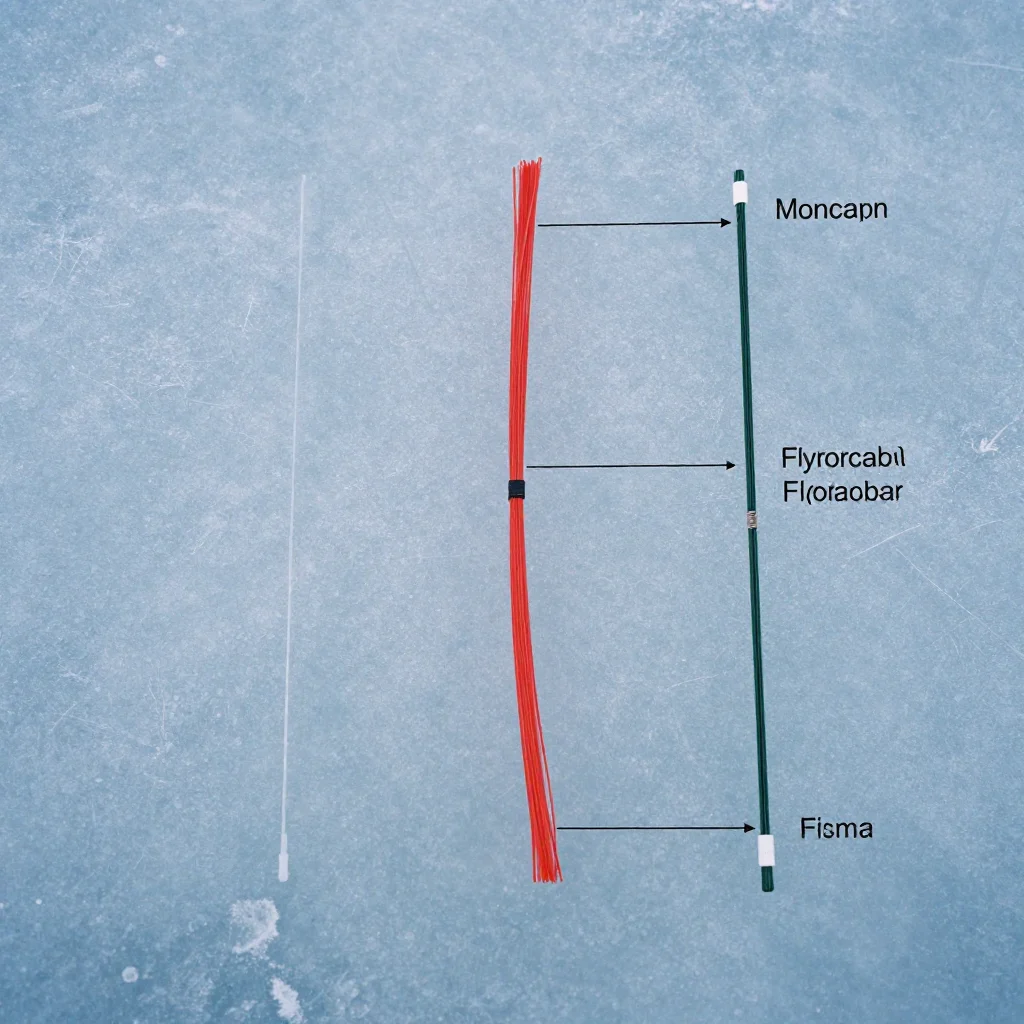
Understanding the fundamental characteristics of monofilament, fluorocarbon, and braided lines enables you to match line types with specific ice fishing applications. Each line category offers distinct advantages and limitations that make them ideal for certain situations while problematic for others. Proper line selection combined with appropriate pound test choices, leader configurations, and maintenance practices transforms your ice fishing effectiveness across all species and techniques.
Understanding Basic Ice Fishing Line Types
Monofilament Line Characteristics: Monofilament represents the most traditional and widely used ice fishing line due to its versatility, affordability, and ease of use. This single-strand nylon line exhibits flexibility that remains manageable in cold temperatures, particularly when formulated specifically for ice fishing. Monofilament stretches under load, providing shock absorption that prevents hook pulls during aggressive fish runs. This stretch characteristic proves especially valuable when targeting panfish with light tackle, as it forgives tension spikes that might tear hooks from paper-thin mouths.
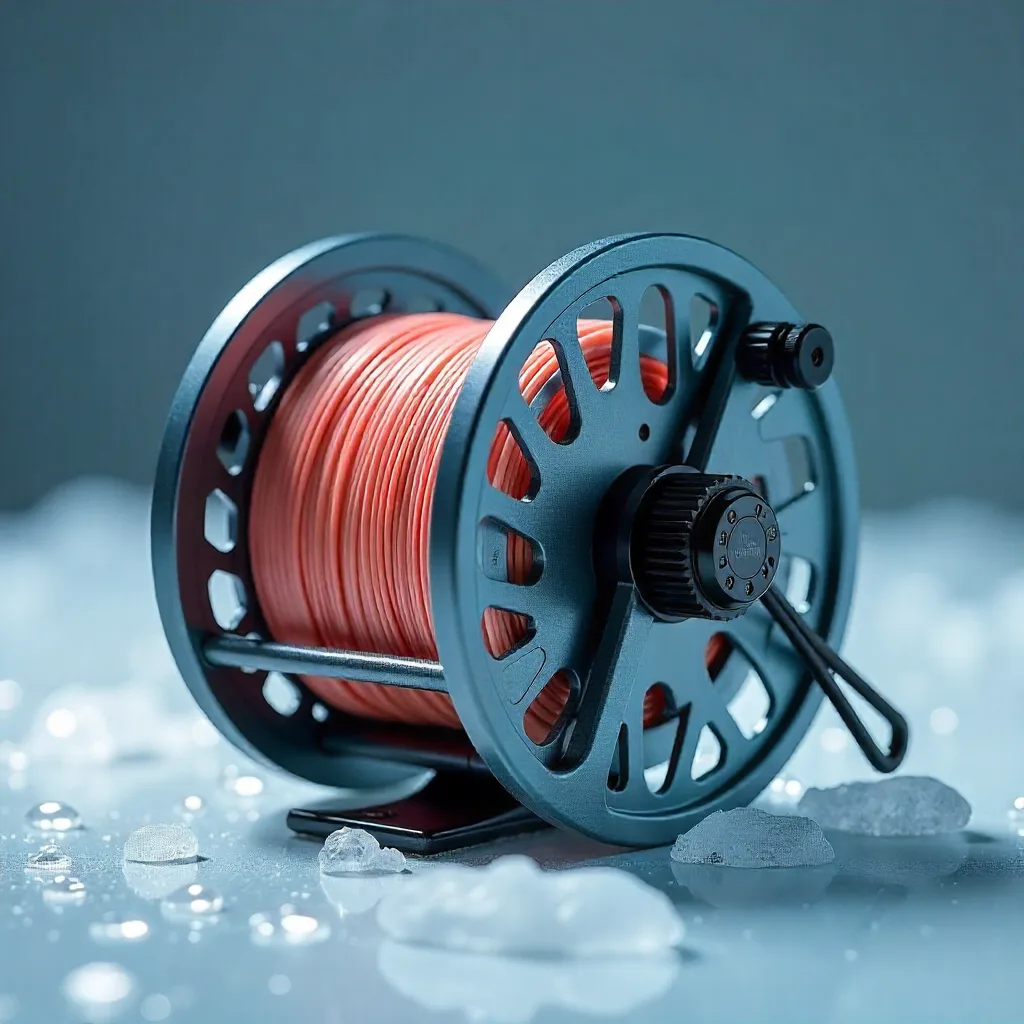
Modern ice fishing monofilaments feature low-memory properties that minimize coiling—the tendency for line to retain spool shape and create tangled bird’s nests. Quality ice-specific monofilaments like Clam CPT Frost maintain suppleness in frigid temperatures while providing excellent knot strength. The ease of tying and retying monofilament makes it ideal for anglers who frequently change lures to match conditions.
However, monofilament demonstrates higher visibility underwater compared to fluorocarbon, potentially spooking fish in clear water or high-pressure situations. The stretch that provides shock absorption simultaneously reduces sensitivity, making subtle bite detection more challenging, particularly in deep water. For comprehensive ice fishing fundamentals, review our beginner ice fishing tips guide before selecting tackle.
Fluorocarbon Line Properties: Fluorocarbon’s low refractive index renders it nearly invisible underwater—a significant advantage when targeting wary fish in clear water or heavily pressured fisheries. This near-invisibility allows anglers to use heavier pound test lines without spooking fish, providing extra insurance against break-offs. Fluorocarbon’s higher density causes it to sink faster than monofilament, helping small tungsten jigs reach bottom quickly while maintaining direct connection for superior bite detection.
The line exhibits excellent abrasion resistance that withstands contact with sharp ice edges around drilled holes—a common cause of break-offs with other line types. This durability proves particularly valuable when fishing around structure like rocks, submerged timber, or vegetation. Fluorocarbon’s low stretch characteristics (though more than braid) provide better sensitivity than monofilament for detecting light bites and transmitting jigging actions directly to lures.
Disadvantages include higher cost compared to monofilament, reduced knot strength requiring careful tying techniques, and increased stiffness in extreme cold that can cause unexpected unspooling. The smooth surface that resists ice contact also makes clearing accumulated ice from rod guides more difficult than with monofilament’s slightly rougher texture. Despite these limitations, fluorocarbon excels as mainline for walleye jigging and as leader material across various applications.
Braided Line Advantages: Braided lines deliver exceptional sensitivity due to zero stretch characteristics that transmit even the lightest panfish bites directly to rod tips. This sensitivity becomes critical when jigging in water exceeding 30 feet, where monofilament stretch absorbs subtle strikes. Braided line’s thin diameter relative to breaking strength allows anglers to use 15-20 pound test that provides security against break-offs while maintaining the profile of 4-6 pound monofilament.
The lack of memory means braid remains supple and manageable on reels, eliminating coiling problems that plague monofilament on small-arbor tip-up spools. This suppleness allows you to pack significantly more line on spools compared to thicker monofilament or fluorocarbon of equivalent strength. For tip-up applications and deep-water jigging, braided lines provide unmatched performance.
However, braid’s high visibility underwater—particularly in heavier pound tests—requires fluorocarbon or monofilament leaders to avoid spooking fish. The line absorbs water readily, and when exposed to freezing air outside shelters, accumulated moisture freezes on reels and guides, creating frustrating tangles. Braid also exhibits minimal abrasion resistance compared to fluorocarbon, particularly when rubbing against sharp ice edges. These characteristics make braid ideal for inside heated shelters or mild weather conditions above 25°F.
Desirable Properties in Ice Fishing Lines
Low Memory for Cold-Weather Performance: Low-memory lines maintain flexibility when air and water temperatures plummet, remaining manageable rather than springing into uncontrollable coils. Ice-specific line formulations incorporate treatments or coatings that preserve suppleness in frigid conditions. This flexibility proves critical for effective presentations and tangle-free operation when fishing outside shelters in sub-zero temperatures.
Superior Sensitivity for Bite Detection: Sensitivity—the ability to feel subtle strikes and transmit lure actions—becomes paramount when targeting lethargic winter fish with light bites. Lines with minimal stretch (fluorocarbon and braid) provide immediate feedback when fish mouth baits tentatively. This direct connection allows anglers to detect and respond to strikes before fish reject offerings, dramatically increasing hookup percentages.
Above-Average Abrasion Resistance: Ice contact creates unavoidable abrasion that weakens lines progressively throughout fishing sessions. Lines with superior abrasion resistance—particularly fluorocarbon and coated options—withstand repeated contact with ice hole edges without compromising strength. This durability prevents frustrating break-offs during critical moments when battling quality fish.
Thin Diameter with Adequate Strength: Thin-diameter lines offer multiple advantages including reduced underwater visibility, faster sink rates for small jigs, enhanced strike detection, and more natural live bait movement. However, thin lines must retain sufficient breaking strength to land targeted species reliably. Braided lines excel in this balance, providing breaking strengths far exceeding their diameter.
Selecting Appropriate Pound Test
Standard Ice Fishing Line Weights: Most ice anglers use 4-6 pound test as their standard line weight across various applications. This range provides adequate strength for landing even large fish while maintaining thin enough diameter to avoid spooking pressured fish. Winter fish exhibit more lethargic behavior than summer counterparts, fighting less aggressively and allowing lighter tackle to succeed.
The key to successfully landing large fish on light line involves quality drag systems that yield smoothly under pressure. When using tip-ups, slow, steady hand-lining brings fish to holes without applying sudden tension that breaks light leaders. For comprehensive equipment recommendations including reels with quality drags, explore our ice fishing gear guide.
When to Upsize Line: Target species and fishing conditions dictate exceptions to standard 4-6 pound test recommendations. When pursuing northern pike, muskie, or lake trout with sharp teeth, increase monofilament or fluorocarbon to 8-10 pound test. For braid with leader systems, mainline strength can reach 15-20 pound test due to its thin diameter, though leaders should remain in the 4-6 pound range.
Extremely clear water and heavily pressured fisheries sometimes require downsizing to 1-2 pound test for finicky panfish. These ultra-light lines produce more bites but break more easily, demanding careful handling. Reserve downsizing for situations where heavier line clearly reduces catch rates.
Deep Water Applications: Deep-water fishing exceeding 40 feet benefits from braid’s zero-stretch characteristics that transmit light bites over extended distances. The 4-6 pound braid maintains sensitivity while providing strength to land jumbo perch from Devils Lake depths or trophy lake trout from basin structures.

Strategic Line Selection by Application
Jigging Reel Configurations: Active jigging for panfish performs best with 3-4 pound monofilament that provides adequate sensitivity, shock absorption, and ease of use. Clam CPT Frost 3-pound test represents an ideal all-around choice for versatile panfish applications. The line fishes similar to 2-pound test in feel and diameter while providing superior strength and durability.
Walleye jigging benefits from 4-6 pound fluorocarbon that offers invisibility, abrasion resistance, and sensitivity for detecting subtle takes. The faster sink rate helps maintain bottom contact with blade baits and jigging spoons. For aggressive search presentations using larger spoons, 4-pound monofilament provides adequate strength with better shock absorption than fluorocarbon.
Deep-water jigging over 30-40 feet demands braid’s zero-stretch sensitivity to detect light bites over extended distances. Spool 4-6 pound braid as mainline, adding 3-4 foot fluorocarbon leaders in 3-4 pound test for invisibility near lures. This combination delivers maximum sensitivity with adequate stealth.
Tip-Up Line Systems: Braided line dominates tip-up applications due to its thin diameter that allows maximum line capacity on small-arbor spools. The lack of memory prevents coiling problems that create tangles when tip-up flags trigger. Standard tip-up configurations use 20-30 pound braided Dacron as mainline, providing strength and durability for hand-lining large fish.
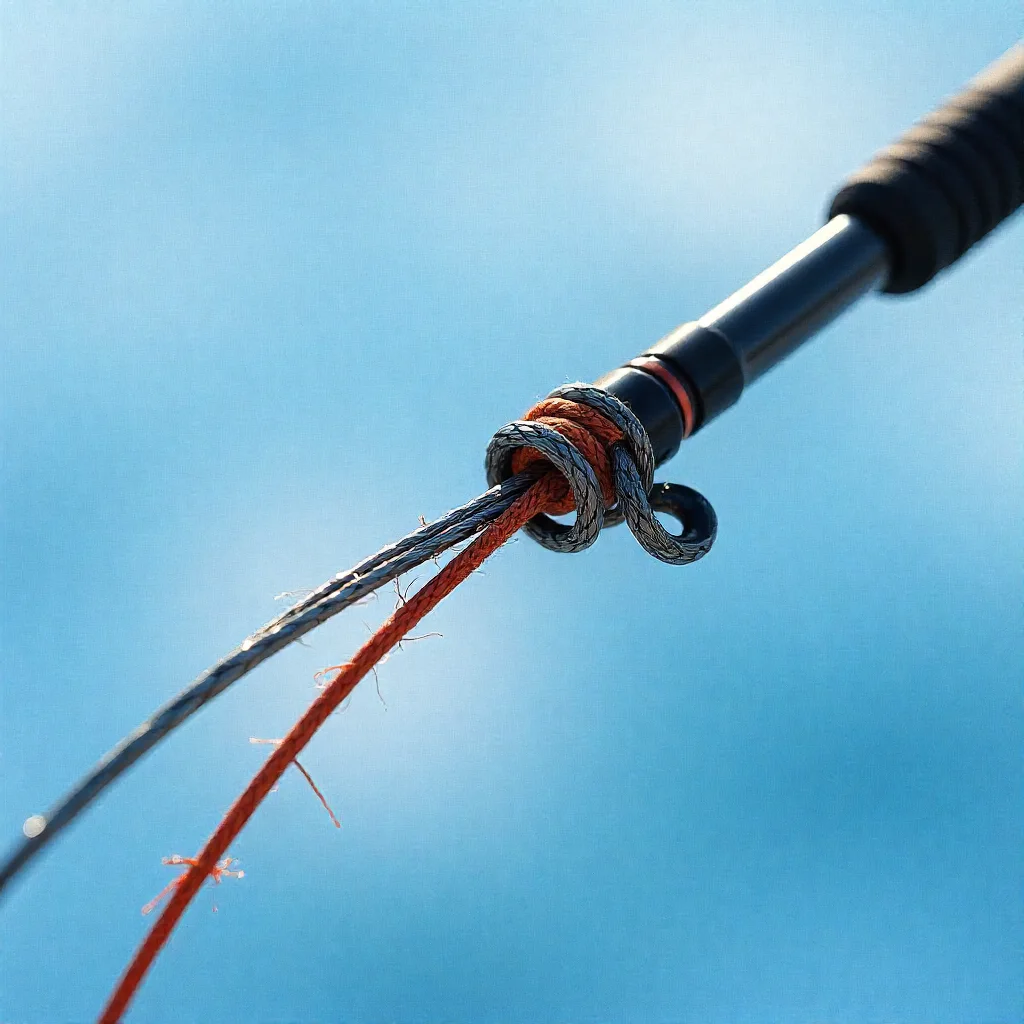
Attach 3-6 foot fluorocarbon or monofilament leaders in 6-10 pound test to braided mainlines using improved Albright knots or small barrel swivels. Leader length increases in clear water to distance visible braid from wary fish. Some anglers prefer vinyl-coated lines or fly fishing backing for tip-ups to minimize tangling, though these sacrifice some sensitivity.
Deadstick and Rattle Reel Applications: Deadsticking—suspending stationary baits alongside active jigging rods—performs best with fluorocarbon or monofilament that provides forgiveness for natural bait presentations. The slight stretch allows fish to mouth baits without detecting resistance that triggers rejections. Rattle reels mounted inside ice houses use similar line selections, favoring supple braids or low-memory monofilaments.
Leader Material and Configuration
Why Use Leaders: Leaders serve multiple critical functions in ice fishing systems. They provide invisibility near lures when using highly visible braided mainlines. Leaders offer abrasion resistance around structure while allowing less expensive mainline sacrifices during break-offs. For toothy species like northern pike, wire or heavy fluorocarbon leaders prevent bite-offs.
Optimal Leader Length: Leader length varies based on water clarity and target species wariness. Standard 3-4 foot leaders work well in most situations, providing sufficient separation between visible braid and lures. Extremely clear water or pressured fisheries demand longer 6-8 foot leaders that maximize invisibility. Shorter 1-2 foot leaders suffice in stained water or when targeting aggressive species.
Leader Material Selection: Fluorocarbon represents the premier leader material for most ice fishing applications due to near-invisibility and abrasion resistance. Use leaders 1-2 pound tests lighter than mainline breaking strength to create weak points that sacrifice leaders rather than entire spools during snags. Monofilament works adequately for leader material when fluorocarbon budget constraints exist. For species with sharp teeth like pike and muskie, incorporate wire leaders or heavy 20-30 pound fluorocarbon.
Line Freezing Prevention and Management
Understanding Freezing Dynamics: All line types accumulate ice when water transfers over them during retrieval and freezes upon exposure to frigid air. Monofilament and fluorocarbon resist ice accumulation better than braid due to smoother, less absorbent surfaces. Braid’s woven structure absorbs water readily, freezing on reels and in guides when fishing outside heated shelters.
Prevention Strategies: Fish inside heated portable shelters whenever possible to maintain above-freezing conditions that prevent line freezing. When fishing outside, use monofilament or fluorocarbon that resist freezing better than braid. Apply small amounts of water-repellent substances like lip balm, petroleum jelly, or silicone spray to rod guides—not line itself—to shed water before freezing occurs. Ensure these treatments don’t transfer scent or chemicals to lines that might spook fish.
Dealing with Frozen Line: When ice accumulates in rod guides, clear it frequently by breathing warm air directly on guides or touching them briefly with warm fingers. Fluorocarbon’s smooth surface requires more effort to clear than monofilament’s slightly rougher texture that helps break ice loose. Keep lines dry when not fishing by wiping them down and storing rods in warm vehicles between sessions.
Line Maintenance and Inspection
Regular Inspection Protocols: Inspect the first 6-12 feet of line frequently throughout fishing sessions for abrasion damage, nicks, or weakening. Ice contact creates progressive wear that weakens lines gradually. Cut back damaged sections immediately rather than risking break-offs during critical fish battles.
Retying Frequency: Retie terminal tackle connections after landing several fish or detecting any line damage. Knots weaken through repeated stress, particularly in cold conditions that make lines more brittle. The minutes spent retying prevent losing trophy fish to preventable failures.
Seasonal Replacement: Replace ice fishing line annually or after 15-20 fishing trips, whichever occurs first. Fluorocarbon deteriorates faster than monofilament or braid when exposed to UV light and cold temperatures. Braid lasts longest but eventually develops weak spots from abrasion. Fresh line at season start provides confidence and prevents frustrating losses.
Species-Specific Line Recommendations
Panfish (Bluegill, Crappie, Perch): Use 2-4 pound monofilament for versatile panfish applications, selecting Clam CPT Frost or equivalent ice-specific formulations. In pressured clear-water fisheries, downsize to 1-2 pound test despite increased break-off risks. For deep water exceeding 40 feet, 4-pound braid with fluorocarbon leaders maximizes sensitivity. When fishing around structure like weeds or timber, 2-4 pound fluorocarbon provides superior abrasion resistance.
Walleye: Straight 4-6 pound fluorocarbon excels for walleye jigging, offering invisibility and sensitivity. Alternatively, use 10-15 pound braid with 4-6 pound fluorocarbon leaders for maximum sensitivity with adequate stealth. For tip-ups targeting walleye, spool 20-30 pound Dacron braid with 6-8 pound fluorocarbon leaders.
Northern Pike and Lake Trout: These toothy predators demand heavier tackle with abrasion protection. Use 8-10 pound monofilament or fluorocarbon for jigging applications. Tip-up configurations should feature 30-40 pound braided mainlines with heavy 20-30 pound fluorocarbon leaders or wire leaders to prevent bite-offs.
For comprehensive species-specific tactics, explore our guides on ice fishing for panfish and visiting premier ice fishing destinations.
Top 5 Frequently Asked Questions About Ice Fishing Lines
What is the best ice fishing line for beginners?
Monofilament line in 4-6 pound test represents the best choice for beginner ice anglers. Quality ice-specific monofilaments like Clam CPT Frost provide excellent all-around performance with easy handling, good knot tying, adequate sensitivity, and shock absorption that forgives mistakes. Monofilament costs less than fluorocarbon or quality braid, reducing financial risk while learning. The line manages well in cold temperatures and resists freezing better than braid. Once you’ve mastered basic techniques, experiment with fluorocarbon leaders or straight fluorocarbon for improved performance.
Should I use fluorocarbon or monofilament for ice fishing?
Fluorocarbon excels for walleye jigging, clear-water situations, and around structure due to invisibility and abrasion resistance. However, it costs more, ties less easily, and stiffens in extreme cold. Monofilament provides better value, easier handling, superior cold-weather performance, and adequate sensitivity for most applications. Many anglers compromise by using monofilament mainline with fluorocarbon leaders, gaining both lines’ advantages. For panfish in typical conditions, monofilament performs excellently; for walleye in clear water, fluorocarbon delivers better results.
What pound test should I use for ice fishing?
Standard ice fishing applications use 4-6 pound test across monofilament, fluorocarbon, and leader materials. This range handles most species including panfish, walleye, and average pike while maintaining thin diameter and sensitivity. Downsize to 2-3 pound or even 1-2 pound test in ultra-clear water or for heavily pressured panfish. Upsize to 8-10 pound test when targeting large pike or fishing heavy structure. For braided mainlines, 10-20 pound test provides thin diameter with adequate strength when paired with lighter leaders.
Can you use regular fishing line for ice fishing?
Yes, regular fishing line works for ice fishing, but ice-specific formulations perform better in cold conditions. Standard monofilament may develop excessive memory (coiling) and stiffness in frigid temperatures. Ice fishing lines feature low-memory coatings or treatments that maintain suppleness when cold. Regular fluorocarbon and braid transition to ice fishing more successfully than regular monofilament. If using standard line, test it in cold conditions before committing to full spools. For serious ice fishing, invest in ice-specific monofilament while regular fluorocarbon and braid suffice.
How often should I replace ice fishing line?
Replace ice fishing line annually or after 15-20 trips, whichever comes first. Fluorocarbon deteriorates fastest, often requiring mid-season replacement for frequent anglers. Monofilament lasts through single seasons reliably, while quality braid may survive multiple seasons if properly maintained. Inspect line regularly for nicks, abrasion, and discoloration that indicate weakening. Immediately cut back and retie when damage appears. Fresh line provides confidence and prevents losing trophy fish to preventable failures. The modest cost of replacement line represents insignificant expense compared to lost fish from worn line.
Conclusion
Ice fishing line selection dramatically impacts your hardwater angling success through improved bite detection, presentation quality, and fish-landing reliability. Understanding the fundamental characteristics of monofilament, fluorocarbon, and braided lines enables strategic choices that match specific applications and conditions. Monofilament provides versatile, affordable performance with excellent cold-weather handling; fluorocarbon delivers invisibility and abrasion resistance for demanding situations; braid offers unmatched sensitivity for deep water and tip-up applications.
Appropriate pound test selection—typically 4-6 pounds across most situations—balances adequate strength with thin diameter that maintains sensitivity and reduces visibility. Strategic leader configurations combine mainline and terminal tackle advantages while minimizing individual weaknesses. Regular inspection, proper maintenance, and annual replacement ensure line reliability throughout ice fishing seasons.
Whether you’re targeting panfish species, planning trips to premier destinations, or introducing families to ice fishing, proper line selection provides the foundation for successful hardwater angling.
1 thought on “Best Ice Fishing Line: Complete Selection Guide 2026”