Ready to hook a monster from the deep? Big game fishing (also called offshore or deep-sea fishing) is one of the most thrilling experiences in the sport — but it requires the right prep, gear, mindset, and knowledge. This beginner’s guide will walk you through everything you need to know before chasing giants like marlin, tuna, sailfish, or swordfish in 2025.
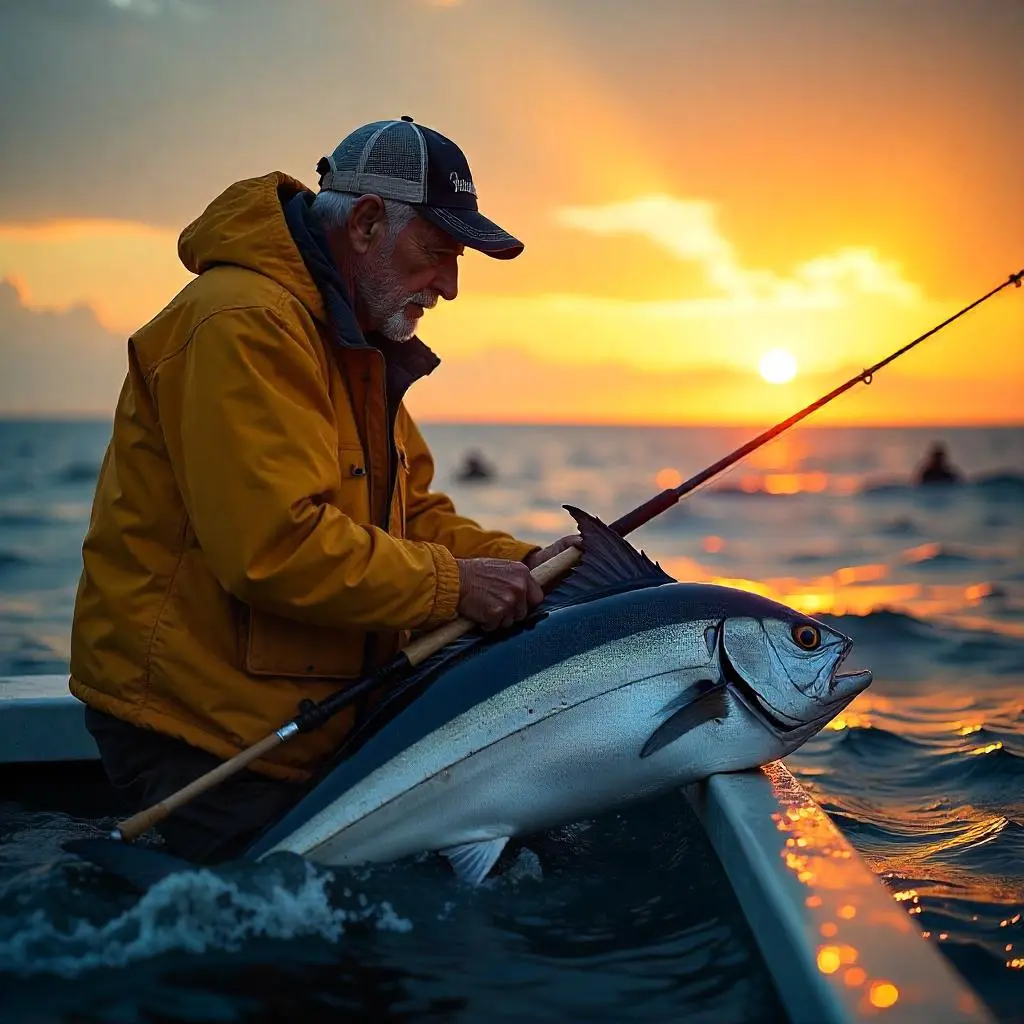
What Is Big Game Fishing?
Big game fishing targets large, powerful fish species in offshore waters. Unlike inshore or freshwater fishing, this form takes place far from the coast, often in deep oceanic waters where fish can weigh hundreds of pounds.
🎯 Also known as:
- Deep sea fishing
- Offshore sportfishing
- Bluewater fishing
It’s not uncommon for battles with fish to last 30 minutes to 4+ hours, testing your strength, patience, and skill.
Types of Big Game Fish
Here are the most popular big game species beginners dream of landing:
| Fish | Avg Weight | Best Location | Season |
|---|---|---|---|
| Blue Marlin | 300–1000+ lbs | Hawaii, Caribbean | Summer |
| Yellowfin Tuna | 100–400 lbs | Gulf of Mexico, Mexico | Year-round |
| Swordfish | 200–500 lbs | Florida, Australia | Spring–Fall |
| Sailfish | 80–200 lbs | Costa Rica, Florida Keys | Winter |
| Mahi-Mahi (Dorado) | 15–50 lbs | Pacific + Atlantic Tropics | Summer |
| Giant Trevally (GT) | 40–150 lbs | Maldives, Seychelles | Year-round |
Best Big Game Fishing Destinations (2025)
Here are the top hotspots known for trophy-sized catches:
- 🏝️ Kona, Hawaii – Legendary for blue marlin
- 🌊 Cabo San Lucas, Mexico – Billfish Capital of the World
- 🐠 Key West, Florida – Sailfish, tuna, and permit
- 🇨🇷 Quepos, Costa Rica – Epic sailfish action
- 🐟 Great Barrier Reef, Australia – Black marlin paradise
- 🇲🇻 Maldives – GTs and tuna year-round
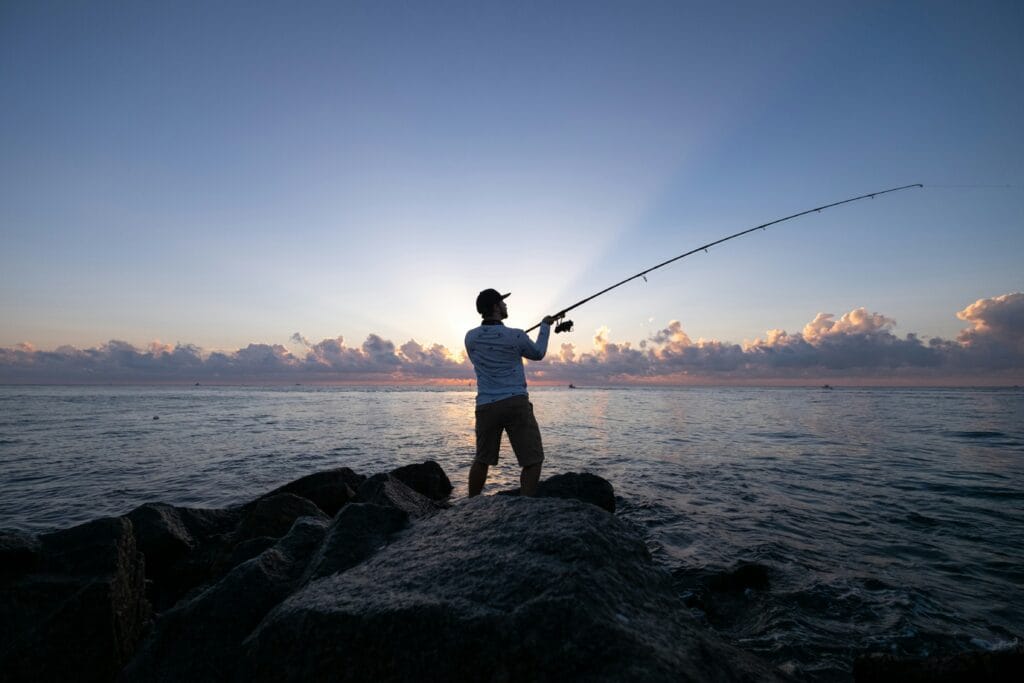
Do You Need a License for Big Game Fishing?
Yes! Always check the local and federal regulations before booking or launching:
- 🎫 Chartered Trips: Often include license in package
- 🧭 DIY Offshore Trips: Must apply for a recreational or sportfishing license
- 📏 Size & Bag Limits: Strict rules on catch size, quantity, and species
- 🐠 Catch & Release: Encouraged for billfish like marlin and sailfish
Check with:
- U.S. NOAA
- Local tourism/fishing departments
Big Game Fishing Gear Overview
Here’s what makes offshore gear different from regular setups:
Rod & Reel
- Heavy-duty trolling rods
- 2-speed conventional reels
- 50–130 lb test line (braid or monofilament)
Terminal Tackle
- Circle hooks (for conservation)
- Large swivels
- Fluorocarbon leaders (100–300 lb)
Extras
- Fighting belts and harnesses
- Outriggers for trolling
- Fishfinder/sonar on boat
- Livewell for bait
Best Techniques for Big Game Fishing
1. Trolling
- Dragging lures behind a moving boat
- Works best for marlin, tuna, mahi-mahi
2. Live Baiting
- Using live skipjack, mullet, or ballyhoo
- Ideal for swordfish or giant tuna
3. Chunking
- Cutting up baitfish and drifting with current
- Great for yellowfin and bluefin tuna
4. Deep Dropping
- Dropping baits 800–1500 ft down
- Targets deep species like tilefish and swordfish
5. Popping/Jigging
- Aggressive casting for GTs, tuna, amberjack
- Requires strong arms and fast retrieves
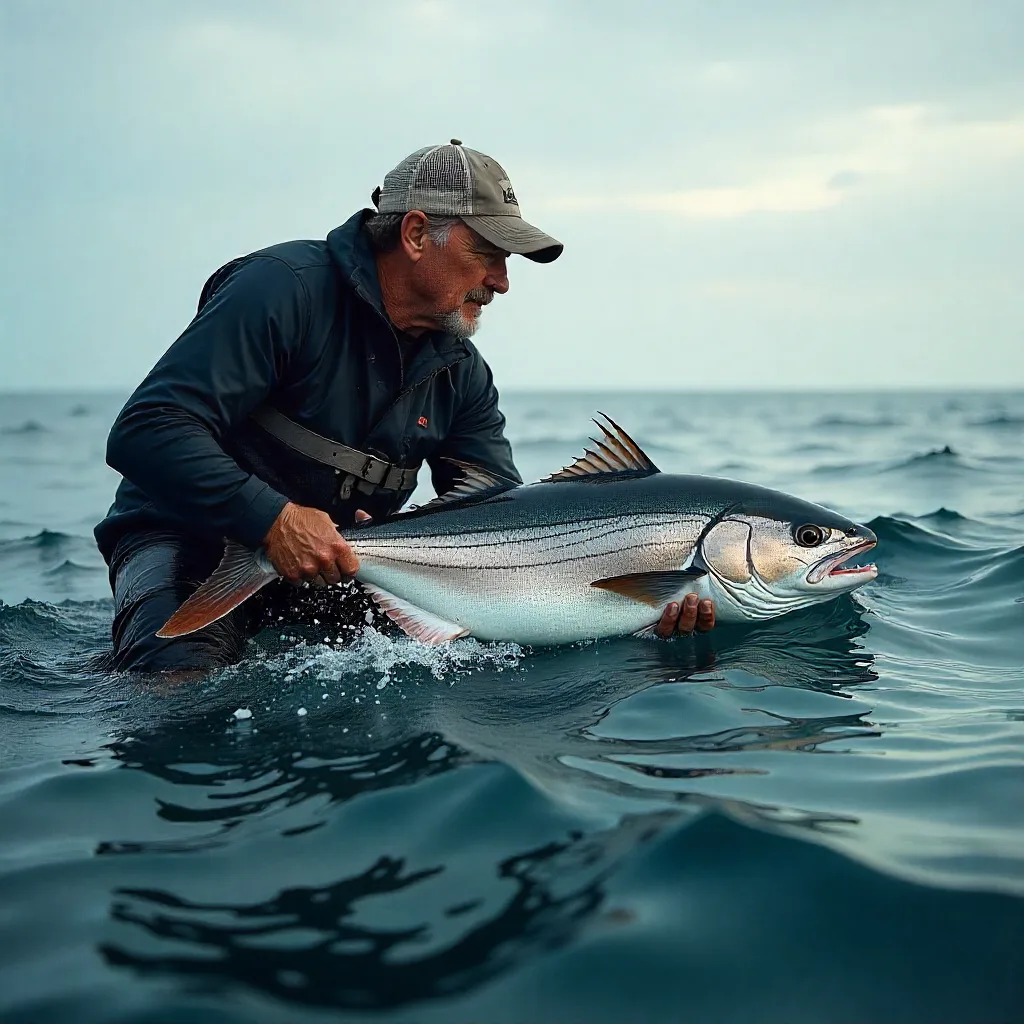
🛟 Offshore Fishing Safety Tips
Big game fishing is exciting but also risky if unprepared. Follow these safety musts:
- ✔️ Always wear a life jacket
- ✔️ Use satellite phones or EPIRBs
- ✔️ File a float plan before departure
- ✔️ Hydrate and bring snacks
- ✔️ Watch for weather changes
- ✔️ Know how to gimbal your rod and brace during fights
Beginner Mistakes to Avoid
- ❌ Underestimating the physical demand
- ❌ Booking a cheap, unlicensed charter
- ❌ Using freshwater gear
- ❌ Forgetting seasickness meds
- ❌ Ignoring local laws or size limits
- ❌ Not checking the weather window
Frequently Asked Questions (FAQs)
What is the single most essential piece of gear for a big game beginner?
The single most essential piece of gear for a beginner is a Fighting Belt and Harness. Unlike inshore fishing, big game fishing involves battles lasting hours against fish weighing hundreds of pounds. The harness distributes the enormous load of the heavy rod and reel from your arms and back to your legs and core, preventing severe fatigue and potential injury. You must learn how to properly gimbal (lock the rod butt into the belt) before starting your trip.
How far offshore do you need to travel to find “big game” fish?
The distance varies significantly by region. In areas with a steep continental shelf (like Kona, Hawaii, or parts of the Caribbean), you can encounter blue marlin just a few miles offshore. However, in locations with a gradual shelf (like the Gulf of Mexico or the Atlantic coast), you may need to travel 30 to 100 miles offshore to reach the deep canyons, temperature breaks, and oceanic currents where large migratory species like tuna and swordfish congregate.
Is Catch and Release mandatory for all billfish (marlin, sailfish)?
While Catch and Release is strongly encouraged globally for conservation purposes, it is not strictly mandatory for all billfish in all locations. Many tournaments and fisheries have specific rules:
Sailfish and White Marlin: Often required to be released alive.
Blue Marlin and Swordfish: May be permitted to be harvested if they meet strict minimum size and weight requirements, which often exceed 100 inches or 200 pounds.
Always confirm the specific rules of your charter and fishing region before targeting billfish.
What is the biggest difference between a conventional reel and a 2-speed conventional reel used in offshore fishing?
A standard conventional reel has one gear ratio. A 2-speed conventional reel has two gear ratios (e.g., a fast 4:1 ratio and a slow, powerful 1.5:1 ratio). The slow speed offers significantly increased torque and pulling power, which is critical for fighting large, powerful fish like marlin or giant tuna that need to be lifted from great depths. The fast speed is used to quickly retrieve slack line or reel in tackle after a strike. This dual capability is mandatory for effective big game fishing.
Conclusion: Ready to Reel in a Giant?
Big game fishing is more than a sport; it is an expedition that demands respect for the ocean and dedication to the process. You now have the essential roadmap to start your offshore journey in 2025, covering everything from the target species and top global destinations to the heavy-duty gear and specialized techniques required.
Remember that success in deep-sea fishing is often determined before you even leave the dock. Prioritize safety, check the federal and local regulations, and never underestimate the power of the fish you are chasing. Start small, book a reputable chartered trip, and focus on mastering the fundamentals of trolling and live baiting.
The deep blue awaits, offering a test of skill and an opportunity to hook a true monster. With the right preparation and mindset, that once-in-a-lifetime fight with a blue marlin or giant tuna is within reach.
swemgo
Incredible! i’ve been searching for something similar.
i appreciate the info