
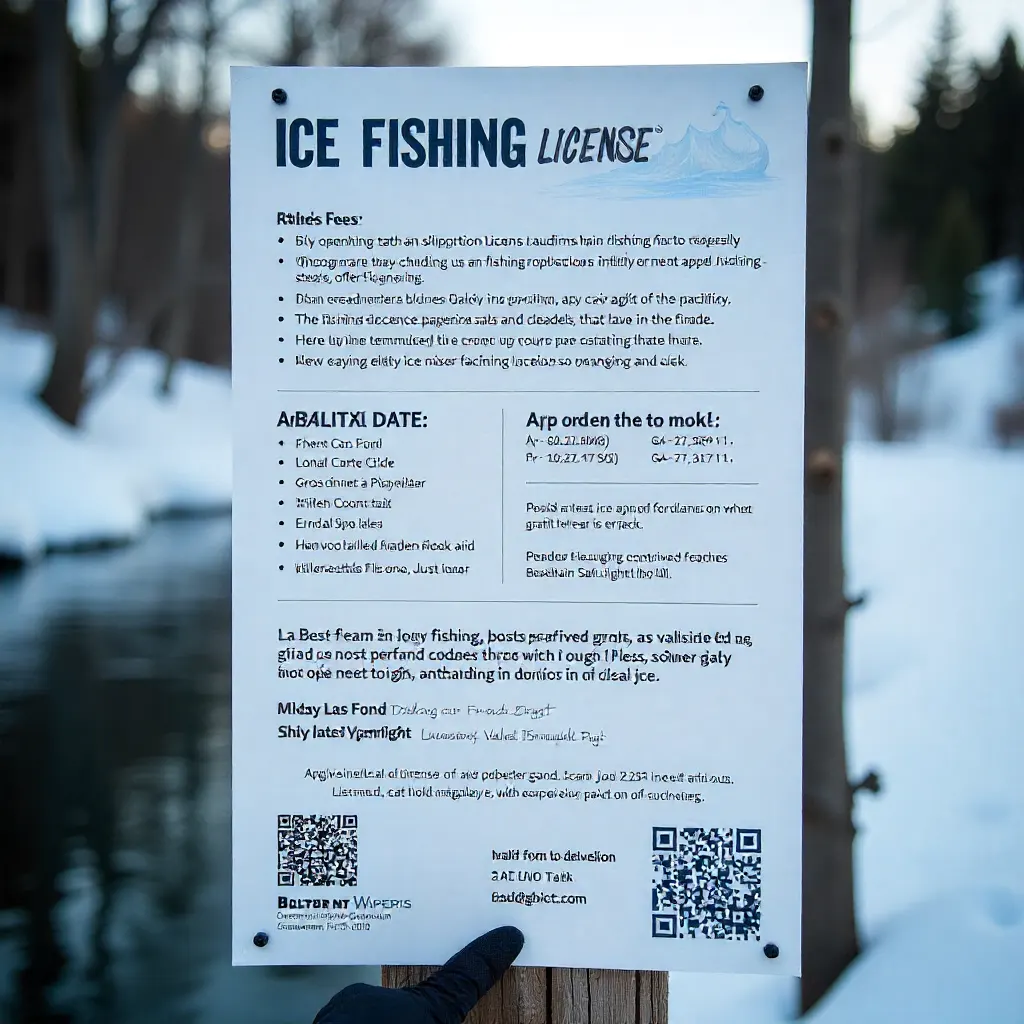
Every winter, thousands of anglers head out onto frozen lakes without realizing they’re breaking the law. The question “do I need a license for ice fishing?” comes up constantly, and the answer is almost always yes. Understanding ice fishing license requirements prevents expensive fines, supports conservation efforts, and ensures you’re fishing legally. This comprehensive guide covers everything you need to know about ice fishing licenses across North America in 2026.
I learned this lesson the hard way during my first ice fishing trip in Minnesota. A warden checked licenses on the ice, and while I had my summer fishing license, I didn’t realize it had expired in February. The $150 fine was a painful education. Don’t make my mistake—know the rules before you drill that first hole.
Do You Need a License for Ice Fishing?
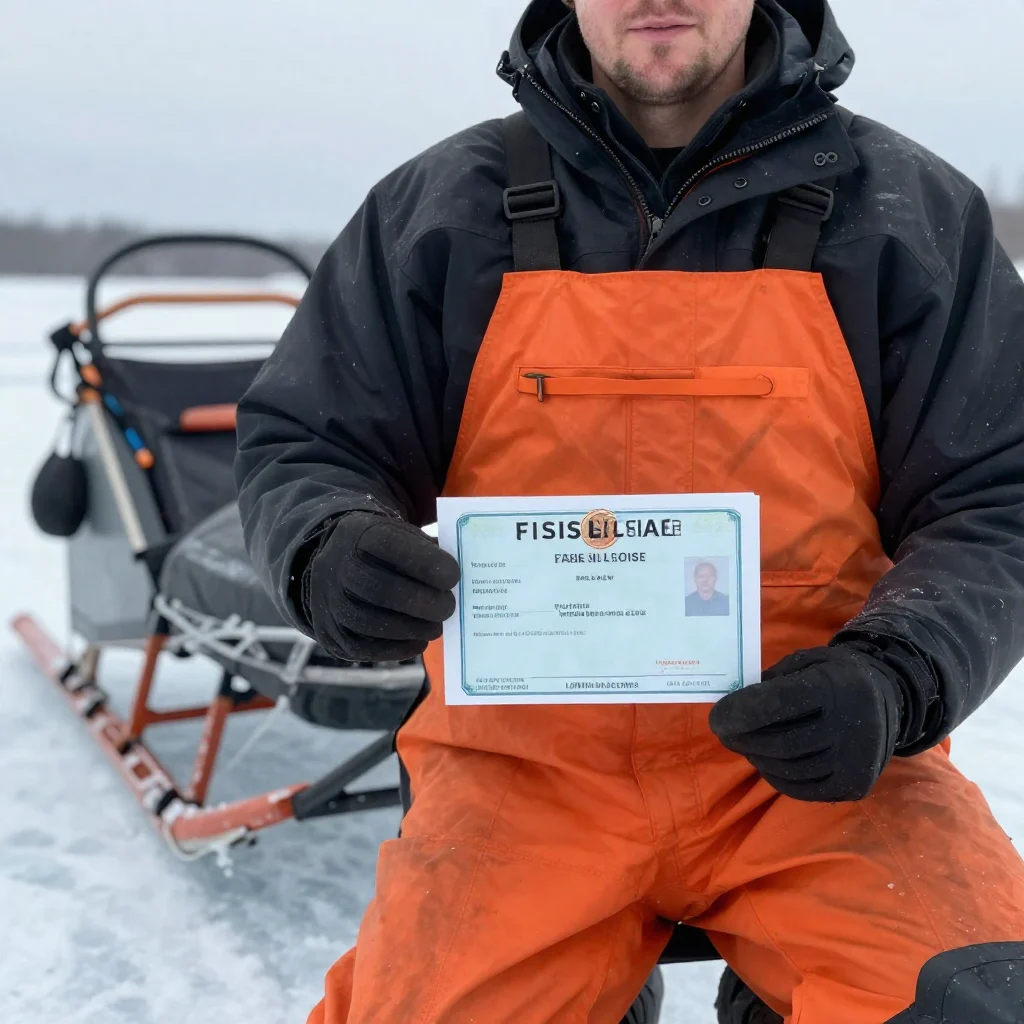
Yes, in almost all cases. Ice fishing requires the same fishing license as open-water fishing. If you’re 16 years or older (varies by state—some states require licenses at 15 or 18), you need a valid fishing license to legally ice fish in virtually every state and Canadian province.
General Rule
An ice fishing license isn’t typically a separate license—it’s your standard freshwater fishing license that remains valid during winter months. The same license that lets you bass fish in summer allows you to chase perch through the ice in winter.
Rare Exceptions
Free Fishing Days: Most states offer 1-3 days per year when anyone can fish without a license. These often include winter dates specifically for ice fishing. Check our free fishing days by state guide.
Private Property: Some states don’t require licenses on private ponds, but rules vary significantly. Never assume—always check state regulations.
Age Exemptions: Children under a certain age (typically 15-16) don’t need licenses. Seniors may get free or discounted licenses. See the exemptions section below.
For comprehensive licensing information, visit our fishing license requirements by state guide.
Ice Fishing License vs Regular Fishing License
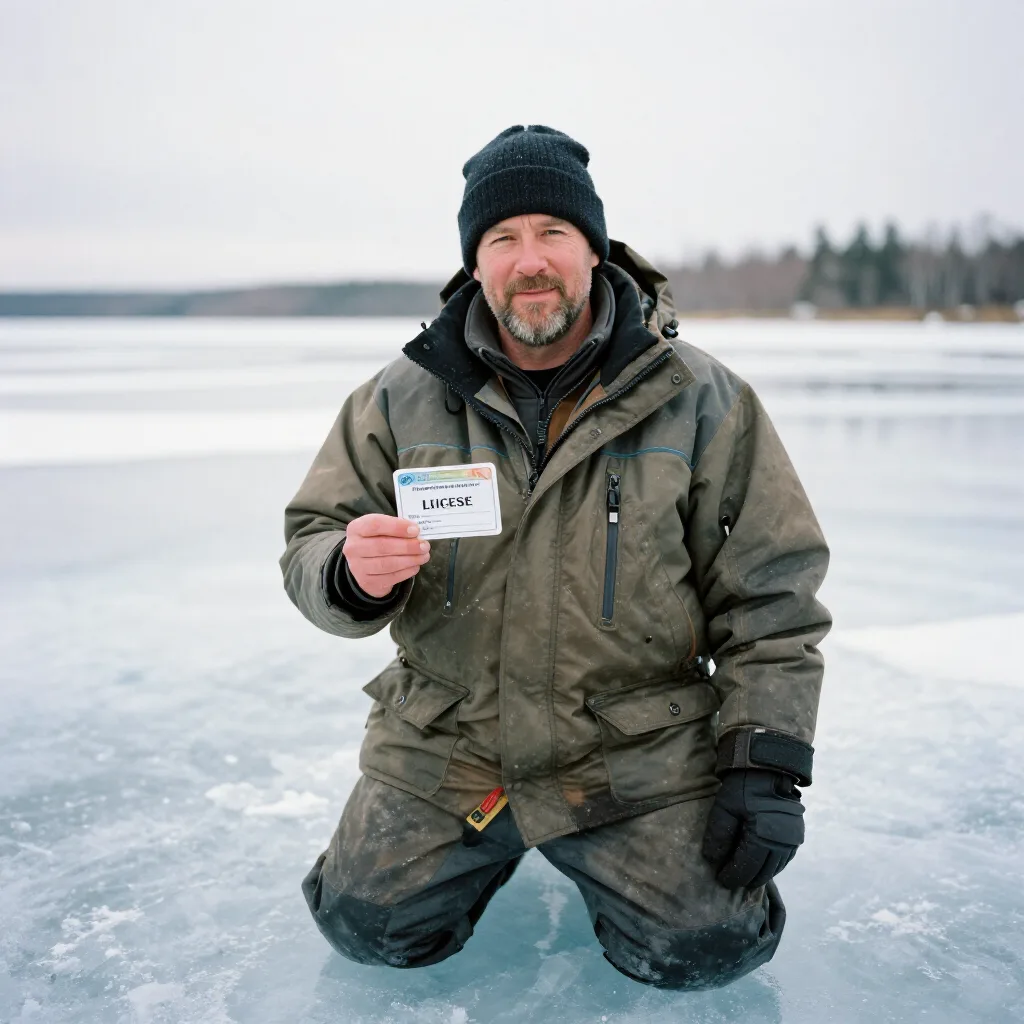
This confuses many anglers: there is no separate “ice fishing license” in most states. Your standard freshwater fishing license covers both open-water and ice fishing.
What Your Regular License Covers
✅ Ice fishing through frozen lakes and ponds ✅ Using tip-ups, jigging rods, and other ice fishing methods ✅ Catching the same species available during open-water season ✅ Fishing year-round (subject to species-specific season closures)
When You Might Need Additional Permits
While your base license covers ice fishing, you may need additional stamps or permits for:
Trout Stamps: Many states require an additional trout stamp to fish for or possess trout, including through the ice.
Great Lakes Stamps: Some Great Lakes states require special stamps for certain species.
Spearing Permits: States allowing darkhouse spearing (North Dakota, Minnesota, others) often require separate registration.
Second Rod Permits: Some states allow fishing with multiple lines if you purchase an additional permit.
Learn more about fishing license USA requirements and how to get fishing licenses online.
State-by-State License Requirements
Ice fishing license requirements vary significantly by state. Here’s a breakdown of key information for major ice fishing destinations:
Northeast States
Maine
- License required: Age 16+
- Cost: Resident $27/annual, Non-resident $66/annual
- Note: North Zone waters closed to ice fishing unless specifically designated open
- Special regulations for ice shanty marking and removal
New York
- License required: Age 16+
- Cost: Resident $27/annual, Non-resident $52/annual
- Ice shanties must be marked with owner info (3-inch letters)
- Must be removed by March 15
Vermont
- License required: Age 15+
- Cost: Resident $28/annual, Non-resident $56/annual
- Five-line limit through the ice
- Check fishing regulations before heading out
Great Lakes States
Minnesota
- License required: Age 16+
- Cost: Resident $26/annual, Non-resident $56/3-day, $86/annual
- Four-line limit per angler
- Darkhouse spearing registration required separately
- Check our ice fishing techniques guide
Wisconsin
- License required: Age 16+
- Cost: Resident $20/annual, Non-resident $50/annual
- Three-line limit for most species
- Sturgeon spearing requires separate license
Michigan
- License required: Age 17+
- Cost: Resident $26/annual, Non-resident $76/annual
- Two-line limit standard, three-line permits available
- Visit Michigan fishing license info
Northern Plains States
North Dakota
- License required: Age 16+
- Cost: Resident $18/annual, Non-resident $58/annual
- Four-line limit through ice
- Darkhouse spearing registration required
- See our Devils Lake ice fishing guide
South Dakota
- License required: Age 16+
- Cost: Resident $28/annual, Non-resident $93/annual
- Two-line limit standard
- Spearfishing requires additional license
Montana
- License required: Age 15+
- Cost: Resident $32/annual, Non-resident $116/annual
- Two-rod permit available for additional fee
- Check Montana fishing regulations
Mountain West States
Colorado
- License required: Age 16+
- Cost: Resident $36/annual, Non-resident $105/annual
- Two-rod stamp available
- Many high-elevation lakes freeze solid for ice fishing
Wyoming
- License required: Age 14+
- Cost: Resident $27/annual, Non-resident $102/annual
- Limited ice fishing season on many waters
- Check specific water regulations
Idaho
- License required: Age 14+
- Cost: Resident $29.75/annual, Non-resident $113.50/annual
- No specific line limit for ice fishing
- Two-rod permit available
Other Notable States
Alaska
- License required: Age 18+
- Cost: Resident $29/annual, Non-resident $145/annual
- King salmon stamp required for that species
- Many remote ice fishing opportunities
Pennsylvania
- License required: Age 16+
- Cost: Resident $23/annual, Non-resident $57/annual
- Trout/salmon permit required for those species
- Ice fishing very popular on Lake Erie
For detailed information on any specific state, visit our comprehensive fishing license requirements guide.

How to Purchase an Ice Fishing License
Getting your ice fishing license is easier than ever with multiple purchasing options available.
Online Purchase (Recommended)
Advantages:
- Instant access—print or display on phone
- Available 24/7
- Usually slightly cheaper than in-person
- Digital records saved to your account
- No need to carry paper license
How to Buy Online:
- Visit your state’s fish and wildlife website
- Navigate to license sales section
- Create account or log in
- Select license type (annual, multi-day, or daily)
- Add any required stamps (trout, salmon, etc.)
- Complete payment
- Print confirmation or save to phone
Most states use systems like “Active Outdoors Solutions” or similar platforms. Your license is typically available immediately after purchase.
Pro Tip: Download your state’s fish and wildlife mobile app. Many allow you to store licenses digitally and access them offline.
Check our guide on how to get a fishing license online for detailed state-by-state instructions.
Retail Locations
Where to Buy:
- Sporting goods stores (Bass Pro, Cabela’s, Dick’s)
- Walmart and other big-box retailers
- Local bait and tackle shops
- Gas stations in rural areas
- Some grocery stores
Advantages:
- Get advice from knowledgeable staff
- Purchase tackle and gear simultaneously
- Some people prefer face-to-face transactions
Disadvantages:
- Limited to business hours
- May involve service fees
- Requires physical trip
By Phone
Some states allow license purchases by phone, though this is becoming less common as online systems improve. Check your state’s fish and wildlife department for phone ordering options.
Automatic Renewal
Many states now offer automatic annual license renewal. Sign up once, and your license renews automatically each year. You’ll receive email notifications before charging your card.
License Costs by State
Ice fishing license costs vary dramatically depending on residency status and duration.
Typical Cost Ranges (2026)
Resident Annual Licenses:
- Low: $15-25 (states like North Dakota, Pennsylvania)
- Average: $25-35 (most states)
- High: $35-50 (states like Colorado, California)
Non-Resident Annual Licenses:
- Low: $50-75 (friendly states)
- Average: $75-120 (most states)
- High: $150-200 (states protecting resident opportunity)
Short-Term Non-Resident Licenses:
- 1-Day: $10-30
- 3-Day: $25-60
- 7-Day: $35-75
Resident vs Non-Resident Price Difference
Non-resident licenses typically cost 2-5 times more than resident licenses. This pricing structure:
- Funds state conservation from visiting anglers
- Provides price advantage for residents who pay state taxes
- Helps manage fishing pressure on popular waters
Additional Costs to Consider
Beyond your base license, budget for:
- Trout/salmon stamps: $5-20
- Second rod permits: $10-25
- Spearing licenses: $5-15
- Combination hunting/fishing packages: Often save $10-30
Best Value Options
Annual Resident License: Best value if you fish more than 3-4 times per year.
Multi-Day Non-Resident: Perfect for ice fishing trips. Three-day licenses usually cover a weekend trip.
Lifetime Licenses: Some states offer lifetime licenses. Expensive upfront ($300-500+ depending on age) but can save money over decades.
For current pricing in all states, see our cheapest fishing licenses by state comparison.
Who Gets Free or Discounted Licenses
Many groups qualify for free or reduced-price ice fishing licenses:
Age-Based Exemptions
Children:
- Most states: Free for ages 15 and under
- Some states: Free for ages 12 and under
- Few states: Free for ages 18 and under
Seniors:
- Varies by state: Ages 62-70 and older
- Usually: Reduced fees rather than completely free
- Some states: Completely free for residents over a certain age
Military Exemptions
Active Duty:
- Many states: Free or reduced licenses for active military
- Usually: Must be stationed in that state or maintain residency
- Some states: Free for all active duty regardless of station
Veterans:
- Disabled veterans: Free licenses in many states
- Percentage of disability determines eligibility
- Usually: Must have VA documentation
Gold Star Families: Some states provide free licenses to families of fallen service members.
Disability Exemptions
Qualifications:
- Usually: Permanent disability as determined by Social Security or VA
- Some states: Any documented disability
- Requirements: Proper documentation required at purchase
Benefits:
- Free or significantly reduced license fees
- Sometimes: Allows fishing from vehicle or special accommodations
- May include: Companion licenses for caretakers
Blind or Visually Impaired
Many states offer free or reduced licenses for legally blind residents.
Resident Landowners
Some states offer free or reduced licenses for residents who own substantial acreage. Requirements vary—usually 10-40+ acres.
Youth Programs
Free Youth Fishing Events: Many states host free youth ice fishing events with no license required.
Mentored Youth Hunting/Fishing: Some states allow unlicensed youth to fish under direct supervision of licensed adult.
For detailed exemption information by state, visit our fishing license for kids and resident vs non-resident guides.
Fishing License Violations and Penalties
Fishing without a proper ice fishing license carries serious consequences.
Common Violations
Fishing Without a License:
- First offense: $100-300 fine typically
- Repeat offenses: $300-1,000+ fines, possible equipment confiscation
- Serious violations: Potential jail time in extreme cases
Expired License:
- Treated similarly to no license
- Officers may show leniency if recently expired
- Still subject to fines
Fishing on Another Person’s License:
- Cannot borrow or share licenses
- Both parties can be cited
- Same penalties as fishing without license
Providing False Information:
- Lying about residency status to get cheaper license
- Using fake ID or information
- Serious offense with higher penalties
Additional Fishing Violations
Beyond license issues, ice anglers can be cited for:
Exceeding Bag Limits:
- Fines per fish over limit
- Potential equipment confiscation
- Can result in license suspension
Fishing Closed Waters:
- Some lakes closed to ice fishing
- Fines similar to license violations
Illegal Methods:
- Too many lines (varies by state)
- Illegal bait or tackle
- Fishing during closed seasons
Ice Shanty Violations:
- Unmarked shanties
- Shanties left past deadline (usually mid-March)
- Littering or improper waste disposal
Long-Term Consequences
License Suspension:
- Serious or repeat violations can result in 1-3 year license suspension
- May apply across multiple states through interstate compacts
Criminal Record:
- Major violations can result in misdemeanor charges
- Affects background checks for employment
Loss of Hunting Privileges:
- Some violations affect both hunting and fishing privileges
- Interstate Wildlife Violator Compact shares information between states
Enforcement on Ice
Conservation Officer Checks:
- Officers regularly patrol popular ice fishing lakes
- Can check licenses, catch limits, and equipment
- May measure ice holes, inspect shanties
- Have authority to inspect coolers and fish
What to Do During Check:
- Be courteous and cooperative
- Have license readily available (phone or paper)
- Don’t volunteer information beyond what’s asked
- Know your rights but don’t be confrontational
Learn about avoiding beginner fishing mistakes including license issues.
Multi-State Fishing: Reciprocity Agreements
Planning to ice fish multiple states? Understanding reciprocity can save money and legal headaches with your ice fishing license.
What Is Reciprocity?
Reciprocity agreements allow anglers licensed in one state to fish certain waters in another state without purchasing an additional license. These agreements are relatively rare but exist in specific situations.
Where Reciprocity Exists
Border Waters:
- Mississippi River: Multiple states have reciprocal agreements
- Ohio River: Similar border water agreements
- Other major river boundaries
Specific Agreements:
- Michigan-Wisconsin: Reciprocity on boundary waters
- Minnesota-Wisconsin: Agreements on certain border waters
- Check state websites for current agreements
Great Lakes Considerations
The Great Lakes span multiple states, creating complex licensing situations:
General Rule: You must be licensed in the state whose waters you’re fishing, regardless of where you launched your boat or where you’re standing on ice.
Example: If you’re ice fishing on Lake Michigan, you need a license for whichever state’s waters you’re in (Michigan, Wisconsin, Illinois, or Indiana).
Tip: Some multi-state anglers purchase licenses for all surrounding states to avoid confusion and stay completely legal.
No National License
Important: There is no “national fishing license” that works in all states. Each state manages its own fisheries and requires separate licenses.
Exception: Federal parks and waters may have different rules, though most still require state licenses.
Planning Multi-State Ice Fishing Trips
Buy All Licenses Before Leaving Home:
- Purchase online for each state you’ll visit
- Often cheaper than buying at out-of-state retailers
- Ensures you’re legal from the moment you start fishing
Know Boundary Lines:
- On border lakes, know where state lines run
- Err on the side of caution—buy both licenses if unsure
- GPS apps can help identify boundaries
For more information, see our fishing without a license consequences guide.
Special Permits and Stamps
Beyond your base ice fishing license, many states require additional permits for certain species or methods.
Trout and Salmon Stamps
Required in Most States:
- Separate stamp/permit for trout and salmon
- Cost: $5-20 typically
- Must be purchased in addition to base license
- Required to fish for OR possess these species
Why Separate?
- Funds trout stocking programs
- Pays for coldwater fisheries management
- Trout fishing is resource-intensive
Where It Matters for Ice Fishing:
- Lakes stocked with rainbow, brook, or brown trout
- Natural trout lakes
- Check before keeping any trout through the ice
Second Rod Permits
States Offering Second Rod Permits:
- Minnesota (allows 4 lines standard, no permit needed)
- Wisconsin (3-line permit available)
- Michigan (3-line permit available)
- Others vary
Benefits:
- Fish multiple depths simultaneously
- Increases catch rates
- One rod can be “soaking” bait while you jig another
Cost: $5-15 typically
Note: Some states allow multiple lines through ice without permits. Always check current regulations.
Spearing Licenses
Darkhouse Spearing:
- Allowed in Minnesota, North Dakota, Michigan, Wisconsin
- Requires separate license or registration
- Targets pike, suckers, rough fish (carp, etc.)
- Check our advanced fishing techniques for methods
Traditional Spearing:
- Different from darkhouse spearing
- Rules vary dramatically by state
- Often restricted to specific species
Great Lakes Stamps
Some states require special stamps for:
- Great Lakes salmon fishing
- Lake trout in Great Lakes
- Other specific Great Lakes species
Check Combined Packages
Many states offer combination licenses that include multiple stamps at a discount:
- Fishing + Trout stamp combo
- Hunting + Fishing combo
- All-species packages
Usually saves $10-30 compared to buying separately.
License Check Tips for Ice Anglers
Encounters with conservation officers are common during ice fishing season. Here’s how to handle ice fishing license checks professionally.
Be Prepared
Have License Accessible:
- Don’t make officer dig through tackle boxes
- Phone stored licenses: Have app open and ready
- Paper licenses: Keep in waterproof sleeve in easily accessible pocket
Know Your Information:
- Know your license number
- Remember expiration date
- Understand what your license covers
What Officers Check
License Validity:
- Current and not expired
- Proper resident/non-resident status
- Required stamps (trout, etc.)
Catch Compliance:
- Count fish in bucket, cooler, and on stringers
- Measure any size-restricted species
- Verify species identification
Equipment Compliance:
- Count lines in water
- Check for illegal methods
- Inspect bait (some waters restrict live bait)
Ice Shanty Compliance:
- Proper marking with owner information
- Not left unattended beyond allowed time
- No litter or violations
Your Rights
Officers Can:
- Check your license anytime while fishing
- Count and measure your catch
- Inspect your fishing equipment
- Ask for identification
Officers Cannot:
- Search your vehicle without probable cause or consent
- Confiscate property without violation
- Require you to answer questions beyond identification and license verification
If You’ve Made a Mistake
Honest Mistake (Forgot License at Home):
- Explain situation calmly
- Provide identifying information
- Officer may verify license through system
- May receive warning rather than citation
Actually Unlicensed:
- Accept responsibility
- Don’t lie or make excuses
- Pay fine promptly
- Purchase license before fishing again
Dispute a Citation:
- Accept the citation politely
- Follow instructions for contesting
- Prepare documentation
- Appear in court if necessary
For more on fishing regulations and avoiding issues, see our fishing pro tips guide.
Supporting Conservation Through Licenses {#conservation}
Every ice fishing license you purchase directly funds fisheries management and conservation.
Where Your Money Goes
Fish Stocking Programs:
- Trout stocking for put-and-take fisheries
- Walleye stocking to maintain populations
- Pan fish (perch, crappie, bluegill) stocking
- Native species restoration
Habitat Improvement:
- Fish spawning habitat creation
- Aquatic vegetation management
- Water quality monitoring
- Stream bank stabilization
Research and Monitoring:
- Fish population surveys
- Growth rate studies
- Disease monitoring
- Invasive species control
Hatchery Operations:
- Raising fish for stocking
- Maintaining brood stock
- Disease prevention
- Genetic diversity programs
Access Improvements:
- Public boat launches
- Fishing piers and platforms
- Ice fishing access areas
- Parking facilities
Law Enforcement:
- Conservation officer salaries
- Patrol vehicles and equipment
- Training programs
- Enforcement technology
Federal Support
Through the Sport Fish Restoration Act (also called Dingell-Johnson Act):
- Excise taxes on fishing equipment
- Taxes on boat fuel and motors
- Federal funds distributed to states
- Must be matched by state license revenue
Your license purchases ensure state eligibility for these federal matching funds.
Economic Impact
Licensed anglers generate billions in economic activity:
- Tackle and gear purchases
- Lodging and meals
- Gas and transportation
- Guide services
- Tourism in rural communities
Ice fishing alone generates over $1 billion annually in economic activity.
Conservation Success Stories
License-funded programs have achieved:
- Restoration of walleye populations in dozens of lakes
- Successful lake trout recovery in Great Lakes
- Creation of thousands of trophy fisheries
- Protection of native species
- Control of invasive species
When you buy your ice fishing license, you’re investing in the future of fishing.
Frequently Asked Questions
Do I need a separate ice fishing license or is my regular fishing license enough?
Your regular freshwater fishing license covers ice fishing in almost all states—there’s no separate “ice fishing license.” The same annual or short-term license that allows summer fishing permits winter ice fishing, subject to species-specific seasons and regulations. Some states may require additional stamps for trout, salmon, or spearing.
At what age do you need an ice fishing license?
Most states require licenses at age 16, though some start at 15 (Vermont, Montana) or 14 (Wyoming, Idaho). Younger children can fish without licenses. Some states also offer free or reduced licenses for seniors (typically 62-70+). Check your specific state’s requirements at fishing license requirements by state.
Can I use my fishing license from one state to ice fish in another state?
No. Each state requires its own separate fishing license, except in specific reciprocity situations on border waters. If you’re planning to ice fish in multiple states, you need to purchase a license for each state. Non-resident short-term licenses (1-day, 3-day, 7-day) are available for ice fishing trips.
How much does an ice fishing license cost?
Resident annual licenses typically cost $15-50, while non-resident annual licenses range from $50-200 depending on the state. Short-term non-resident options (1-3-7 days) cost $10-75. Additional stamps for trout, salmon, or extra lines add $5-25. See our cheapest fishing licenses guide for specific state pricing.
Where can I buy an ice fishing license?
Purchase online through your state’s fish and wildlife website (fastest and most convenient), at sporting goods stores like Bass Pro Shops or Cabela’s, at Walmart, at local bait shops, or by phone in some states. Online purchases are typically instant and can be displayed on your smartphone.
What happens if I get caught ice fishing without a license?
Fines typically range from $100-300 for first offenses, with higher fines ($300-1,000+) for repeat violations. Officers may confiscate equipment in serious cases. Violations can result in license suspension, affect hunting privileges, and in extreme cases lead to criminal charges. Interstate Wildlife Violator Compacts share violation information between states.
Do disabled veterans get free ice fishing licenses?
Many states offer free or discounted fishing licenses to disabled veterans, typically requiring 100% permanent disability rating from the VA or unemployable status. Requirements and benefits vary by state. Proper VA documentation must be presented when purchasing or while fishing. Check your state’s specific veteran benefits.
Can kids ice fish without a license?
Yes, in all states. Children under a certain age (typically 12-16, varies by state) can ice fish without a license. They must still follow all other regulations including bag limits, size restrictions, and seasonal closures. In some states, unlicensed children fishing with licensed adults may be able to contribute to the adult’s bag limit rather than having their own separate limit.
Do I need a license to ice fish on private property?
In most states, yes—you still need a license even on private property. A few states exempt completely private ponds with no connection to other waters, but these exceptions are rare. Always check state-specific regulations. The property owner doesn’t need to have a license unless they’re personally fishing.
Are there any free ice fishing days when I don’t need a license?
Yes! Most states offer 1-3 free fishing days per year when anyone can fish without a license. Many include at least one winter date specifically for ice fishing. All other regulations (bag limits, size restrictions, seasons) still apply. Check our free fishing days guide for specific dates by state.
Understanding ice fishing license requirements keeps you legal, supports conservation, and ensures you’re contributing to the future of the sport. With online purchasing, getting licensed takes just minutes and provides peace of mind for the entire season.
Whether you’re a weekend warrior hitting your local lake or planning a destination ice fishing trip, make sure licensing is the first item checked off your prep list. The small investment in a license pays huge dividends—funding the fisheries management programs that keep our lakes stocked, healthy, and producing quality fish.
Don’t risk the hassle and expense of fishing illegally. Get licensed, fish legally, and enjoy worry-free ice fishing knowing you’re supporting the conservation programs that make great fishing possible. The fish, the fisheries managers, and future generations of anglers will thank you.
Now get your license sorted out, gather your ice fishing gear, and get out there. The ice is calling, and the fish are waiting. Stay safe, fish legally, and make this your best ice fishing season yet. ❄️🐟
Quick Reference Checklist
Before Your Ice Fishing Trip:
- [ ] Purchase valid fishing license for the state you’ll fish
- [ ] Check license expiration date
- [ ] Buy any required stamps (trout, salmon, etc.)
- [ ] Download digital copy to phone or print paper copy
- [ ] Store license in waterproof, easily accessible location
- [ ] Review current fishing regulations for target waters
- [ ] Check bag limits and size restrictions
- [ ] Verify ice fishing is allowed on target water
- [ ] Note any special restrictions (line limits, bait restrictions)
- [ ] Understand ice shanty marking and removal requirements
License Purchase Resources:
- State fish and wildlife websites
- Sporting goods retailers
- Local bait shops
- State mobile apps
- Online license portals
Related Articles
- How to Ice Fish: Complete Guide
- Ice Fishing Techniques for Success
- Devils Lake Ice Fishing Guide
- Eskimo Ice Fishing Gear Review
- Fishing License Requirements by State
- How to Get a Fishing License Online
- Free Fishing Days by State
- Resident vs Non-Resident Licenses
- Fishing License for Kids
- Cheapest Fishing Licenses by State
- Fishing Without a License Consequences
- States with Strict Fishing Rules
7 thoughts on “Ice Fishing License Information: State-by-State Guide 2026”