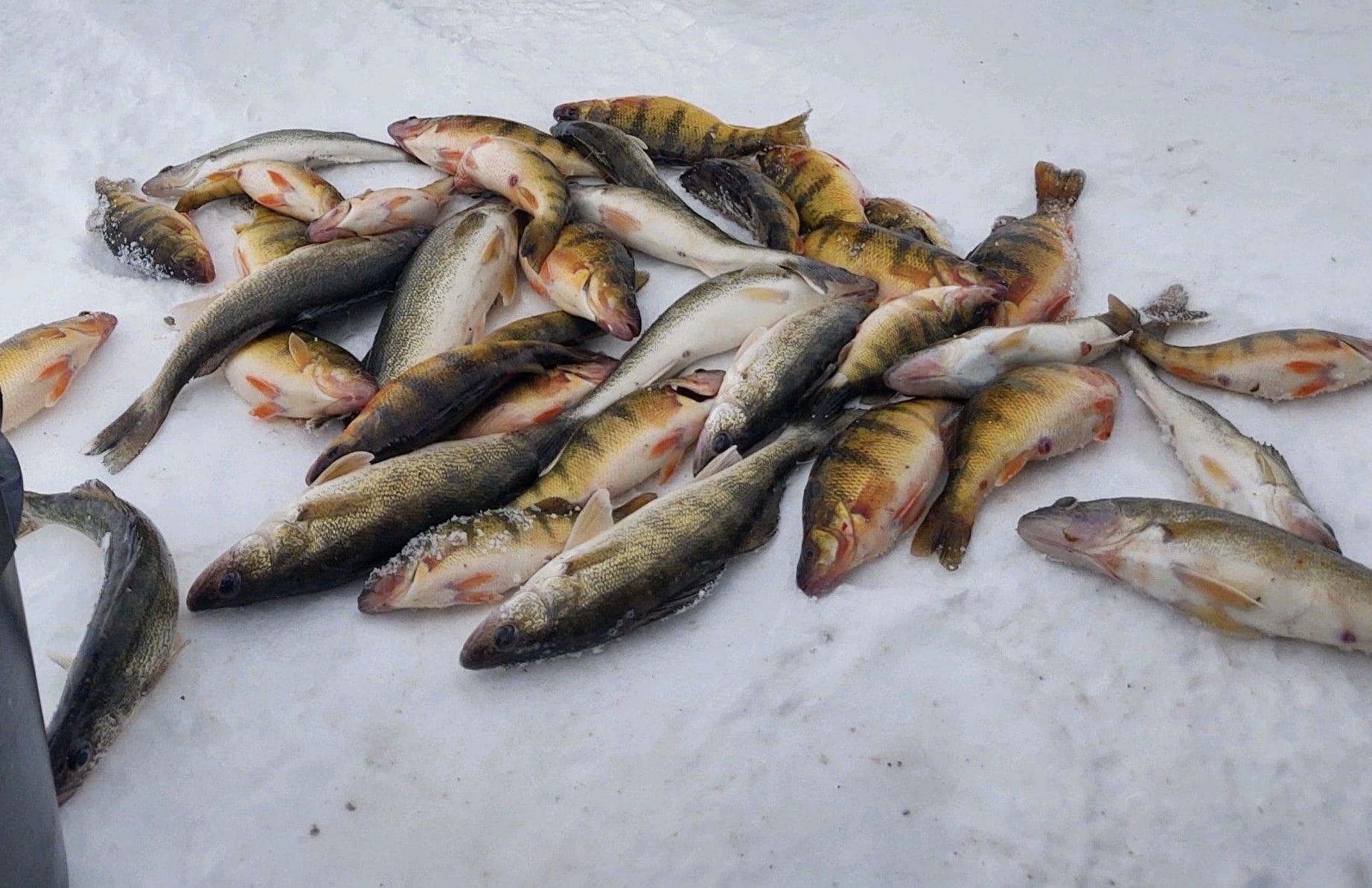
There’s a reason anglers drive hundreds of miles through North Dakota winters to reach Devils Lake—it’s the ice fishing capital for jumbo perch in North America. When someone mentions Devils Lake ice fishing, serious perch fans immediately picture thick ice, heated fish houses, and stringers loaded with fish that would be considered trophy-sized anywhere else. This isn’t your average ice fishing trip. This is the kind of experience that turns casual anglers into obsessed perch chasers.
I made my first trip to Devils Lake three winters ago, skeptical about the hype. Two days later, I was already planning my return trip for the following season. The combination of aggressive fish, proven techniques, and world-class guide services creates an ice fishing experience unlike anywhere else I’ve fished.
Why Devils Lake is the Perch Capital
Devils Lake, North Dakota isn’t just good for perch—it’s legendary. This 165,000-acre prairie lake consistently produces more jumbo perch (fish over 12 inches) than any other water body in North America. The lake’s unique characteristics create perfect conditions for growing massive perch populations.
The Numbers Don’t Lie
Devils Lake ice fishing produces perch averaging 10-12 inches, with fish over 14 inches common and 15-16 inch giants caught regularly. Compare this to most lakes where an 11-inch perch is considered large, and you understand why this destination attracts anglers nationwide.
Daily limits fill quickly here—not with marginal fish, but with legitimate jumbo perch. It’s not unusual for skilled anglers to catch 40-60 perch in a day (North Dakota allows a 40-fish daily limit), with nearly every fish being a keeper.
What Makes Devils Lake Special
The lake flooded dramatically in the 1990s, submerging thousands of acres of trees, roads, and farmland. This created incredible structure and habitat. The flooded timber provides perfect ambush points for perch, while the nutrient-rich prairie water supports abundant forage.
The lake’s size and variety of depths mean perch always have somewhere comfortable to be, regardless of conditions. From shallow bays with submerged trees to deep mud basins hitting 50+ feet, the diverse habitat supports multiple perch patterns simultaneously.
For context on different ice fishing destinations, check our complete ice fishing guide and ice fishing techniques.
Best Time for Devils Lake Ice Fishing
Timing your Devils Lake ice fishing trip correctly can mean the difference between good fishing and legendary fishing.
Early Ice (December – Early January)
Pros: Fish are aggressive and feeding heavily. Perch congregate around submerged timber in 8-20 feet of water. Ice conditions are fresh and safe. Less fishing pressure.
Cons: Ice thickness may limit where you can safely fish. Weather can be unpredictable. Shorter days.
Best for: Anglers who want aggressive bites and don’t mind drilling more holes to find fish.
This is my favorite time to fish Devils Lake. The perch are actively feeding in preparation for deeper winter, and they haven’t seen fishing pressure yet. Target the submerged trees and old shorelines in 12-20 feet of water.
Mid-Winter (Mid-January – February)
Pros: Peak season for jumbo perch. Fish school heavily in deeper water (25-45 feet). Ice is thick and safe everywhere. Established guide patterns.
Cons: Can be brutally cold (-20°F to -30°F). Fish can be finicky during extreme cold snaps. Heavy fishing pressure on weekends.
Best for: Anglers targeting trophy-sized perch willing to brave harsh conditions.
This is prime time for the biggest perch. Fish move to mud basins and deeper structures, schooling in massive groups. When you find them, the action can be non-stop. Learn more about winter fishing strategies and seasonal fishing tips.
Late Ice (March)
Pros: Warming weather makes fishing more comfortable. Longer days. Pre-spawn feeding activity. Ice is still safe but sun cups form.
Cons: Ice conditions deteriorate quickly in warm spells. Snow on ice can reduce bite quality.
Best for: Anglers who want better weather while still catching quality perch.
Late ice brings aggressive pre-spawn feeding. Perch move back toward shallower transitional areas, making them more accessible. Weather is significantly more pleasant, though ice safety becomes a concern.
Understanding Devils Lake Geography
Devils Lake ice fishing success requires understanding the lake’s unique layout. This isn’t a simple, bowl-shaped lake—it’s a complex system of interconnected bays, basins, and submerged structures.
Major Fishing Areas
East Devils Lake: The deepest section, with depths exceeding 50 feet in basins. Prime mid-winter perch location. Requires longer travel from most access points.
Main Bay: Central area with varied depths from 15-35 feet. Consistent producer throughout winter. Good mix of structure.
Creel Bay: Popular area with good access. Mix of shallow and deep water. Heavy pressure but fish are always present.
Pelican Lake: Connected to main lake. Excellent early-ice perch fishing in timber. Shallower overall (10-25 feet).
Lake Alice/Lake Irvine: Upper lake system. Great walleye water that also holds perch. More protected from wind.
Key Structure Types
Submerged Timber: Flooded trees from the 1990s. Perch use these as ambush points early and late ice. Fish around edges in 8-20 feet.
Old Shorelines: Pre-flood shorelines now underwater. These drop-offs from 18-22 feet down to 30+ feet are perch highways. Critical mid-winter structure.
Mud Basins: Flat areas in 30-50 feet of water. Mid-winter perch staging areas. Fish suspend or hold near bottom depending on conditions.
Points and Humps: Isolated structure in deeper water. Can concentrate roaming perch schools. Often overlooked but productive.
For more information on reading water structure, see our fishing tips for beginners guide.
Essential Gear for Devils Lake Perch
Success with Devils Lake ice fishing requires specific gear matched to the conditions and fish behavior.
Rods and Reels
Ultra-Light Ice Rods: 24-30 inch medium-light or light power rods with fast action tips. Devils Lake perch can bite light—you need sensitivity to detect subtle takes.
Quality Ice Reels: Smooth drag is essential. Inline reels or small spinning reels work great. Pre-spool with fresh line before your trip.
Spring Bobbers: Optional but helpful. These attach to your rod tip and show the slightest bite. Many guides swear by them for finicky fish.
Tip: North Dakota allows four lines per angler through the ice. Bring multiple rod setups to maximize your chances. Check out our best fishing rods for beginners if you need equipment recommendations.
Line Selection
4-6 lb Braided Line: Zero stretch means better hook-sets in deep water (25-45 feet). Better sensitivity for detecting light bites. Quality braided line makes a real difference.
2-4 lb Fluorocarbon Leader: 18-24 inch leader of fluorocarbon for invisibility. Perch can be leader-shy in clear water.
Why Not Monofilament? Mono works but has too much stretch for deep water. You’ll miss bites you’d catch with braid.
Lures and Baits
Tungsten Jigs: #12 to #16 size in various colors. Gold, silver, glow, pink, chartreuse. Tungsten drops faster than lead—crucial in deep water.
Spoons: Small flutter spoons and jigging spoons (#3-#5). Buckshot spoons, Kastmasters, Swedish Pimples all produce.
Soft Plastics: Small profile plastics for tipping jigs. Maki, Trigger X, Berkley Gulp all work.
Live Bait: Waxworms (waxies), spikes (maggots), and small minnow heads. Fresh bait from local shops is best.
Scents: Adding scent can trigger bites from finicky fish. Not essential but helpful.
For more on tackle selection, visit our best bait and tackle guide.
Electronics
Flasher or Fish Finder: Vexilar FL-18 or FL-20, MarCum LX-5 or LX-7, Humminbird ICE series. You NEED to see fish to catch them consistently on Devils Lake.
Why Electronics Matter: Perch school and move constantly. Electronics let you see fish approaching, watch their reaction to your presentation, and know when to move.
Underwater Camera: Optional but fun. Seeing perch approach your bait is addictive.
Clothing and Safety
Layering System: Base layer, mid-layer (fleece), insulated outer layer. Temperatures can swing 40 degrees during the day.
Quality Boots: Insulated boots rated to -40°F minimum. Your feet will be stationary on ice for hours.
Ice Cleats: Essential for walking on slippery ice. Wear them constantly.
Hand and Toe Warmers: Chemical warmers are life-savers during cold snaps.
Ice Safety Picks: Wear around your neck. If you break through, these help you pull yourself out.
Check our Eskimo ice fishing gear guide for equipment recommendations.
Top Techniques for Jumbo Perch
Devils Lake ice fishing requires specific techniques refined over decades by local guides and hardcore anglers.
The Search-and-Drill Approach
Devils Lake perch don’t stay put. You must cover water to find active schools.
Step 1: Drill 10-20 holes in a promising area. Space them 25-50 feet apart in a grid pattern.
Step 2: Fish each hole for 5-7 minutes maximum. Drop your jig, work it aggressively for a minute, then fish it subtly. Watch your electronics.
Step 3: If you mark fish that won’t bite or see nothing, move to the next hole. Don’t waste time on dead water.
Step 4: When you find active fish, slow down and milk the spot. Perch travel in schools—where there’s one, there are more.
This aggressive approach covers water fast. You’re looking for that magic school of active jumbos. Once found, the catching can be fast and furious.
Jigging Cadences That Work
Aggressive Lift-Drop: Rip your jig up 12-18 inches, let it flutter back down. Repeat every 2-3 seconds. Triggers reaction strikes from competitive perch.
Subtle Shake: Barely move the jig with tiny wrist twitches. For pressured or finicky fish. Watch your line or spring bobber for bites.
Dead-Stick: Let your bait sit motionless. Sometimes finicky perch want no movement at all. Patience required.
Combination Approach: Start aggressive to call fish in, switch to subtle once they’re interested. Most effective overall strategy.
Reading Your Electronics
Strong Mark at Bottom: Perch sitting on structure. Try dead-sticking or subtle shakes.
Suspended Fish: Perch cruising through. Aggressive jigging often triggers strikes.
Rising Mark: Fish coming up to investigate. Keep jigging—bite is imminent.
Mark That Won’t Commit: Try different colors, sizes, or switch to live bait. Sometimes they just need convincing.
For more advanced fishing strategies, check our advanced fishing techniques and fishing pro tips.
Where to Find Perch Through the Ice
Location changes throughout winter on Devils Lake. Understanding seasonal movements is critical for Devils Lake ice fishing success.
Early Ice Patterns (December – Early January)
Target Areas: Submerged timber in 8-20 feet, edges of old shorelines, inside turns of bays.
Why: Perch haven’t felt winter pressure yet. They’re actively feeding in relatively shallow water near cover.
Best Technique: Drill multiple holes around flooded trees. Fish between trees rather than directly over them. Use aggressive jigging to call fish in.
Mid-Winter Patterns (January – February)
Target Areas: Old shoreline breaks at 20-25 feet transitioning to mud basins at 30-45 feet, suspended over deep basins, isolated humps in deeper water.
Why: Cold water and fishing pressure push perch to deeper, less-pressured areas. They school heavily, roaming over mud flats looking for food.
Best Technique: Focus on transition zones where depth changes quickly. Fish 20-35 feet of water on the drop-offs. Be mobile—schools move constantly.
Late Ice Patterns (March)
Target Areas: Back toward shallower structures (15-25 feet), old shorelines, edges of bays, any area with transitional depth and nearby shallow spawning areas.
Why: Pre-spawn movement. Perch stage in areas adjacent to where they’ll spawn in spring. Water temps start rising, triggering feeding activity.
Best Technique: Target the deeper sides of structure that transitions to shallow spawning areas. Early morning and late afternoon bites can be exceptional.
Working with Local Information
Talk to Bait Shops: Local bait shops have current reports. They know what’s working and where fish are biting. Don’t be shy—ask questions.
Check Recent Reports: Online fishing forums and Facebook groups share recent catches and locations. Devils Lake fishing report pages update regularly.
Hire a Guide: Guides fish Devils Lake nearly every day. They’ve put in the scouting work and know current patterns. Money well spent, especially for first-timers.
Hiring a Devils Lake Ice Fishing Guide
For first-time visitors, hiring a Devils Lake ice fishing guide is the smartest investment you can make.
Benefits of Guided Trips
They Know Current Patterns: Guides fish the lake almost daily. They’ve already done the scouting work to find active fish.
All Gear Provided: Most packages include heated fish house, rods, tackle, bait, and electronics. You just show up.
Learning Experience: Good guides teach you techniques that work on Devils Lake specifically. Knowledge transfers to future DIY trips.
Safety: Guides know ice conditions and safe travel routes. They have emergency equipment and communication.
Higher Catch Rates: Guides put you on fish. DIY first-timers often struggle to find consistent action.
Reputable Guide Services
Perch Patrol: One of the most respected guide services on Devils Lake. Professional operation with experienced guides. Books up months in advance.
Woodland Resort: Full-service resort with in-house guide staff. Packages include lodging, meals, and guided fishing.
Perch Eyes: Long-established guide service specializing in both perch and walleye. Excellent reputation.
Book Early: Quality guides fill their calendars months ahead for peak season (January-February). Book in fall for winter trips.
Typical Costs: Full-day guided trips run $300-500 per person, often with 2-person minimums. Multi-day packages with lodging range $800-1500+ per person.
What to Expect
Morning Pickup: Most guides pick you up at your lodging in a heated vehicle equipped for ice travel.
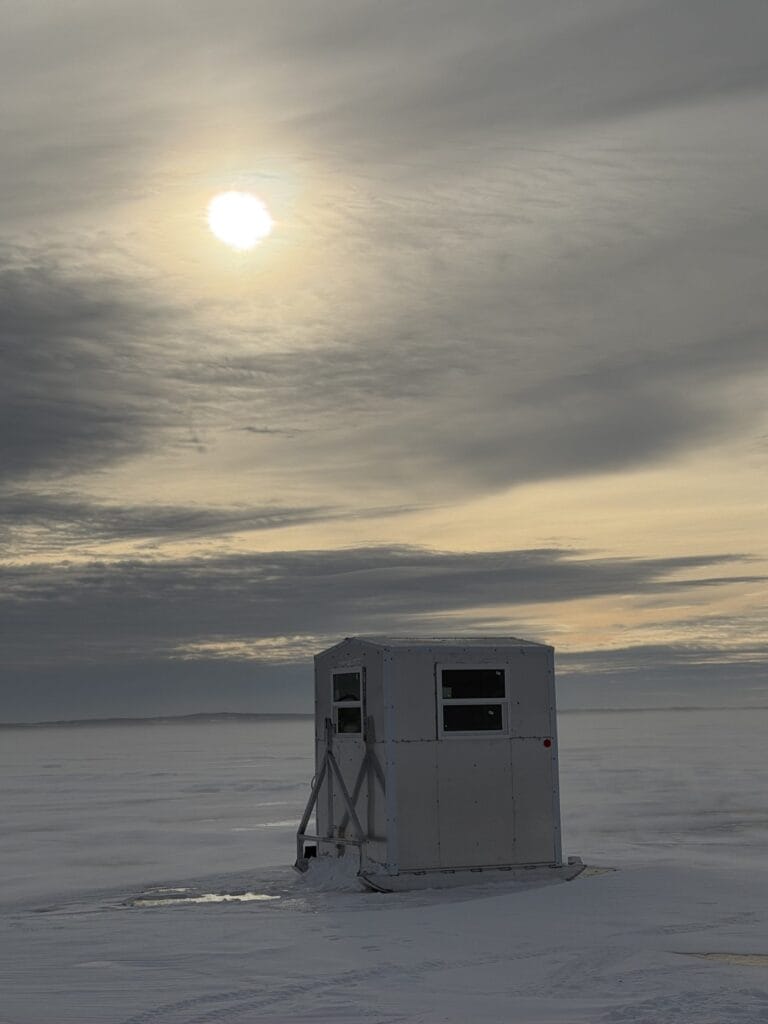
Heated Fish Houses: You’ll fish from portable or permanent heated shelters. Flip-over shacks or spacious wheel houses.
Active Fishing: Expect to move locations multiple times. Guides search for active fish rather than waiting in one spot.
Fish Cleaning: Many services include fish cleaning. They’ll fillet your catch and vacuum seal for travel.
Full Experience: Good guides provide not just fishing but education about the lake, techniques, and local culture.
For more on hiring guides, see our fishing community guide.
Devils Lake Fishing Regulations
Understanding North Dakota fishing regulations is essential for Devils Lake ice fishing trips.
License Requirements
Non-Resident Annual License: Covers fishing year-round in North Dakota. Most cost-effective for multi-day trips.
3-Day Non-Resident License: Good option for shorter visits. Significantly cheaper than annual license.
One-Day License: Available but not recommended unless truly fishing one day only.
Where to Buy: Online through North Dakota Game & Fish website, at local bait shops, or sporting goods stores.
Digital Licenses: Download the ND Outdoors mobile app. Your license is stored digitally on your phone.
Learn more about fishing license requirements and how to get a fishing license online.
Perch Regulations
Daily Limit: 40 perch per day (as of 2026—always verify current regulations)
Possession Limit: 80 perch (two daily limits)
Size Restrictions: None currently. All sizes legal to keep.
Four Lines Allowed: North Dakota permits four lines per angler through the ice. Take advantage—set multiple depths and presentations.
Important Rules
Tip-Ups: Count toward your four-line limit.
Leaving Lines Unattended: Lines must be within 200 yards and within sight. Checking periodically required.
Transporting Fish: Keep fish frozen during transport. Many lodges offer vacuum sealing and freezing services.
Check Current Regulations: Rules can change. Always verify current regulations before your trip at the North Dakota Game & Fish website.
Lodging and Accommodations
Devils Lake ice fishing trips require planning lodging well in advance.
Full-Service Resorts
Woodland Resort: Premier full-service resort on the lake. Packages include lodging, meals, and guided fishing. Indoor fish cleaning station. On-site restaurant and bar.
Pros: Everything in one place. No driving between lodging and fishing. Social atmosphere with other anglers.
Cons: Books up early. More expensive than budget options.
Best for: Anglers wanting the complete experience without logistics hassles.
Hotels and Motels
Devils Lake city has numerous hotels ranging from budget to mid-range:
- Quality Inn
- Fireside Inn & Suites
- AmericInn
- Super 8
- Several independent motels
Pros: More affordable. Greater dining options in town. Flexible schedules.
Cons: Must arrange own fish cleaning. Drive to/from fishing locations. Less immersive experience.
Cabin Rentals
Several properties around the lake offer cabin rentals:
Pros: Privacy and space. Full kitchens for cooking. Often come with fish cleaning areas. More economical for groups.
Cons: Book far in advance. May require minimum stays. Need to source own meals.
RV and Ice Shack Camping
Hardcore anglers sometimes set up RVs or stay in permanent ice shacks on the lake.
Pros: Ultimate immersion. Lowest cost. 24/7 fishing access.
Cons: Brutally cold. Limited amenities. Not for everyone.
Note: Check regulations about overnight stays in ice shelters. Some areas restrict this.
What to Pack for Your Trip
Proper preparation ensures your Devils Lake ice fishing experience is comfortable and successful.
Fishing Gear Checklist
✅ Ice fishing rods and reels (or confirm guide provides) ✅ Tackle box with jigs, spoons, and soft plastics ✅ Braided fishing line and fluorocarbon leader material ✅ Hook sharpener (ice dulls hooks quickly) ✅ Pliers and line clippers ✅ Ice auger (if DIY fishing) – 8″ minimum diameter ✅ Ice scoop for clearing holes ✅ 5-gallon bucket for sitting/storage ✅ Minnow bucket if using live bait ✅ Tackle organization system for keeping gear sorted ✅ Headlamp with fresh batteries ✅ Flasher or fish finder with charged battery
Clothing Checklist
✅ Moisture-wicking base layers (top and bottom) ✅ Fleece mid-layers ✅ Insulated bibs or pants ✅ Insulated parka rated to -40°F or colder ✅ Winter boots rated to -40°F with removable liners ✅ Wool or synthetic socks (multiple pairs) ✅ Insulated gloves (thin and thick pairs) ✅ Face mask or balaclava ✅ Winter hat that covers ears ✅ Neck gaiter or scarf ✅ Ice cleats for traction ✅ Sunglasses (sun reflects intensely off snow/ice) ✅ Sunscreen and lip balm (sunburn happens even in winter)
Food and Hydration
✅ Insulated thermos for hot coffee/cocoa ✅ Water bottles (keep in insulated carrier) ✅ High-calorie snacks (trail mix, jerky, energy bars) ✅ Lunch if doing full-day trips ✅ Chemical hand warmers ✅ Chemical toe warmers
Safety Equipment
✅ Ice safety picks (wear around neck) ✅ Throw rope ✅ First aid kit ✅ Cell phone in waterproof case ✅ Portable charger/power bank ✅ GPS or map of the lake ✅ Whistle ✅ Extra clothing in vehicle
Miscellaneous
✅ Cooler with ice packs for transporting fish ✅ Plastic bags for storing fillets ✅ Camera for photos ✅ Fish measuring board/tape ✅ Small towel ✅ Plastic sled for hauling gear on ice
Safety Considerations
Devils Lake ice fishing can be dangerous if you don’t respect the conditions.
Ice Thickness Guidelines
4 inches: Safe for ice fishing on foot 5-7 inches: Safe for snowmobile or ATV 8-12 inches: Safe for small cars/trucks 12-15+ inches: Safe for full-size trucks
Always check ice thickness yourself. Don’t rely on others’ reports. Ice thickness varies dramatically across the lake.
Dangerous Conditions
Pressure Ridges: Where ice plates push together creating jagged ridges. Can be unstable. Test carefully before crossing.
Snow Cover: Heavy snow insulates ice from cold air, slowing freezing. It also hides dangerous spots.
Slush: Layer of water between ice and snow. Means ice isn’t as thick as it appears. Very dangerous.
Springs and Current: Moving water creates weak spots. Common near river inlets and outlets.
Warm Weather: When temps spike above freezing, ice deteriorates fast. Be extra cautious after warm spells.
Wind: Devils Lake is exposed prairie. Wind chills can reach -50°F. Frostbite happens in minutes.
Emergency Preparedness
Never Fish Alone: Always have a fishing partner. If one person breaks through, the other can help.
Tell Someone Your Plans: Let someone know where you’re fishing and when to expect you back.
Wear Ice Picks: Keep them around your neck outside your clothing. If you break through, these help you pull yourself out.
Know Hypothermia Signs: Shivering, confusion, slurred speech, drowsiness. Get warm immediately if symptoms appear.
Have Emergency Contacts: Save local emergency numbers in your phone. Know the address of your lodging for 911.
For more safety information, see our beginner fishing mistakes to avoid.
Frequently Asked Questions
When is the best time for Devils Lake ice fishing?
Mid-January through February offers peak ice fishing for jumbo perch, with fish schooling heavily in 25-45 feet of water. Early ice (December-early January) provides aggressive fishing in shallower water with less pressure. Late ice (March) offers warmer conditions and pre-spawn feeding activity.
How thick is the ice on Devils Lake?
Ice thickness varies throughout winter and across the lake. Early December might see 4-6 inches, mid-winter typically 18-24 inches, and late winter 24-30+ inches. Always check current conditions—local guides and bait shops provide daily ice reports.
Do I need a guide for Devils Lake ice fishing?
Not required, but highly recommended for first-timers. Devils Lake is massive (165,000 acres) and perch move constantly. Guides know current patterns, provide all equipment, ensure safety, and dramatically increase your catch rate. DIY fishing is possible but challenging without local knowledge.
What size perch can I expect at Devils Lake?
Average perch run 10-12 inches, which would be considered trophy-sized at most lakes. Fish over 13 inches are common, and 14-15 inch giants are caught regularly. The lake consistently produces some of the largest perch in North America.
How much does a Devils Lake ice fishing trip cost?
Guided full-day trips run $300-500 per person. Multi-day packages with lodging, meals, and guided fishing range $800-1500+ per person. DIY trips cost less but require more planning. Budget $150-300 for license, lodging (if not camping), and food for a weekend DIY trip, plus gear costs.
Can beginners ice fish Devils Lake successfully?
Yes, especially with a guide. The fish are abundant enough that even beginners catch limits. However, the lake’s size and complexity make it challenging for first-time ice anglers going solo. Consider your first trip guided, then try DIY on subsequent visits.
What gear do I need for Devils Lake perch fishing?
Ultra-light ice rods, quality reels with 4-6 lb braided line, tungsten jigs (#12-#16), small spoons, waxworms and spikes, flasher or fish finder, ice auger, warm clothing rated to -40°F, and safety equipment. Many guides provide all fishing gear—confirm what’s included when booking. See our ice fishing gear guide for specific recommendations.
Are there other fish species to target besides perch?
Yes! Devils Lake also offers excellent ice fishing for walleye, northern pike, and white bass. Many anglers target walleye in the morning/evening and perch during midday. Pike fishing can be incredible with tip-ups over shallow structure. Check out our saltwater fishing techniques (many apply to ice fishing too).
How do I transport fish home from Devils Lake?
Most lodges and resorts offer fish cleaning and vacuum sealing services. Freeze your vacuum-sealed fillets solid, pack in coolers with ice, and transport home. For flights, freeze solid and pack in checked luggage with ice packs. TSA allows frozen fish in checked bags.
What’s the fishing limit for perch at Devils Lake?
As of 2026, the daily limit is 40 perch with a possession limit of 80 (two daily limits). There are no size restrictions—all perch are legal to keep. Always verify current regulations before your trip as limits can change based on population assessments.
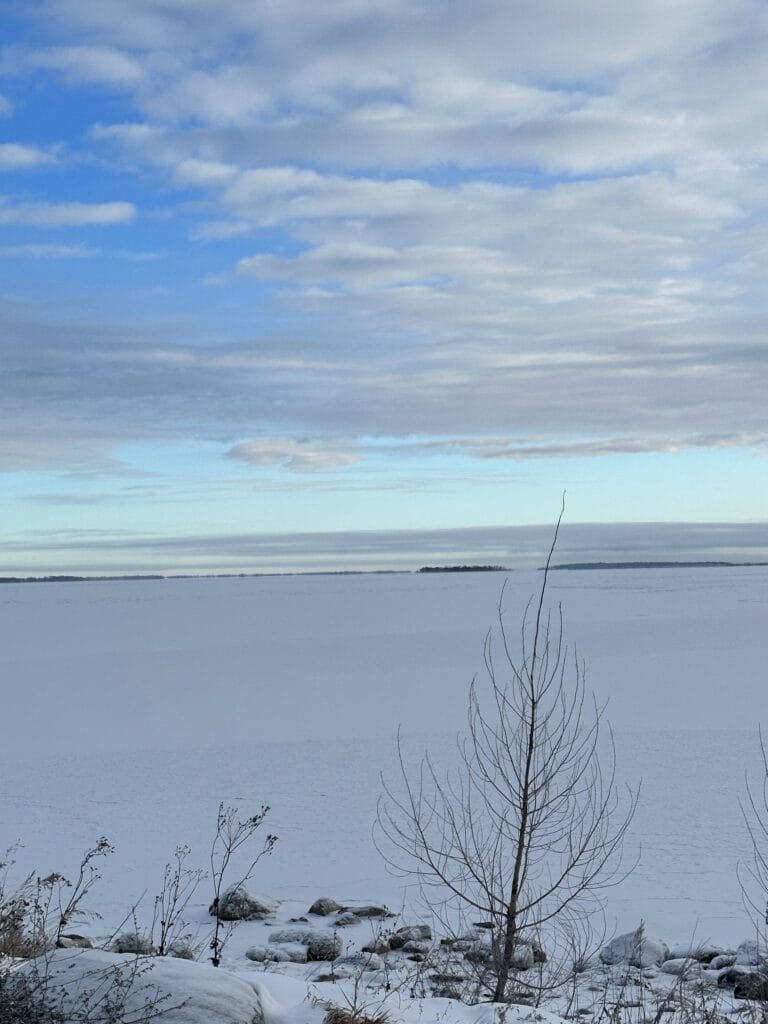
Devils Lake ice fishing represents the pinnacle of ice fishing for jumbo perch. The combination of abundant fish, incredible average size, proven techniques, and world-class guide services creates an experience every serious ice angler should have on their bucket list.
The drive across North Dakota’s frozen prairie might seem long, but it’s worth every mile when you’re dropping your first jumbo Devils Lake perch through the ice. The aggressive bite, the constant action, and the sheer size of these fish will have you planning your return trip before you even leave.
I’ve ice fished across the northern states and Canada, and nothing compares to the consistency and quality of Devils Lake perch fishing. Whether you’re a hardcore ice fishing veteran or someone looking for an incredible winter fishing adventure, Devils Lake delivers in ways few destinations can match.
The lake’s vastness can be intimidating, especially for first-timers. That’s why I always recommend starting with a guided trip. Learn the patterns, understand the lake, and experience the fishing at its best. Then, armed with knowledge and confidence, return for DIY trips where you put your new skills to the test.
Winter on Devils Lake is harsh—there’s no sugarcoating it. But dress properly, fish with experienced people or guides, respect the conditions, and you’ll be safe and comfortable. The rewards far outweigh the challenges.
Now stop reading and start planning your Devils Lake ice fishing adventure. The perch are waiting, and that first jumbo rising to your jig on the flasher screen will make you a believer. See you on the ice. ❄️🐟
Print Checklist
Pre-Trip Planning:
- [ ] Book lodging (3-6 months ahead for peak season)
- [ ] Book guide service if desired (4-6 months ahead)
- [ ] Purchase North Dakota fishing license online
- [ ] Check current fishing regulations
- [ ] Reserve rental car if flying in
- [ ] Purchase travel insurance for winter travel
- [ ] Download offline maps of Devils Lake area
- [ ] Join Devils Lake fishing Facebook groups for reports
Gear to Bring:
- [ ] Ice fishing rods and tackle (or confirm guide provides)
- [ ] Warm clothing system (-40°F rated)
- [ ] Ice safety equipment (picks, rope, whistle)
- [ ] Electronics (flasher/finder with charged battery)
- [ ] Camera and phone chargers
- [ ] Cash for bait shops and tips
- [ ] Cooler and ice packs for transporting fish home
2 thoughts on “Why Devils Lake Ice Fishing Trips are Perfect for Perch Fans (2026 Guide)”